If You're Curious About These Questions...
You should listen to this audiobook
- Why did prominent thinkers like Ayn Rand and Robert Nozick argue that the concept of the 'common good' is actually a path to tyranny, and how has this philosophy fueled the exploitation of public trust?
- How did the 'whatever-it-takes-to-win' mentality of the 1980s, exemplified by corporate raiders and political scandals, transform American society and lead to a drastic decline in institutional trust?
- What specific roles do 'virtuous leadership' and the strategic reassignment of 'honor and shame' play in reversing the erosion of the common good?
Listen to The Common Good — Free Audiobook
Loading player...
Key Takeaways from The Common Good
- Discover how the common good functions as the unwritten moral laws of fairness and trust that keep society from descending into a corrupt jungle.
- Understand why thinkers like Ayn Rand and Robert Nozick actively opposed the concept of the common good, arguing instead that society should be driven by individual self-interest.
- Learn how fragile mutual trust truly is, and see how a few bad actors exploiting society's unspoken rules can trigger a widespread erosion of shared values.
- Find out how the relentless pursuit of maximum profit and a 'whatever-it-takes-to-win' mentality have endangered American societal norms, resulting in actions that are legal but morally wrong.
- Recognize that unethical behavior by leaders creates a destructive domino effect, and explore why acknowledging these historical missteps is the first step toward restoring our communities.
Learning Tools
Reinforce what you learned from The Common Good
Mind Map
The Common Good
Definition & Foundations+
Exploitation & Deniers+
The Whatever-It-Takes Mentality+
Restoring the Common Good+
Quiz — Test Your Understanding
Question 1 of 9
What are the primary historical roots of the notion of a virtuous society and the common good in America, according to the text?
Question 2 of 9
Why did philosopher Robert Nozick oppose the concept of the common good?
Question 3 of 9
What does the text conclude about Martin Shkreli's decision to drastically raise the price of the life-saving drug Daraprim?
Question 4 of 9
Which event is cited as a precedent-setting violation of political norms that contributed to the erosion of the common good?
Question 5 of 9
According to the text, how did the "whatever-it-takes" mentality manifest in the business world during the 1980s?
Question 6 of 9
What is a major societal consequence of the declining trust in government and institutions, as highlighted in the book?
Question 7 of 9
What faulty reasoning often justifies the "whatever-it-takes" approach among economic and political leaders?
Question 8 of 9
How does the author suggest society should reassign the concepts of honor and shame to restore the common good?
Question 9 of 9
Why does the author argue that education should be considered a public good rather than just a private investment?
The Common Good — Full Chapter Overview
- 1Recommendation
- 2The common good expresses the ideals and values society needs to function.
- 3Some people either reject or take advantage of the common good.
- 4In today’s America, the common good is in very short supply.
- 5Past immoral behavior opened the door to future abuses, helping to destroy the common good.
- 6The “whatever-it-takes” attitude in politics and business has severely damaged society.
- 7To revive the common good, we need virtuous leaders and the right use of honor and shame.
- 8The common good relies on both education and a shared commitment to the truth.
The Common Good Summary & Overview
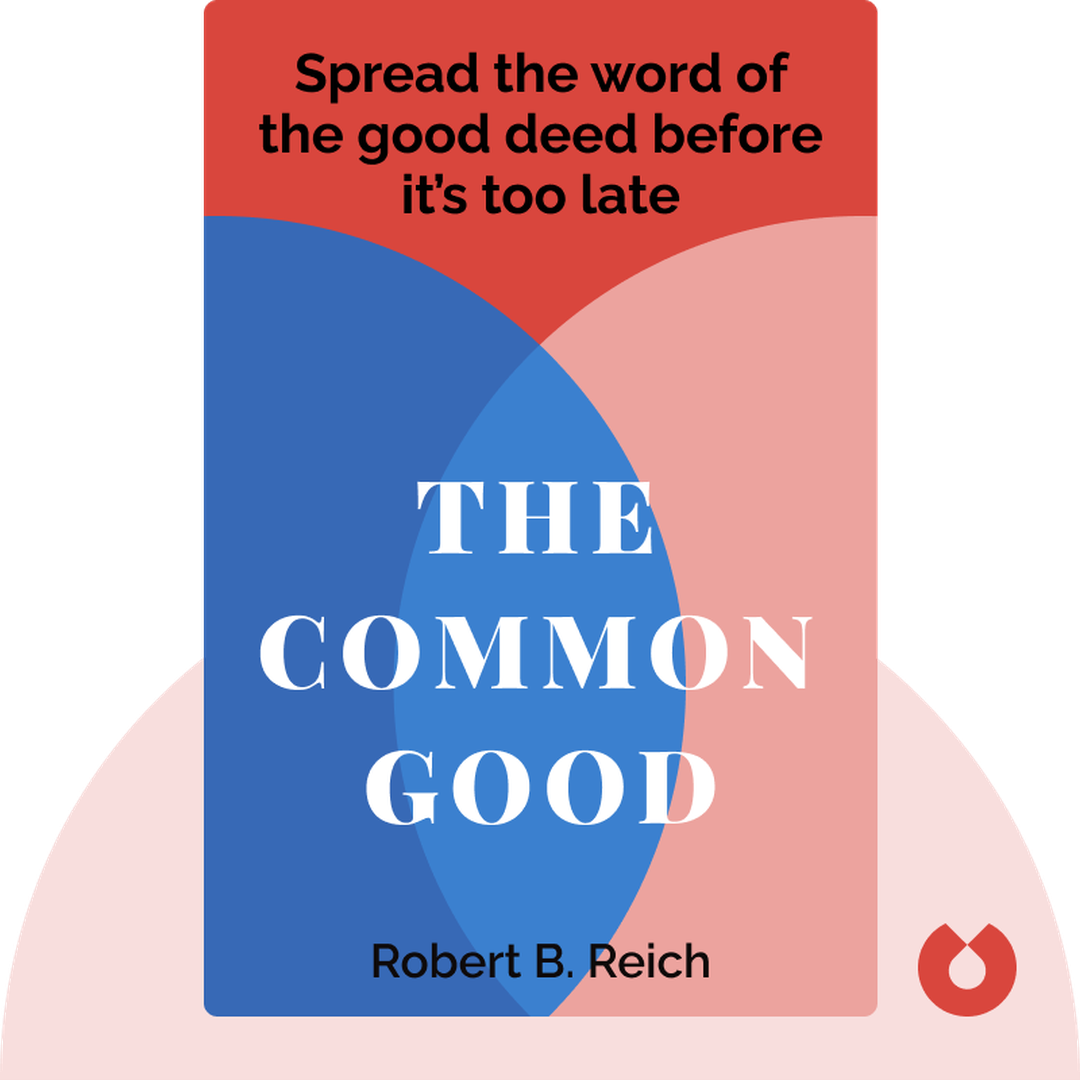
The Common Good (2018) is a call for Americans to try and work toward the collective good once again, rather than continue along the path of “whatever-it-takes-to-win,” which has been the overriding mentality for the last few decades. The author outlines the importance of the common good and how we should go about restoring it.
Who Should Listen to The Common Good?
- Americans who are concerned about the current political environment
- People who feel that Western capitalism is losing its moral compass
- Those interested in American cultural and social history
Books Similar to The Common Good
Readers who enjoyed this also liked these titles.