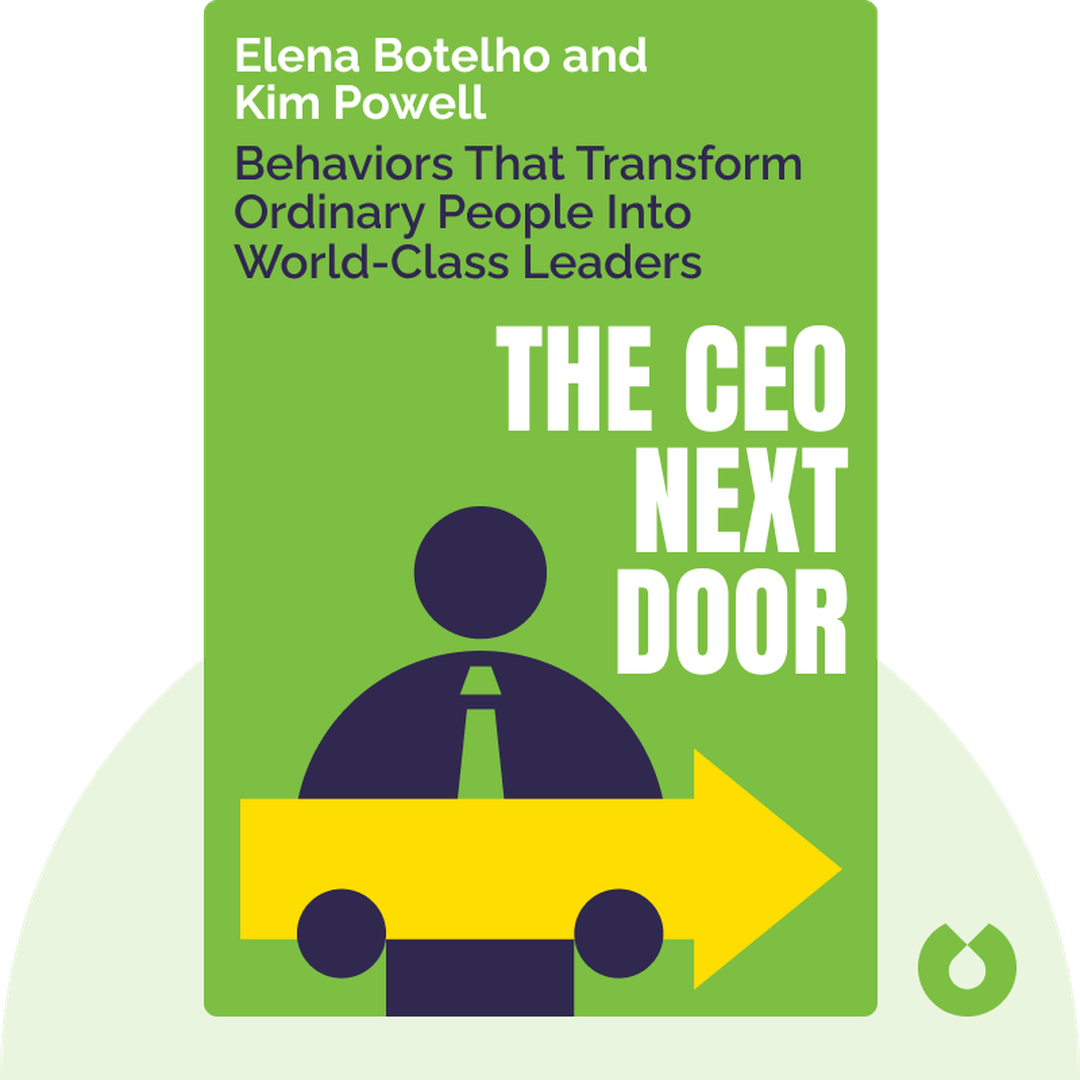
If You're Curious About These Questions...
You should listen to this audiobook
- Did you know that the most successful CEOs often don't have an Ivy League degree or a "perfect" resume?
- Have you ever wondered why some "ordinary" managers skyrocket to the top while others with more experience get left behind?
- What's the secret to mastering the four specific behaviors that research shows are the true predictors of leadership success?
Listen to The CEO Next Door — Cinematic Audio Edition
Loading player...
Key Takeaways from The CEO Next Door
- Discover why corporate success relies on learnable leadership skills rather than Ivy League degrees, massive wealth, or an extroverted personality.
- Learn how practicing swift decisiveness helps you avoid information paralysis and makes you twelve times more likely to become a top-performing leader.
- Master the strategy of establishing a clear winning formula to simplify complex choices and empower your team to make faster, independent decisions.
- Find out how to drive massive business growth by abandoning assumptions, actively listening to customers, and spending valuable time on the shop floor.
- Understand the critical importance of uncovering the personal motivations of your board members to successfully secure their backing for your company vision.
Learning Tools
Reinforce what you learned from The CEO Next Door
Mind Map
The CEO Next Door
The CEO Myth vs. Reality+
Decisiveness+
Stakeholder Understanding+
Reliability & Consistency+
Systems & Delegation+
Adaptability+
Career Advancement+
Communication Tactics+
Quiz — Test Your Understanding
Question 1 of 8
What did the ghSMART project discover about the career intentions and backgrounds of most CEOs?
Question 2 of 8
According to the authors, how do highly intelligent CEOs often struggle when it comes to decision-making?
Question 3 of 8
Why can introverts be particularly effective in the role of a CEO?
Question 4 of 8
According to the Genome Project, which trait is highly favored by board members when selecting a CEO?
Question 5 of 8
What strategy did the Children’s Hospital of Philadelphia use to successfully reduce medical errors by 80 percent?
Question 6 of 8
How did Intel successfully adapt to the changing business landscape in the mid-1980s?
Question 7 of 8
What is a common strategy used by 'sprinters' to climb the corporate ladder quickly and get noticed?
Question 8 of 8
What actionable advice do the authors give for projecting authority in meetings or interviews?
The CEO Next Door — Full Chapter Overview
- 1Recommendation
- 2CEOs aren’t born; they’re made.
- 3Make fewer, and therefore faster, decisions.
- 4To get better results, you need to know your stakeholders.
- 5People will depend on a consistent and committed CEO.
- 6Prevent errors by building repeatable, well-planned systems.
- 7Forget the past and focus on adapting to upcoming trends.
- 8You must get noticed to advance all the way up.
The CEO Next Door Summary & Overview
The CEO Next Door (2017) takes a look at what separates a good CEO from a great one. Backed up by extensive research headed by the authors, it proposes that ordinary people can become leaders of large, successful companies, and details the steps involved in climbing that corporate ladder.
Who Should Listen to The CEO Next Door?
- Anyone with aspirations to become a CEO
- Leaders who want to improve their management skills
- Entrepreneurs looking for advice on how to run a business
Books Similar to The CEO Next Door
Readers who enjoyed this also liked these titles.