If You're Curious About These Questions...
You should listen to this audiobook
- Did you know that your brain’s most creative breakthroughs often happen when you’re doing absolutely nothing at all?
- Have you ever wondered why 'switching off' actually activates a powerful neural network that can solve your toughest problems?
- What if the secret to peak mental performance isn't working harder, but mastering the counterintuitive science of rest?
Listen to The Brain at Rest — Cinematic Audio Edition
Loading player...
Key Takeaways from The Brain at Rest
- Discover how doing absolutely nothing activates your brain's 'default network,' a powerful neural circuit that boosts creativity, problem-solving, and emotional intelligence.
- Understand the deadly neurological costs of overwork, which literally thins your frontal cortex and enlarges your brain's fear center when pushed past its limits.
- Learn why scrolling through social media is fake rest that keeps your brain's executive network constantly fired up, preventing genuine mental recovery.
- Find out why letting your mind wander is not a distraction, but rather a powerful neuronal reset button that restores depleted brain cells and enhances cognitive performance.
- Uncover the medical benefits of 'forest bathing,' and how mindfully immersing yourself in nature can heal the dangerous neurological effects of modern indoor living.
Learning Tools
Reinforce what you learned from The Brain at Rest
Mind Map
The Brain at Rest
The Neuroscience of Rest+
Mind-Wandering & Solitude+
Nature & Play+
Sleep & Active Rest+
Quiz — Test Your Understanding
Question 1 of 8
What is the brain's 'default network'?
Question 2 of 8
Why does scrolling through social media fail to provide genuine rest for the brain?
Question 3 of 8
According to neuroscience, what evolutionary purpose does mind-wandering serve when you are engaged in unrewarding work?
Question 4 of 8
What physiological benefit did middle-aged businessmen experience after three days of 'forest bathing'?
Question 5 of 8
What did the University of Virginia experiment reveal about modern humanity's relationship with solitude?
Question 6 of 8
How does the book challenge the common stereotype that video games are merely mindless entertainment?
Question 7 of 8
Which of the following is a scientifically proven benefit of a 30-minute nap?
Question 8 of 8
How does intense physical activity, or 'active rest', contribute to mental calm and cognitive health?
The Brain at Rest — Full Chapter Overview
- 1Recommendation
- 2Achieve more by doing nothing
- 3The fatal price of overwork
- 4Embrace your wandering mind
- 5Nature’s restorative superpowers
- 6How to be alone with yourself
- 7All work and no play leaves everyone dull
- 8Sleep, recover, and do your best
The Brain at Rest Summary & Overview
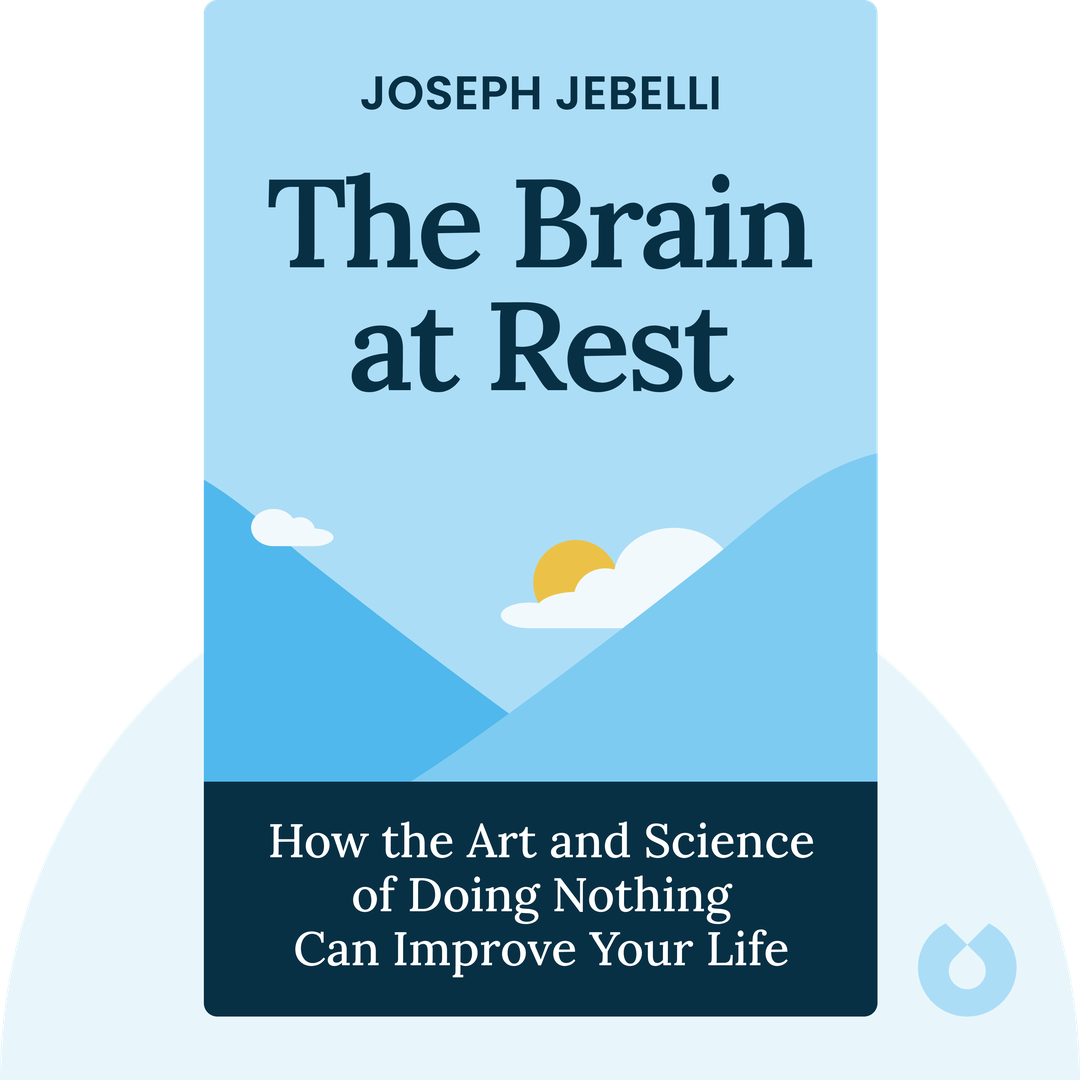
The Brain at Rest (2025) challenges the conventional wisdom that constant productivity is the key to success, revealing how letting your mind wander can actually make you more creative and less stressed. This science-backed guide offers a refreshing antidote to our culture of overwork, showing how rest activates the brain’s default network and can lead to greater contentment and improved mental performance.
Who Should Listen to The Brain at Rest?
- Overworked professionals who want to develop a better work-life balance
- Creatives looking to sharpen their idea-generation skills
- Anyone interested in the neuroscience of cognition, creativity, and rest
Books Similar to The Brain at Rest
Readers who enjoyed this also liked these titles.