If You're Curious About These Questions...
You should listen to this audiobook
- Did you know that the common antibiotics we use to treat infections might be permanently altering your body’s internal ecosystem and fueling modern health epidemics?
- Have you ever wondered why conditions like asthma, obesity, and food allergies are skyrocketing, and if the secret lies in the tiny organisms disappearing from our guts?
- What if the very medicines we rely on to stay healthy are actually destroying the microscopic protectors that keep our children's immune systems in balance?
Listen to Missing Microbes — Free Audiobook
Loading player...
Key Takeaways from Missing Microbes
- Discover why the alarming rise in chronic diseases like asthma, obesity, and diabetes may be directly linked to the overuse of antibiotics, sanitizers, and Cesarean sections.
- Understand how your gut microbiome acts like a delicate natural ecosystem, where the loss of even a single bacterial species can cause your internal health to collapse.
- Learn why humans are entirely dependent on microbes to eat and breathe, as these invisible organisms actually outnumber and outweigh all other life forms on Earth combined.
- Find out how the historical shift from isolated hunter-gatherer tribes to crowded cities turned localized bacterial infections into devastating global epidemics.
- Recognize why modern antibiotics are a double-edged sword that can miraculously cure lethal infections while simultaneously wiping out the vital gut flora that keeps you healthy.
Learning Tools
Reinforce what you learned from Missing Microbes
Mind Map
Missing Microbes
The Microbiome's Role+
Epidemics & Antibiotics+
The Dark Side of Antibiotics+
Agricultural Misuse+
Actionable Solutions+
Quiz — Test Your Understanding
Question 1 of 7
What analogy does the author use to explain the consequences of losing a single bacterial species in the human gut?
Question 2 of 7
According to the book, what is the relationship between humans and microbes in terms of survival?
Question 3 of 7
Why were bacterial epidemics NOT an existential threat to early human ancestors?
Question 4 of 7
What are the two primary reasons antibiotics are heavily administered to farm animals in the United States?
Question 5 of 7
How did a routine course of antibiotics contribute to the death of Peggy Lillis from a Clostridium difficile (C. diff) infection?
Question 6 of 7
What did the 1985 Salmonella outbreak in Chicago reveal about antibiotic use?
Question 7 of 7
Why does the author recommend using ordinary soap instead of modern sanitizers?
Missing Microbes — Full Chapter Overview
- 1Recommendation
- 2Missing microbes may explain the rise in chronic diseases like asthma, allergies, and diabetes.
- 3Microbes existed on Earth long before us and made our existence possible.
- 4Antibiotics may have saved humanity from being wiped out by epidemics.
- 5Antibiotics are both a blessing and a curse.
- 6Overusing antibiotics can alter our microbiome and make us more vulnerable to infections.
- 7Limiting antibiotic exposure and using prebiotics can support your beneficial microbes.
- 8Final summary
Missing Microbes Summary & Overview
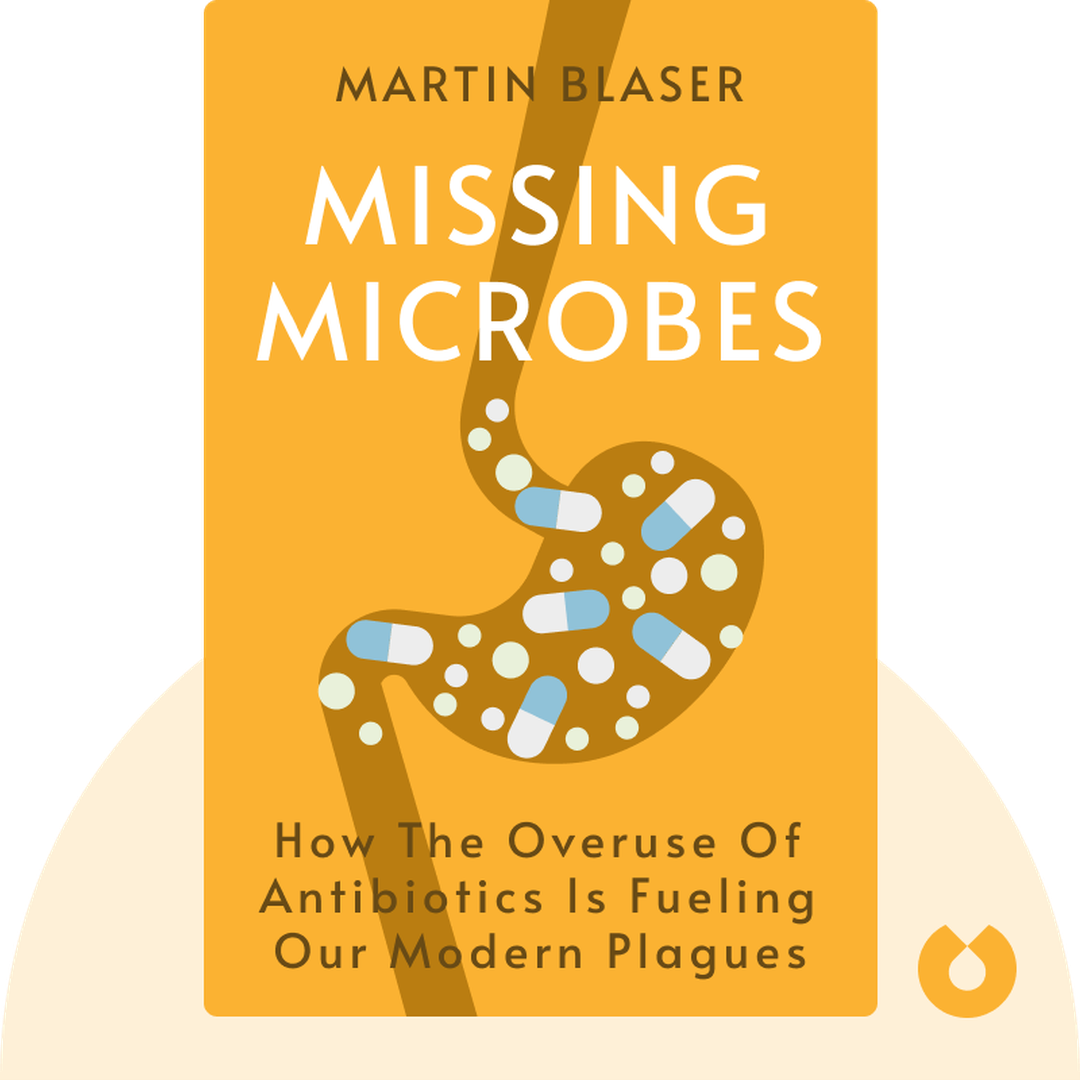
Missing Microbes (2014) explores the strange and microscopic world inside your guts. It sheds light on the crucial role played by microbes – tiny creatures that keep your body happy and healthy – and explains the dangers of overusing antibiotics.
Who Should Listen to Missing Microbes?
- People curious about the dangers of antibiotics
- Parents concerned about their children’s health
- Readers interested in medicine and health
Books Similar to Missing Microbes
Readers who enjoyed this also liked these titles.