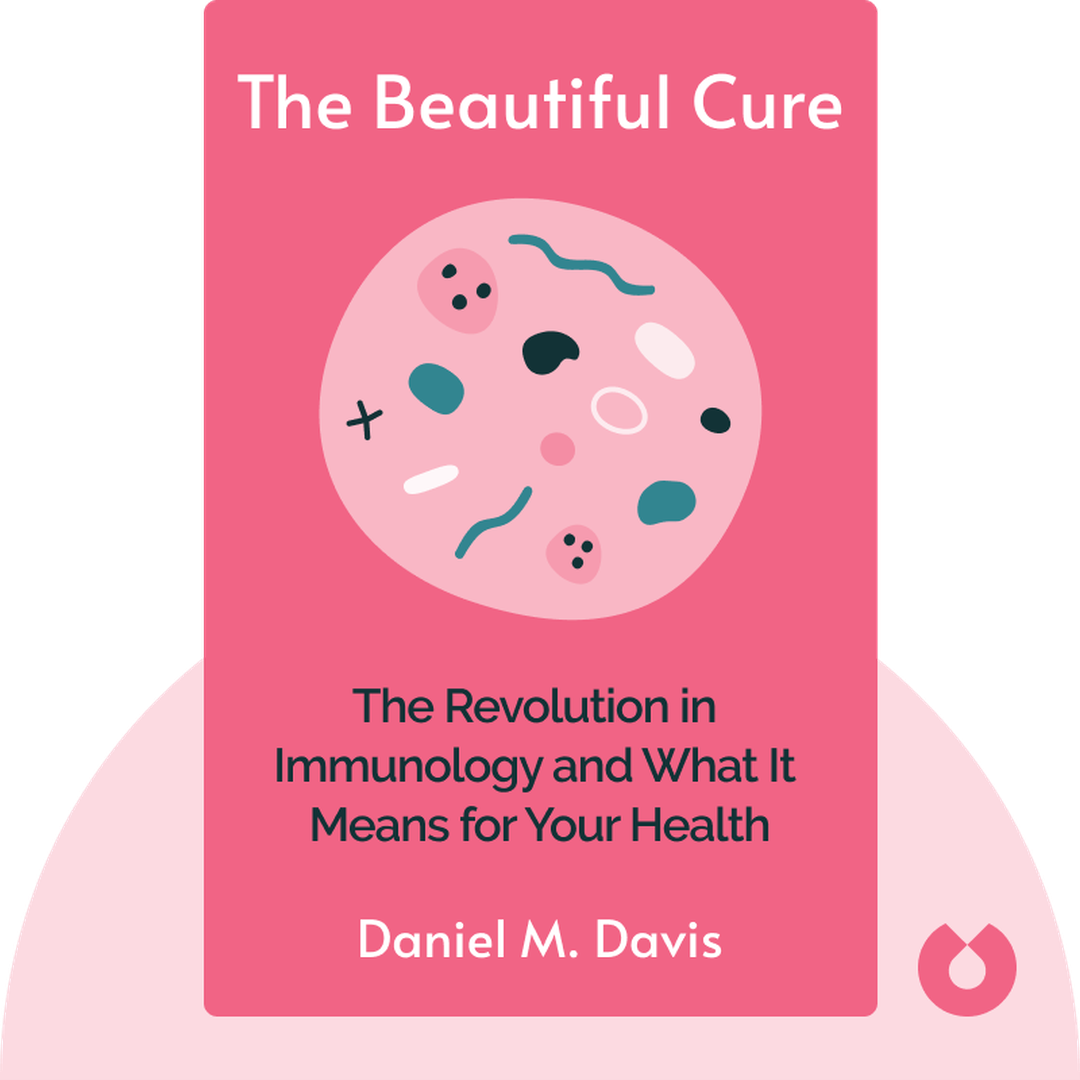
If You're Curious About These Questions...
You should listen to this audiobook
- What if the most powerful medicine in the world isn't a pill, but a complex defense system already hidden inside your own body?
- Did you know that scientists are on the brink of a revolution that could use your own cells to wipe out diseases like cancer, HIV, and arthritis?
- Have you ever wondered how the 'beautiful' complexity of your immune system actually works, and what it would mean if we could finally learn to control its power?
Listen to The Beautiful Cure — Free Audiobook
Loading player...
Key Takeaways from The Beautiful Cure
- Explore the astonishing biological complexity behind healing a simple scrape, revealing a highly coordinated network of cells, proteins, and hormones working to protect you.
- Understand how vaccines leverage your adaptive immune response by training T and B cells to remember specific germs and effortlessly destroy future infections.
- Discover why your body doesn't attack harmless new substances like food, relying instead on a sophisticated innate immune system programmed to only target true threats.
- Learn how pattern-recognition receptors, encoded by specialized toll genes, give your immune cells the innate ability to lock onto and identify specific bacteria and parasites.
- Uncover the vital role of dendritic cells, which act as your body's internal alarm system by capturing germs and switching to a mature state to activate a full-scale immune response.
Learning Tools
Reinforce what you learned from The Beautiful Cure
Mind Map
The Beautiful Cure
Core Immune Systems+
Key Cellular Players+
Chemical Messengers+
Influencing Factors+
Revolutionary Treatments+
Quiz — Test Your Understanding
Question 1 of 9
What primary function do vaccines serve in the human body according to the text?
Question 2 of 9
What was Charles Janeway's groundbreaking realization about the immune system in 1989?
Question 3 of 9
How do dendritic cells function as the immune system's 'alarm system'?
Question 4 of 9
What is the primary role of cytokines, such as the interferon discovered by Lindenmann and Isaacs?
Question 5 of 9
How did scientists Sir Marc Feldmann and Sir Ravinder Maini successfully treat rheumatoid arthritis?
Question 6 of 9
Why does chronic psychological stress make it harder for the body to fight off viral infections?
Question 7 of 9
According to the text, why is the human immune system generally strongest at night?
Question 8 of 9
What important function do regulatory T cells perform in the immune system?
Question 9 of 9
How does immune checkpoint therapy, developed by Jim Allison, help the body fight cancer?
The Beautiful Cure — Full Chapter Overview
- 1Recommendation
- 2Vaccines activate the body’s adaptive immune response.
- 3Our innate immune systems are built to handle specific threats.
- 4Dendritic cells act as alarms that warn the body when something is wrong.
- 5Cytokines help the body coordinate the right immune response.
- 6Anti-cytokines can stop harmful immune responses and may help treat autoimmune diseases.
- 7Our immune systems rely on stress hormones, but too much can be damaging.
- 8Our immune systems work differently depending on the time of day and stage of life.
- 9Low levels of regulatory T cells may contribute to many autoimmune diseases.
- 10Using the power of our immune systems could help us fight devastating diseases.
- 11Final summary
The Beautiful Cure Summary & Overview
The Beautiful Cure (2018) is an exuberant tale of how scientists have come to a deeper understanding of the human immune system – and the ways in which their discoveries will revolutionize our health. The immune system is extraordinarily complex. But if we can use our knowledge to harness its power, we may finally win the fight against diseases and illnesses like arthritis, HIV, and even cancer.
Who Should Listen to The Beautiful Cure?
- Health nuts who want to understand the body’s natural defense system
- People who have a chronic illness or know someone who has one
- Medical students and anyone interested in human biology
Books Similar to The Beautiful Cure
Readers who enjoyed this also liked these titles.