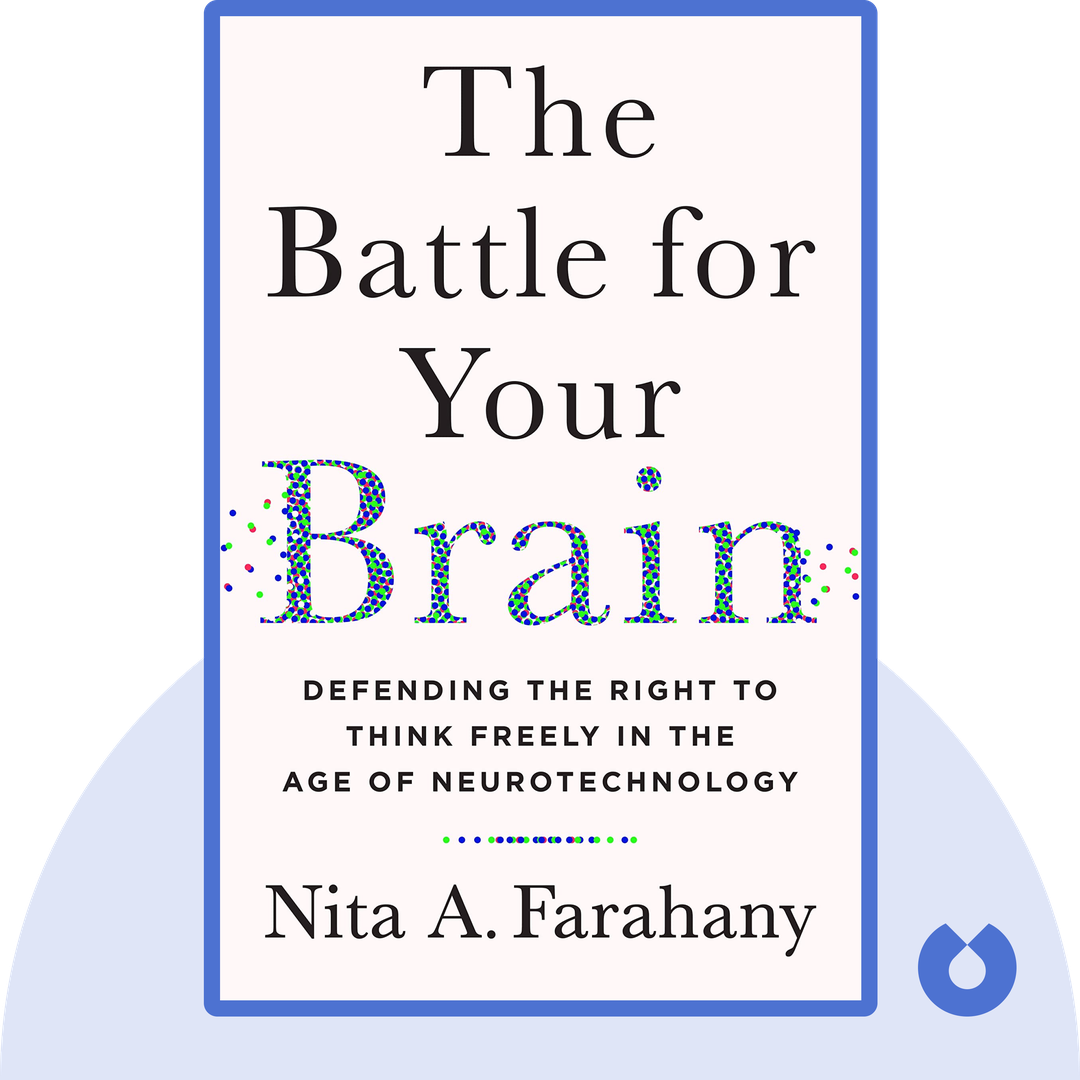
The Battle for Your Brain
Start ListeningDownload Try free on iPhoneScan to start in 5 seconds
Categories:
If You're Curious About These Questions...
You should listen to this audiobook
- How are employers currently using brain-tracking devices like EEG to monitor workers, and where should the ethical line be drawn between promoting workplace safety and violating an employee's cognitive liberty?
- As brain-enhancing drugs and cognitive training tools become more prevalent, how can society address the growing inequality between those who can afford to 'hack' their mental performance and those who cannot?
- Does cognitive liberty include the right to intentionally impair your own brain or erase traumatic memories using emerging technologies like decoded neurofeedback (DecNef)?
Listen to The Battle for Your Brain — Free Audiobook
Loading player...
Key Takeaways from The Battle for Your Brain
- The rapid advancement of neurotechnology threatens our fundamental right to 'cognitive liberty,' which encompasses mental privacy, freedom of thought, and self-determination.
- While workplace brain-tracking devices can improve safety by monitoring fatigue, employers must rely on aggregated, de-identified data to preserve employee trust and avoid stifling creativity.
- To protect citizens from invasive government surveillance and intellectual conformity, authorities should only be granted access to limited binary interpretations of brain data rather than raw neural outputs.
- Instead of banning cognitive enhancements like brain-boosting drugs over fairness concerns, society should focus on making these tools more affordable and accessible to prevent a widening inequality gap.
- The right to self-determination extends to intentionally diminishing brain function or erasing memories, provided these personal choices do not create disproportionate societal costs or harm others.
Learning Tools
Reinforce what you learned from The Battle for Your Brain
Mind Map
The Battle for Your Brain
Cognitive Liberty+
Brain Tracking at Work+
Brain Tracking in Society+
Brain Accelerating+
Brain Braking+
Quiz — Test Your Understanding
Question 1 of 5
How does the author suggest employers should handle neural data to protect employees' cognitive liberty while maintaining safety?
Question 2 of 5
According to the text, what is a major societal risk of unregulated government monitoring of brain activity?
Question 3 of 5
What is a proposed solution to balance government interests with citizens' mental privacy when using brain-tracking technologies?
Question 4 of 5
How does the author view the increasing use of cognitive enhancements, such as brain-enhancing drugs and training tools?
Question 5 of 5
What ethical dilemma is introduced by neurotechnologies like decoded neurofeedback (DecNef)?
The Battle for Your Brain — Full Chapter Overview
- 1Recommendation
- 2Brain tracking in the workplace
- 3Brain tracking across society
- 4The accelerating brain
- 5The braking brain
The Battle for Your Brain Summary & Overview
The Battle for Your Brain (2023) explores the emerging field of neurotechnology and its impact on cognitive liberty. It delves into how this technology will enable unprecedented brain tracking and hacking – raising ethical concerns about mental privacy, freedom of thought, and individual self-determination.
Who Should Listen to The Battle for Your Brain?
- Ethics and philosophy students
- Neurotechnology researchers and developers
- Policymakers focused on emerging technologies
Books Similar to The Battle for Your Brain
Readers who enjoyed this also liked these titles.