If You're Curious About These Questions...
You should listen to this audiobook
- What if you could turn your daily life into a personal laboratory to scientifically upgrade your memory, focus, and creativity?
- Did you know that you can use the same rigorous testing methods as neuroscientists to discover which specific 'neurohacks' actually work for your unique brain?
- Are you curious about the secret to mastering your executive functions and emotional regulation through simple, data-driven experiments you can do at home?
Listen to Smarter Tomorrow — Free Audiobook
Loading player...
Key Takeaways from Smarter Tomorrow
- Understand why your brain is inherently malleable, allowing you to literally edit your cognitive abilities through the power of neuroplasticity.
- Discover how to adopt a DIY scientist's approach by using self-tracking tools to measure, experiment, and improve your unique mental capabilities.
- Learn why traits traditionally viewed as cognitive impediments, such as ADHD, can actually be reframed and harnessed as mental superpowers.
- Find out how targeted repetition forces neurons to wire together, transforming widespread, struggling brain activity into ruthlessly efficient mastery.
- Master your brain's executive functioning by assessing and developing its three crucial sub-abilities: working memory, inhibition, and mental flexibility.
Learning Tools
Reinforce what you learned from Smarter Tomorrow
Mind Map
Smarter Tomorrow
Neurohacking Fundamentals+
Executive Functioning+
Emotional Self-Regulation+
Memory & Learning Speed+
Creativity+
Actionable Daily Habits+
Quiz — Test Your Understanding
Question 1 of 7
How does neurohacking primarily differ from traditional self-help?
Question 2 of 7
What did the brain imaging of Olympic archers demonstrate about neuroplasticity?
Question 3 of 7
According to the text, how should a neurohacker view traits traditionally considered impediments, such as ADHD?
Question 4 of 7
Which of the following are the three sub-abilities of executive functioning mentioned in the text?
Question 5 of 7
Based on the examples of experimental schools in Shanghai and prolific creators like Picasso, what is an effective way to cultivate creativity?
Question 6 of 7
What surprising neurohacking intervention does the author suggest to boost abilities like executive functioning or creativity?
Question 7 of 7
Why does the author argue that boosting learning speed and memory is especially critical for the future?
Smarter Tomorrow — Full Chapter Overview
- 1Recommendation
- 2Neurohacking requires self-knowledge and experimentation.
- 3Your brain’s wiring is distinctive and flexible.
- 4Executive function is a vital strength that you can neurohack.
- 5Emotional self-regulation is essential for success, and it’s a skill you can train.
- 6Use neurohacking to enhance your memory and learning speed.
- 7Creativity is something you can develop.
Smarter Tomorrow Summary & Overview
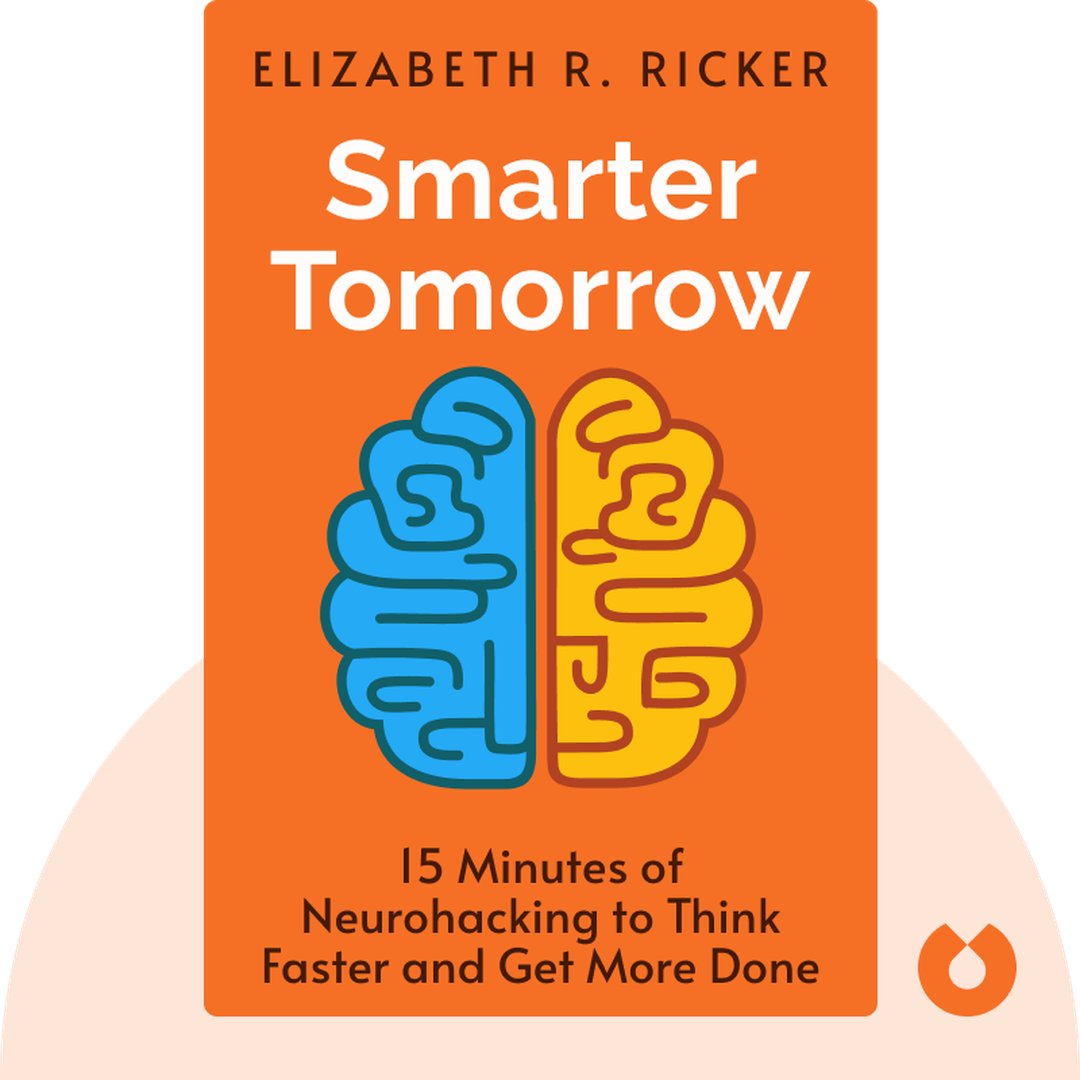
Smarter Tomorrow (2021) shows you how to upgrade your brain using a technique called neurohacking. You’ll learn how to improve your memory, creativity, emotional regulation, and what’s known as “executive functioning” through self-testing and experimentation – all backed up with insights from neuroscience.
Who Should Listen to Smarter Tomorrow?
- Thinkers looking to improve their cognitive skills
- Budding neuroscientists and brain nerds
- Anyone looking to keep up with modern science
Books Similar to Smarter Tomorrow
Readers who enjoyed this also liked these titles.