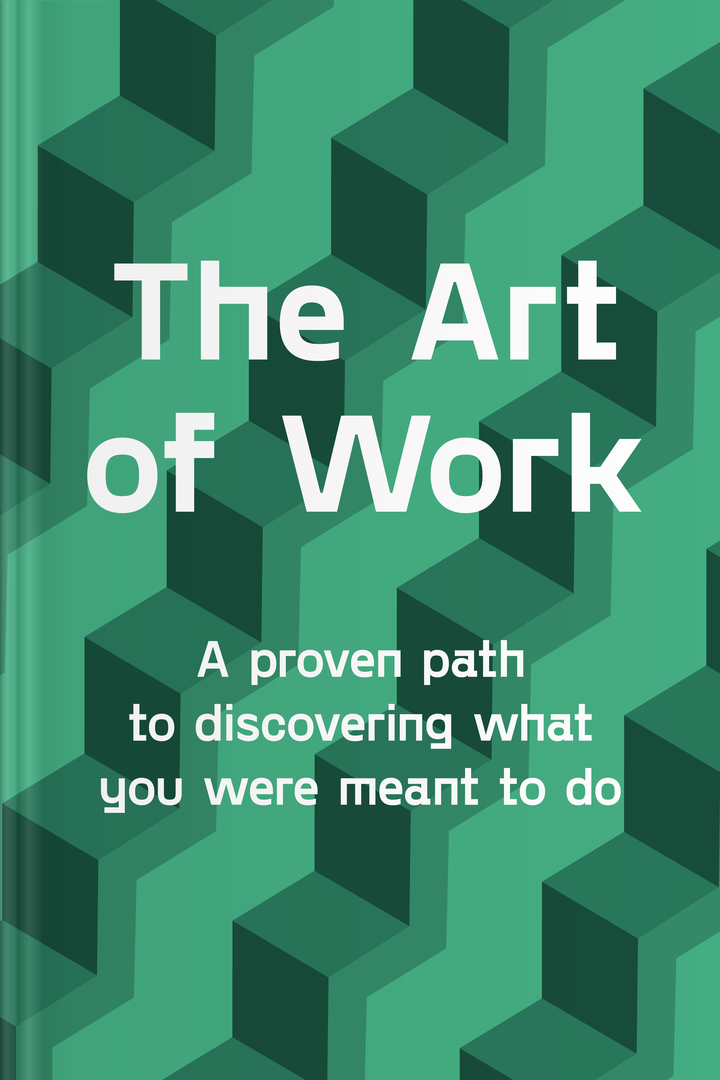
If You're Curious About These Questions...
You should listen to this audiobook
- Have you ever wondered why the secret to your true calling might already be hidden in the patterns of your past, just waiting to be noticed?
- What if you could begin the journey toward a more meaningful career without needing perfect clarity, a sudden miracle, or total confidence?
- Are you curious about how shifting your perspective on failure could actually be the key to building a legacy that serves others long after you're gone?
Listen to The Art of Work — Free Audiobook
Key Takeaways from The Art of Work
- Discover why finding your true calling is rarely a sudden, dramatic event, but rather a gradual revelation of the familiar passions you already possess.
- Understand how to transition your daily work from mere survival into a meaningful pursuit by exploring the fundamental sources of human fulfillment.
- Learn to abandon the trap of copying other people's exact success formulas, focusing instead on the deeper, steady principles that can guide your unique path.
- Uncover the hidden thread of purpose within your own life story by paying attention to the long-standing desires and interests you continually return to.
- Realize that true clarity comes through action, and discover why taking steps before you feel completely ready is essential for finding your life's direction.
Learning Tools
Reinforce what you learned from The Art of Work
Mind Map
Quiz — Test Your Understanding
The Art of Work — Full Chapter Overview
- 1Recommendation
- 2Remembering You Were Made for Meaning
- 3Following Principles, Not Copy-and-Paste Formulas
- 4Moving Before You Feel Completely Ready
- 5Letting Support In: Mentors, Community, and Humility
- 6Trading the “At Least I Tried” Story for Real Growth
- 7Reframing Failure as Feedback on the Way to Purpose
- 8Living on Purpose, Patiently, and Leaving a Legacy
The Art of Work Summary & Overview
This audiobook-style summary is a warm invitation to look at work differently—not only as survival, but as one of the places meaning can grow. It explores why so many people feel disengaged at work, and it offers a kinder, more sustainable way to move toward a sense of calling through small, practical steps rather than sudden miracles.
Across seven chapters, the narration walks through the principles behind purpose: noticing the thread that’s already been present in your gifts and desires, taking action before perfect certainty arrives, receiving help from mentors, building a growth mindset through deliberate practice, and treating failure as feedback. The journey ends with a hopeful focus on legacy—creating work that outlives us by shaping and serving others.
Who Should Listen to The Art of Work?
- People who feel stuck in work that pays the bills but leaves them unfulfilled, and who want a calmer way to explore what might fit better.
- Listeners who are tired of “one-size-fits-all” life formulas and want guiding principles they can apply to their own unique story.
- Anyone seeking encouragement to take practical steps toward a calling—without needing perfect clarity, perfect timing, or perfect confidence.
Books Similar to The Art of Work
Readers who enjoyed this also liked these titles.