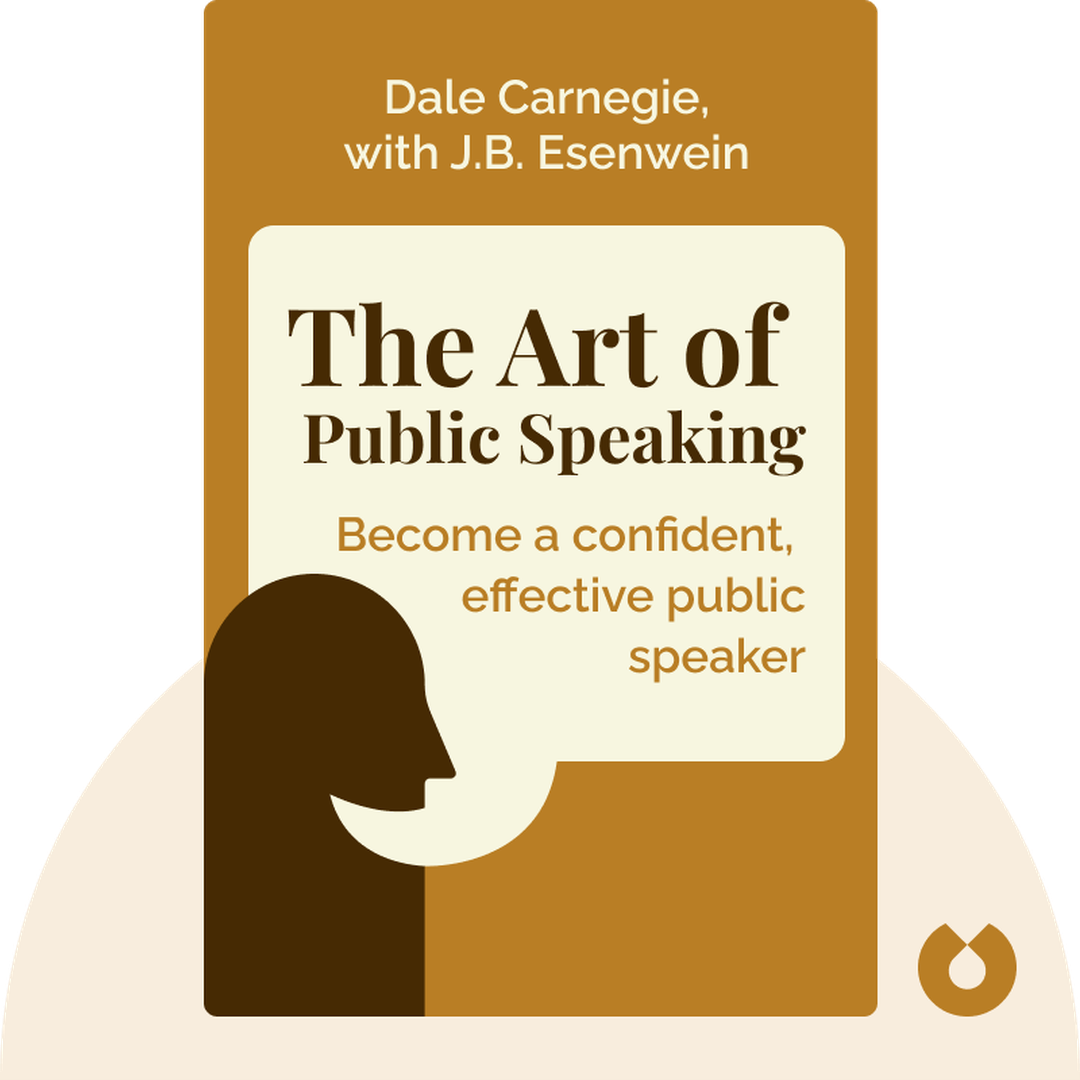
The Art of Public Speaking
Start ListeningDownload Try free on iPhoneScan to start in 5 seconds
Categories:
If You're Curious About These Questions...
You should listen to this audiobook
- Have you ever wondered why some speakers command a room with effortless ease while others struggle to be heard?
- What if you could transform your paralyzing stage fright into a powerful tool for influence and connection?
- What’s the secret to delivering a speech that feels as natural and engaging as a one-on-one conversation?
Listen to The Art of Public Speaking — Free Audiobook
Loading player...
Key Takeaways from The Art of Public Speaking
- Understand why mastering public speaking requires you to plunge directly into practice, treating your early speeches like learning to swim.
- Discover how to conquer stage fright by deeply absorbing yourself in your subject and memorizing your opening sentences to build immediate confidence.
- Learn how to vanquish vocal monotony by strategically changing your pitch, adjusting your pace, and using dramatic pauses to emphasize your main ideas.
- Find out why arousing your audience's emotions will do far more to win them over than hours of ingenious, rational argument.
- Master the ability to infuse your speeches with genuine feeling by fully entering into your topic and occupying it like an actor deeply immersed in a role.
Learning Tools
Reinforce what you learned from The Art of Public Speaking
Mind Map
The Art of Public Speaking
Overcoming Stage Fright+
Vanquishing Monotony+
Arousing Emotion+
Mastering Gestures+
Vocal Power & Health+
Audience Arrangement+
Testing Arguments+
Harnessing Imagination+
Actionable Advice+
Quiz — Test Your Understanding
Question 1 of 8
How does the author suggest speakers initially combat self-consciousness and stage fright?
Question 2 of 8
According to the text, what are the three primary techniques for stressing a speech's central ideas to avoid monotony?
Question 3 of 8
What was the key takeaway from the New York watchmaker's advertising experiment?
Question 4 of 8
What does the author mean by comparing gestures to nailing oak branches to an apple tree?
Question 5 of 8
Why does the author compare public speakers to basketball players?
Question 6 of 8
According to the campfire metaphor, why should a speaker arrange their audience in a dense, clustered mass?
Question 7 of 8
In the analogy of the king who wanted to rule the world, what fatal flaw represents a common mistake made by public speakers?
Question 8 of 8
How does the author suggest a speaker should use 'imaging' before delivering a speech?
The Art of Public Speaking — Full Chapter Overview
- 1Recommendation
- 2Becoming an effective public speaker takes practice, and performance anxiety can indeed fully be overcome.
- 3Use emphasis to defeat monotony.
- 4The ability to stir emotions in listeners is truly central to effective public speaking.
- 5Gestures are learnable, yet they still must arise from authentic feeling.
- 6A strong voice demands strong health.
- 7Arrange your audience to amplify the impact of your speech.
- 8Bolster your argumentative power by rigorously testing your arguments.
- 9Leverage imagination fully to your public-speaking advantage.
The Art of Public Speaking Summary & Overview
The Art of Public Speaking (1915) remains one of the most popular and widely-read guides to making effective public speeches. Its approachable language and applicable tips have been turning would-be speech-givers into master orators for more than a century.
Who Should Listen to The Art of Public Speaking?
- Aspiring public speakers
- People who’ve experienced stage fright
- Anyone trying to increase their influence
Books Similar to The Art of Public Speaking
Readers who enjoyed this also liked these titles.