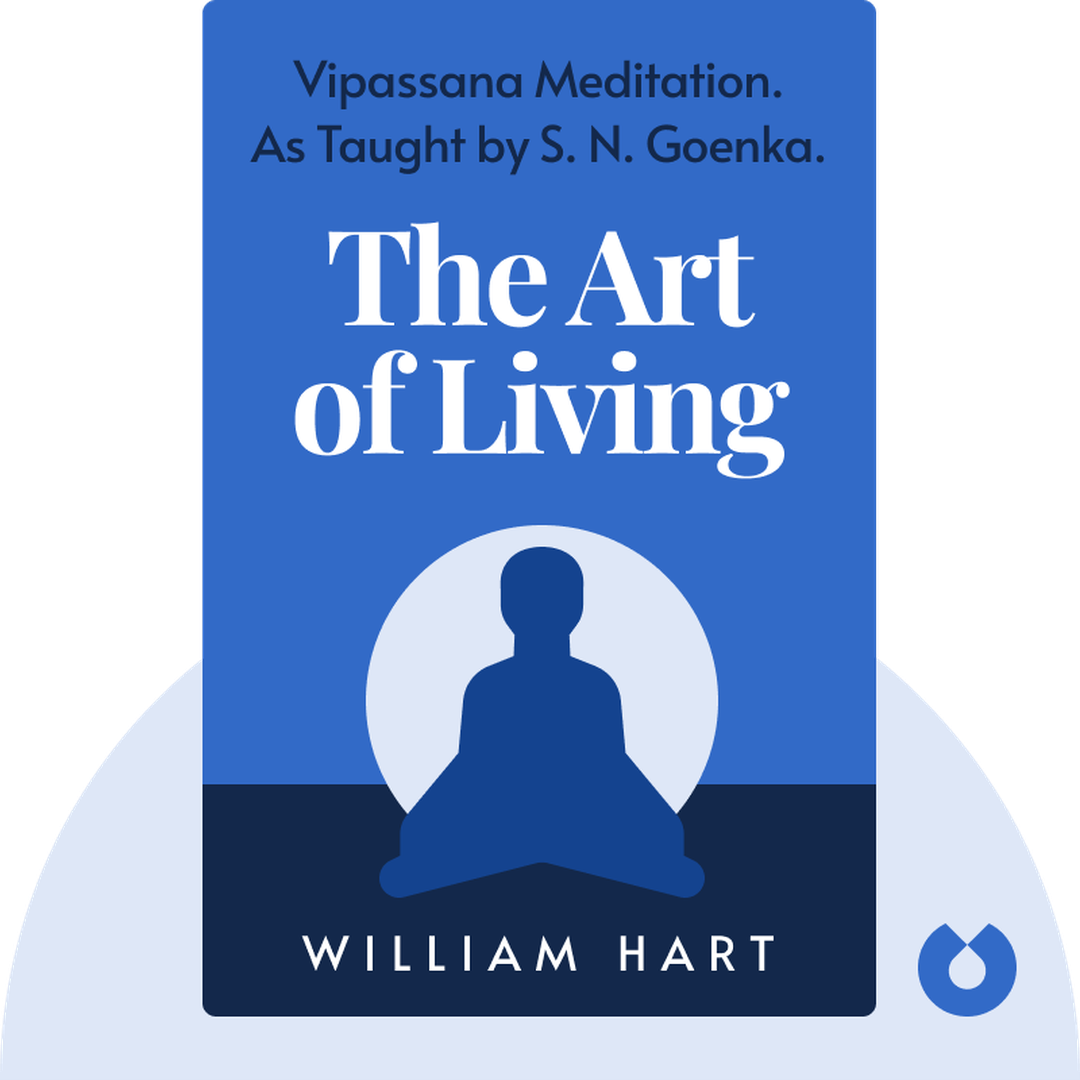
If You're Curious About These Questions...
You should listen to this audiobook
- What if you could dissolve deep-seated stress and anxiety simply by changing how you perceive the physical sensations in your own body?
- What’s the secret to breaking the hidden cycles of craving and aversion that keep us trapped in a loop of dissatisfaction?
- Did you know that the ancient practice of Vipassanā isn’t about religion, but a practical “art of living” that anyone can use to find lasting inner peace?
Listen to The Art of Living — Cinematic Audio Edition
Loading player...
Key Takeaways from The Art of Living
- Understand why intellectually studying Buddhism is ineffective without daily, practical application to actively free yourself from suffering.
- Discover how cultivating a tranquil mind through meditation not only resolves your personal anxieties but also positively impacts the people around you.
- Learn how the Buddha anticipated modern particle physics by realizing that our bodies and minds are not stable entities, but rather a continuous state of rapid flux.
- Master the mechanics of the mind by exploring its four rapid processes—consciousness, perception, sensation, and reaction—to realize why a permanent identity is an illusion.
- Find out why our natural attachment to our ego, possessions, and deeply held beliefs inevitably leads to suffering in a fundamentally impermanent universe.
Learning Tools
Reinforce what you learned from The Art of Living
Mind Map
The Art of Living
Practical Application+
The Nature of Reality+
The Root of Suffering+
The Path to Liberation+
Actionable Advice+
Quiz — Test Your Understanding
Question 1 of 8
What is the primary lesson of the story about the young professor and the old sailor?
Question 2 of 8
According to the Buddha's discoveries, which parallel modern particle physics, what is the true nature of an individual?
Question 3 of 8
In what order do the four rapid processes of the mind occur when interacting with the world?
Question 4 of 8
Why does attachment to our identity, possessions, and beliefs ultimately lead to suffering?
Question 5 of 8
What is the primary internal benefit of practicing sīla (morality), according to the text?
Question 6 of 8
When practicing right effort and right awareness in meditation, what is the primary object of focus used to ground oneself in the present?
Question 7 of 8
Which type of wisdom is considered essential for attaining true peace and is cultivated through Vipassanā-bhāvanā?
Question 8 of 8
Why does Vipassanā meditation focus specifically on observing physical sensations objectively?
The Art of Living — Full Chapter Overview
- 1Recommendation
- 2Buddhism benefits you only when applied in daily practice.
- 3Individuals aren’t fixed beings; they’re always in flux.
- 4To ease suffering, become less attached to yourself and the world.
- 5Practice sīla to eradicate suffering.
- 6Practicing bhāvanā, or meditation, will guide you to a state of equanimity.
- 7Cultivate paññā, or wisdom, to achieve peace and freedom from suffering.
The Art of Living Summary & Overview
The Art of Living (1987) details the Vipassanā meditation principles set out by the famed Burmese-Indian teacher S. N. Goenka. As well as describing the techniques of Vipassanā meditation, it delves into the deeper philosophy of Buddhism.
Who Should Listen to The Art of Living?
- Anyone interested in meditation
- Those seeking relief from anxiety, stress, and suffering
- People curious about Buddhist thinking
Books Similar to The Art of Living
Readers who enjoyed this also liked these titles.