If You're Curious About These Questions...
You should listen to this audiobook
- Why might excluding certain people from your guest list actually be the secret to creating a more meaningful and successful gathering?
- How can being a 'chill' or laid-back host actively harm your event, and why should organizers embrace 'generous authority' instead?
- What is the psychological benefit of imposing strict rules at a party, such as forbidding guests from pouring their own drinks or banning smartphones?
Listen to The Art of Gathering — Free Audiobook
Loading player...
Key Takeaways from The Art of Gathering
- Successful gatherings must break away from ritualized formats and be built around a specific, deeply considered purpose rather than just logistical details.
- Curating your guest list by deliberately excluding people who do not align with the event's core purpose protects the intimacy and dynamic of the group.
- Hosts must exercise 'generous authority' rather than taking a hands-off approach, actively guiding the event to ensure guests connect and engage.
- Implementing explicit, temporary rules forces guests out of their daily routines, limits distractions, and encourages authentic human connection.
- A great gathering requires a definitive, memorable conclusion rather than a slow fizzle, utilizing techniques like a 'last call' to help guests transition gracefully.
Learning Tools
Reinforce what you learned from The Art of Gathering
Mind Map
The Art of Gathering
The Problem with Gatherings+
Defining the Purpose+
The Power of Exclusion+
Generous Authority+
Setting Explicit Rules+
Priming and Honoring+
Fostering Authenticity+
Endings and Locations+
Quiz — Test Your Understanding
Question 1 of 9
Why are many of our modern gatherings, both professional and social, often underwhelming?
Question 2 of 9
According to the author, what is the essential first step to making a gathering great?
Question 3 of 9
How does the author view the concept of 'the more the merrier' when creating a guest list?
Question 4 of 9
What does the author mean by practicing 'generous authority' as a host?
Question 5 of 9
Why can implementing explicit rules, such as banning technology or forbidding guests from pouring their own drinks, be beneficial?
Question 6 of 9
What is the purpose of 'priming' guests before a gathering?
Question 7 of 9
How can a host best encourage guests to reveal their authentic selves rather than just their professional achievements?
Question 8 of 9
How does the author suggest a host should handle the end of a gathering?
Question 9 of 9
When choosing a location for a gathering, what actionable advice does the author provide?
The Art of Gathering — Full Chapter Overview
- 1Recommendation
- 2Gatherings matter deeply to humans, but we rarely give them real attention.
- 3Committing to a focused purpose is the first step toward a great gathering.
- 4The courage to exclude some people is essential for a meaningful gathering.
- 5Hosts who use generous authority create far better events than those who stay overly relaxed.
- 6Clearly stated rules at your events can feel unexpectedly freeing.
- 7Prepare guests thoughtfully and honor them on arrival to launch your gathering well.
- 8You can intentionally shape gatherings so people show up as their real, authentic selves.
- 9Most events fade away instead of finishing strongly, but simple choices can create powerful endings.
The Art of Gathering Summary & Overview
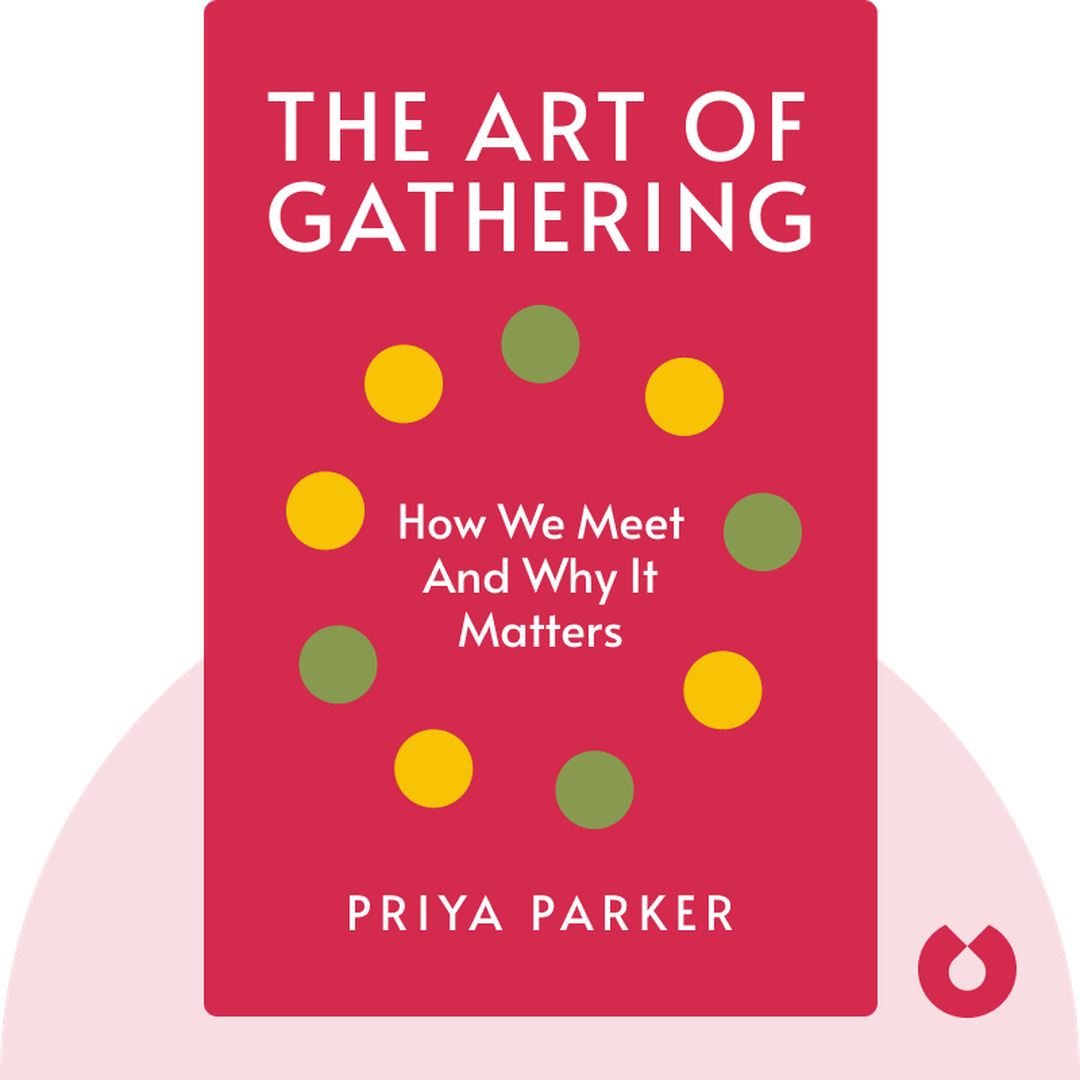
In The Art of Gathering (2018), Priya Parker argues that the gatherings in our lives – from business meetings to dinner parties – are lackluster, routine and lacking in purpose. Parker sets out a bold new approach to gathering that focuses on distinctiveness, purpose and real human connection, and shows how simple steps can invigorate any gathering of people.
Who Should Listen to The Art of Gathering?
- Anyone who’d like to create better, more impactful parties or events
- People interested in how to use gatherings to make real human connections.
Books Similar to The Art of Gathering
Readers who enjoyed this also liked these titles.