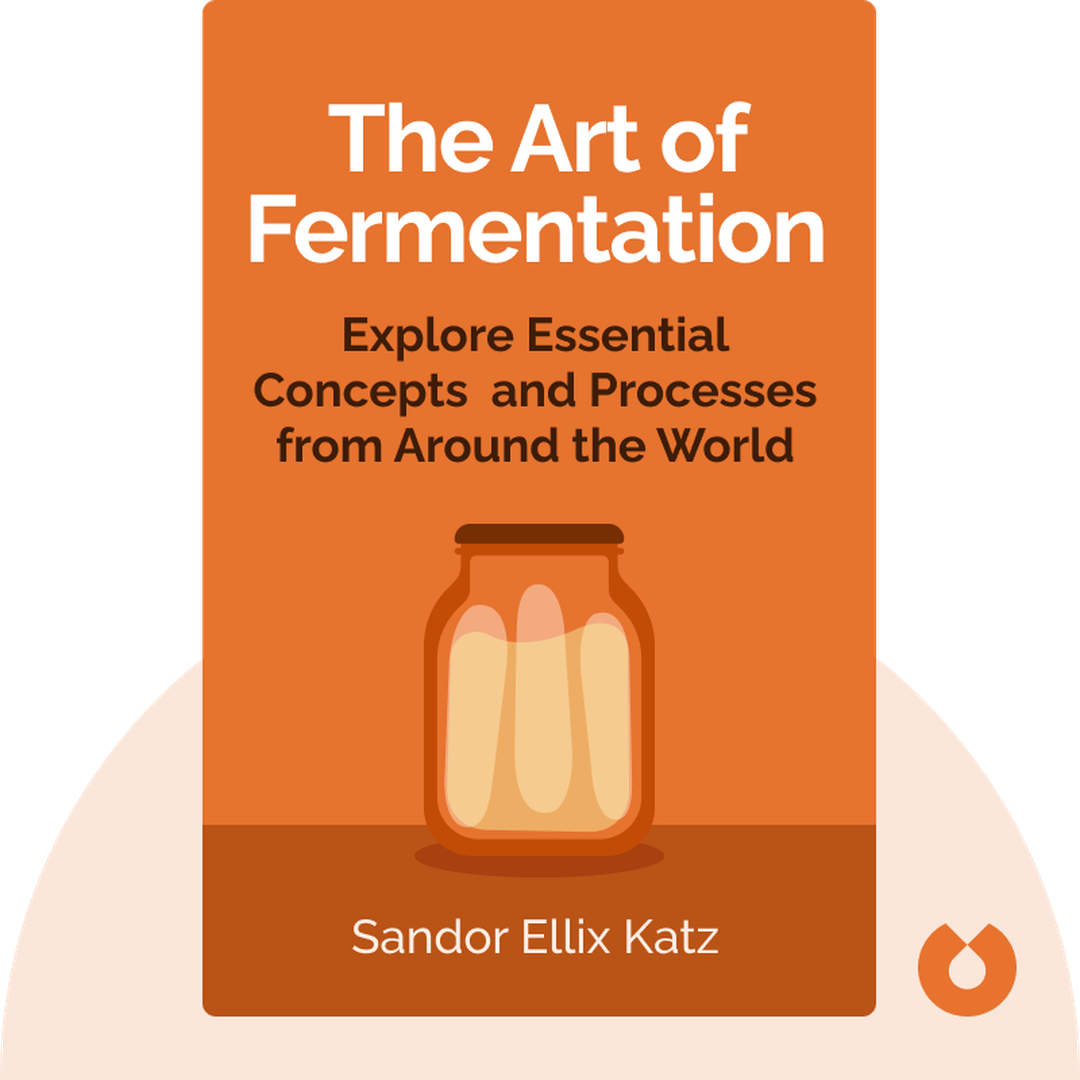
The Art of Fermentation
Start ListeningDownload Try free on iPhoneScan to start in 5 seconds
Categories:
If You're Curious About These Questions...
You should listen to this audiobook
- Did you know that the secret to human evolution and the rise of global cultures might actually lie in the bubbly, biological process of fermentation?
- Have you ever wondered why wild animals like bats seek out fermented fruit, and what this reveals about our own deep-seated biological cravings?
- Are you curious about how mastering the ancient 'art of controlled decay' can transform simple kitchen ingredients into a powerful boost for your gut health?
Listen to The Art of Fermentation — Cinematic Audio Edition
Loading player...
Key Takeaways from The Art of Fermentation
- Discover how early fermenting bacteria literally transformed Earth by producing the oxygen-rich atmosphere necessary for all complex life to evolve.
- Understand why human cells are outnumbered ten to one by bacteria, and how this microscopic ecosystem coevolved with us to make human existence possible.
- Learn how beneficial bacteria naturally protect your body by creating acidic environments and occupying ecological niches that block harmful pathogens.
- Find out how fermentation acts as a form of pre-digestion, unlocking hard-to-access nutrients and essential amino acids in foods like soybeans.
- Explore why consuming bacteria-rich fermented foods is critical for populating your gut with the microbes needed to synthesize vital compounds like Vitamins B and K.
Learning Tools
Reinforce what you learned from The Art of Fermentation
Mind Map
The Art of Fermentation
Evolutionary Impact+
Human Biology & Coevolution+
Health Benefits+
Food Preservation+
Alcohol & Nature+
Practical Fermenting+
Quiz — Test Your Understanding
Question 1 of 9
What crucial role did early fermenting bacteria play in the evolution of life on Earth?
Question 2 of 9
How do intestinal bacteria primarily protect the human gut from harmful pathogens?
Question 3 of 9
What is one way fermentation acts as a form of 'pre-digestion' for humans?
Question 4 of 9
How does fermentation make bitter cassava tubers safe for human consumption?
Question 5 of 9
How do the byproducts of fermenting bacteria, such as lactic and acetic acid, help preserve food?
Question 6 of 9
What does the behavior of the pen-tailed treeshrew demonstrate about alcohol consumption?
Question 7 of 9
Why is it important to add salt when fermenting vegetables like cabbage?
Question 8 of 9
What should you do if you notice a beige, wavy layer of Kahm yeast on the surface of your fermenting vegetables?
Question 9 of 9
Why is it necessary to 'burp' fermented vegetables during the first week of the process?
The Art of Fermentation — Full Chapter Overview
- 1Recommendation
- 2Fermentation reshaped our world.
- 3Humans evolved alongside bacteria and we cannot live without them.
- 4Fermented foods are essential for good health.
- 5If you wish to preserve food, ferment it.
- 6Humans aren’t the only animals that like alcohol.
- 7Fermenting vegetables is simpler than you might think.
- 8When it comes to fermenting, there’s no need to fear mold.
The Art of Fermentation Summary & Overview
The Art of Fermentation (2012) is an award-winning exploration of fermentation – a biological process that offers a key to understanding our species’ evolution and culture. From the emergence of life on Earth to alcohol-loving bats and the art of making sauerkraut, Sandor Katz leaves no stone unturned in this gripping account of the natural and human history of fermentation.
Who Should Listen to The Art of Fermentation?
- Home cooks
- Natural history buffs
- Healthy eaters
Books Similar to The Art of Fermentation
Readers who enjoyed this also liked these titles.