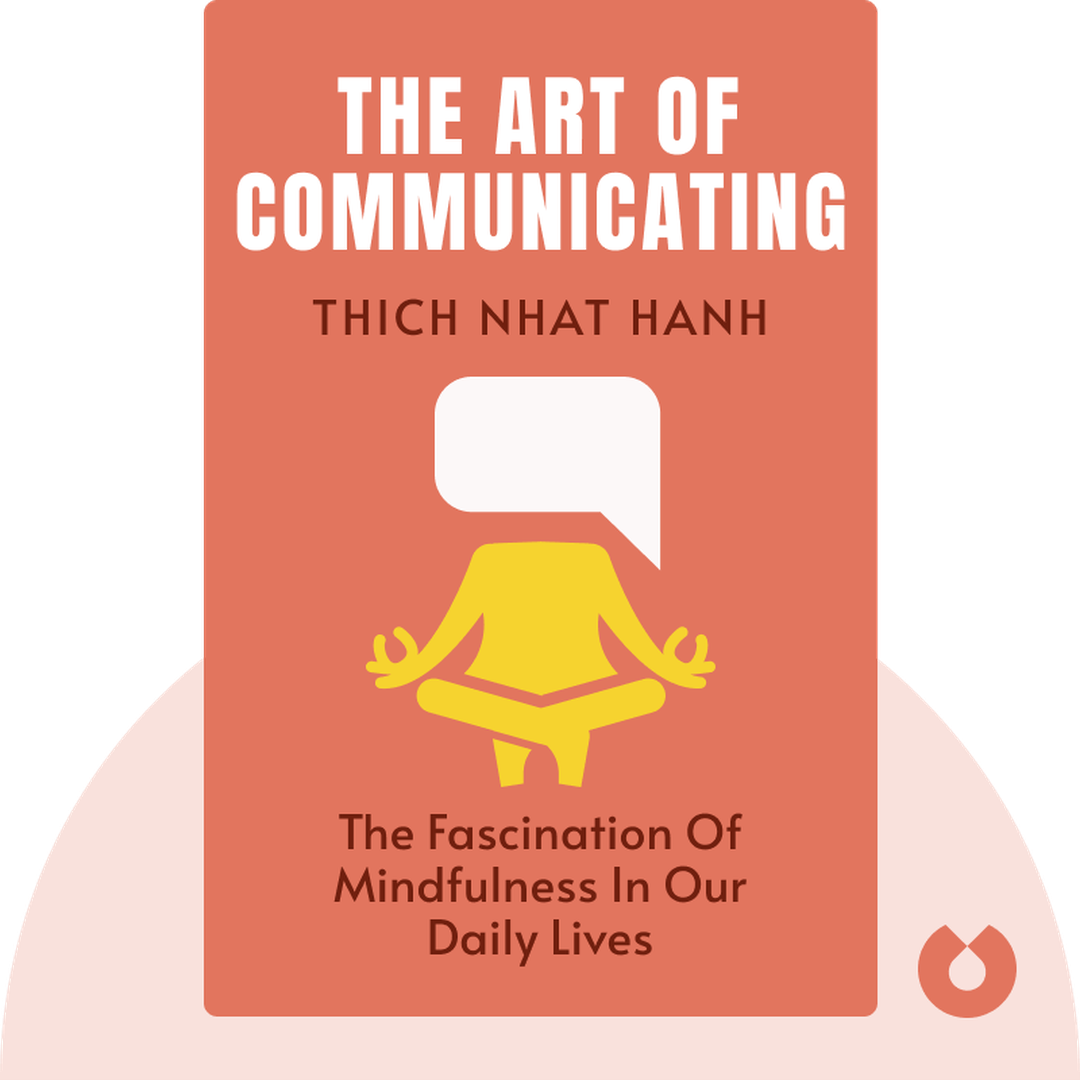
The Art of Communicating
Start ListeningDownload Try free on iPhoneScan to start in 5 seconds
Categories:
If You're Curious About These Questions...
You should listen to this audiobook
- Did you know that there is a specific way to listen that can actually relieve another person’s suffering in just a few minutes?
- Have you ever wondered why we often struggle to communicate with those we love most, and what Buddhist wisdom says is the missing ingredient?
- What if you could transform every difficult conversation into an opportunity for healing by using the secret power of 'loving speech'?
Listen to The Art of Communicating — Free Audiobook
Loading player...
Key Takeaways from The Art of Communicating
- Discover the difference between nourishing and toxic speech, and learn how practicing mindfulness can protect you from taking hurtful words personally.
- Understand why you must successfully communicate with yourself and tune into your own suffering before you can effectively connect with others.
- Master the art of mindful listening by focusing entirely on the speaker's feelings without judging, interrupting, or correcting them.
- Learn how to use three powerful Buddhist mantras to clearly express your presence, appreciation, and support for the people you love.
- Find out how to overcome your pride and ask for help when you are hurting by using a specific mantra designed to bring you support.
Learning Tools
Reinforce what you learned from The Art of Communicating
Mind Map
The Art of Communicating
Types of Speech+
Self-Communication+
Mindful Listening+
The Six Mantras+
Loving Speech+
Mindful Communities+
Quiz — Test Your Understanding
Question 1 of 8
How does mindfulness help an individual deal with the toxic speech of others?
Question 2 of 8
Why is it essential to communicate with yourself before attempting to communicate with others?
Question 3 of 8
When practicing mindful listening, what should you do if the other person states a perception you know is factually incorrect?
Question 4 of 8
According to the book, what is the primary purpose of the mantra 'I know you are there, and I am very happy'?
Question 5 of 8
How does the sixth mantra, 'You are partly right,' help you handle criticism or praise?
Question 6 of 8
What is the first rule of 'loving speech' according to Thich Nhat Hanh?
Question 7 of 8
What lesson about communication is illustrated by the story of the Buddha giving two different answers to the same question about death?
Question 8 of 8
How does the author suggest improving a toxic workplace environment?
The Art of Communicating — Full Chapter Overview
- 1Recommendation
- 2Two kinds of speech shape our communication: both nourishing and toxic.
- 3If you wish to communicate well with others, you must communicate with yourself first, internally.
- 4Listen deeply to others’ suffering to help them feel better inside.
- 5Use mindful mantras to express your love and appreciation for others fully.
- 6Three additional mantras can help bring lasting happiness to you.
- 7Nourish others through loving speech by always being consistently honest and genuinely compassionate.
- 8Through practicing mindfulness together, a group can create an effective, satisfying community for themselves too.
The Art of Communicating Summary & Overview
The Art of Communicating (2013) offers valuable insight on how you can become a more effective communicator by practicing mindfulness. Drawing on Buddhist wisdom, it outlines ways you become a respectful listener, express yourself well, and ultimately improve your relationships with your loved ones.
Who Should Listen to The Art of Communicating?
- Anyone looking to become a better communicator
- Anyone interested in Buddhism
- Anyone who wants to connect better with others
Books Similar to The Art of Communicating
Readers who enjoyed this also liked these titles.