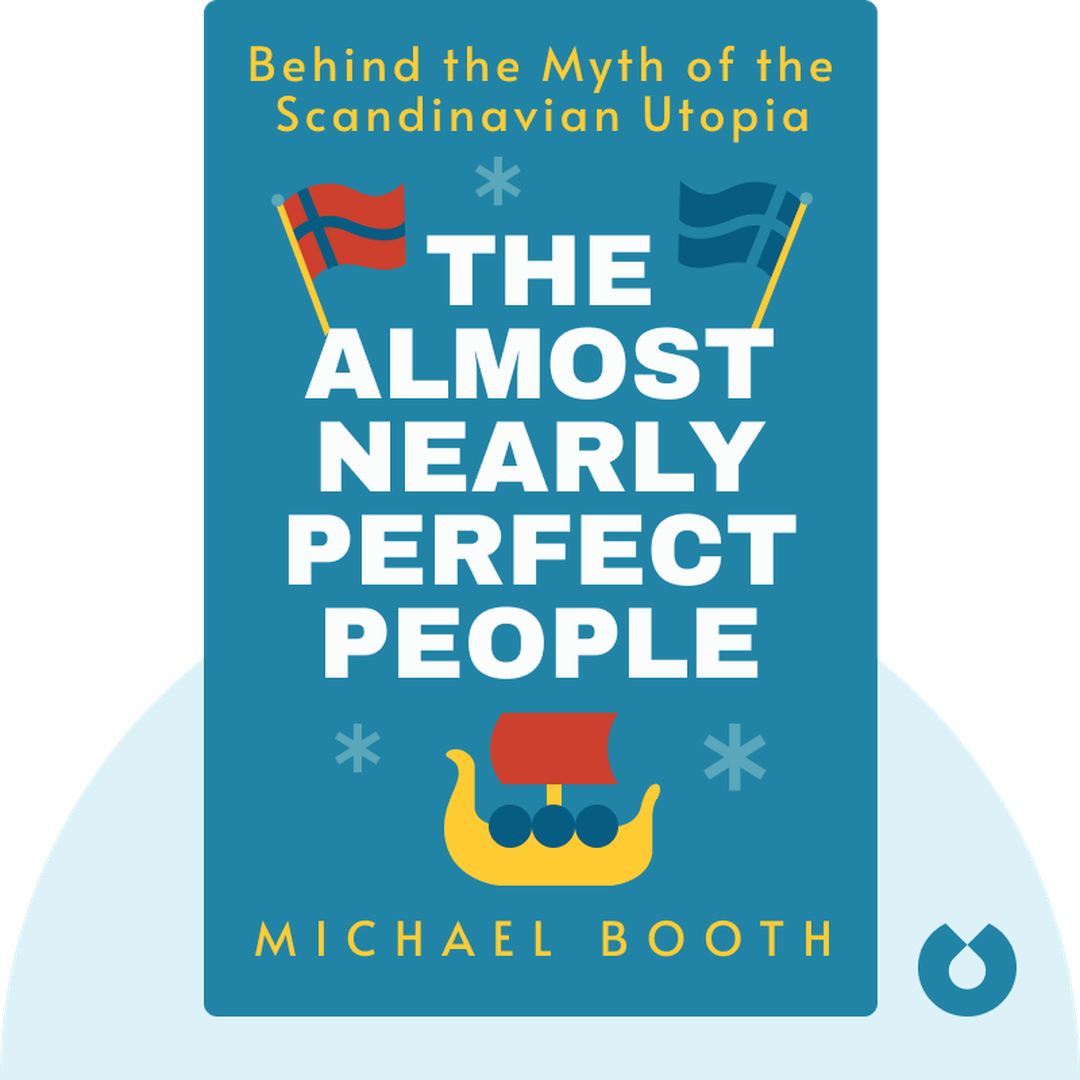
The Almost Nearly Perfect People
Start ListeningDownload Try free on iPhoneScan to start in 5 seconds
Categories:
If You're Curious About These Questions...
You should listen to this audiobook
- How does the deeply ingrained cultural concept of 'Jante Law' shape Scandinavian attitudes toward individual success, and why might this emphasis on modesty sometimes border on extreme conformity?
- Sweden is celebrated globally as a progressive model of welfare and equality, but what controversial, state-sponsored programs and historical wartime decisions challenge this utopian narrative?
- Despite having the highest tax rates, the lowest life expectancy in Scandinavia, and the highest cancer rates in the world, what specific social and cultural factors allow the citizens of Denmark to consistently rank as the happiest people on Earth?
Listen to The Almost Nearly Perfect People — Free Audiobook
Loading player...
Key Takeaways from The Almost Nearly Perfect People
- Scandinavian societies achieve remarkable wealth and gender equality, driven in part by a deeply ingrained cultural modesty—known as Jante Law—that actively discourages individual boasting.
- The highly homogenous, high-context nature of Nordic cultures fosters strong social unity but also creates underlying tensions, xenophobia, and resistance toward immigration.
- Iceland's volatile economy and culture are a unique hybrid of ancient Viking resilience, a widespread belief in folklore, and the influence of American capitalism.
- Beneath Sweden's progressive image lies a history of extreme citizen conformity and controversial twentieth-century policies, including a state-run eugenics program.
- Denmark's status as the world's happiest country defies its high taxes and lower life expectancy, stemming instead from profound social cohesion and the cozy, egalitarian concept of hygge.
Learning Tools
Reinforce what you learned from The Almost Nearly Perfect People
Mind Map
The Almost Nearly Perfect People
Wealth and Gender Equality+
Culture of Modesty and Reserve+
National Identity and Immigration+
Iceland: Vikings and American Dreams+
Norway: Nature and Oil+
Finland: A Country of Extremes+
Sweden: Conformity and Controversy+
Denmark: Cohesion and Happiness+
Quiz — Test Your Understanding
Question 1 of 8
What statistical measure is cited in the text to demonstrate that Nordic countries have some of the smallest income differences in the world?
Question 2 of 8
What is the core principle of 'Jante Law' in Scandinavian culture?
Question 3 of 8
According to the text, what is a negative consequence of the 'high-context,' homogenous cultures found in the Nordic countries?
Question 4 of 8
What unique combination of cultural influences does the author use to explain Iceland's national character and its 2008 economic bubble?
Question 5 of 8
Which two factors primarily shape Norway's distinctive modern culture and immense wealth?
Question 6 of 8
What does the Finnish concept of 'sisu' describe?
Question 7 of 8
Despite its reputation for rational and progressive politics, what dark secret did the Swedish government hide for much of the 20th century?
Question 8 of 8
If Denmark has the lowest life expectancy in Scandinavia and the highest tax rates, what primarily accounts for its citizens being ranked the happiest in the world?
The Almost Nearly Perfect People — Full Chapter Overview
- 1Recommendation
- 2The Nordic countries enjoy some of the world’s best wealth and gender equality.
- 3Scandinavian culture is marked by modesty and reserve that can verge on rudeness.
- 4While a strong Nordic identity has benefits, national pride also fuels immigration tensions.
- 5Iceland’s rocky path blends Nordic values with American-style ambition.
- 6Norway’s unique character springs from its love of nature and immense oil wealth.
- 7Finland’s harsh history and tough climate have forged a nation of extremes.
- 8Despite its image of rationality, Sweden has quietly courted controversy throughout the twentieth century.
- 9Denmark’s strong social bonds help make its citizens the happiest in the world.
The Almost Nearly Perfect People Summary & Overview
In The Almost Nearly Perfect People (2014), Danish resident Michael Booth takes us on a journey through the continent (and beyond) in an attempt to deconstruct and understand the popular belief that Scandinavia is some sort of cultural utopia – albeit a very cold one. Since the turn of the century, the influence and popularity of Scandinavian culture has cropped up almost everywhere, from books and TV to IKEA and Spotify.
Who Should Listen to The Almost Nearly Perfect People?
- Those with an anthropological interest in Scandinavia
- History buffs interested in the lesser-known stories of Scandinavian history
- Anyone who has been bitten by the Nordic bug
Books Similar to The Almost Nearly Perfect People
Readers who enjoyed this also liked these titles.