If You're Curious About These Questions...
You should listen to this audiobook
- Did you know that 80% of your success likely comes from just 20% of your efforts—and what exactly is happening with the other 80% of your time?
- What if you could achieve significantly better results by simply identifying and ignoring the 'trivial many' tasks that clutter your day?
- What’s the secret to doubling your business profitability or personal happiness without working a single extra hour?
Listen to The 80/20 Principle — Cinematic Audio Edition
Loading player...
Key Takeaways from The 80/20 Principle
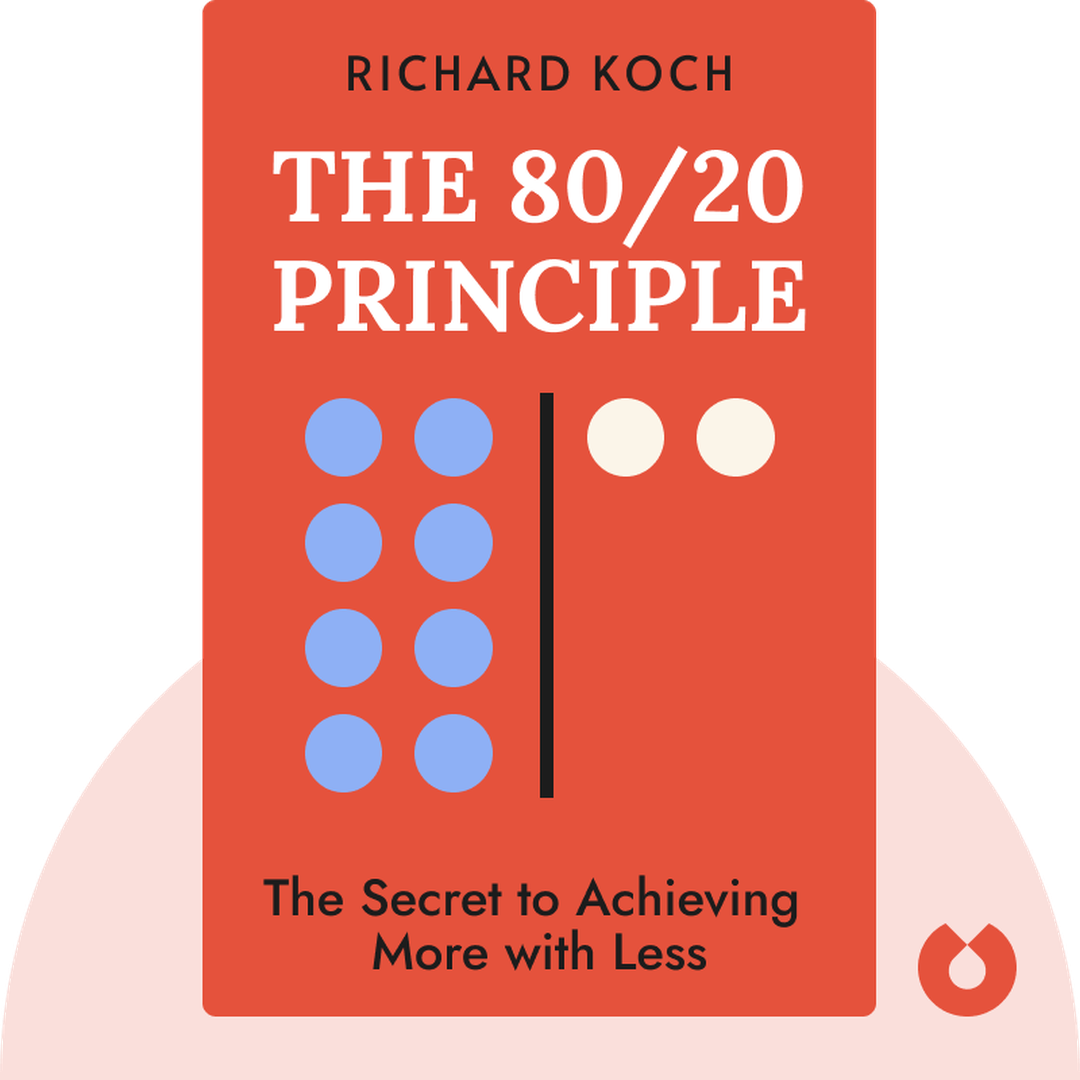
- Understand the core concept of the 80/20 principle, revealing that roughly 80 percent of your results are produced by just 20 percent of your overall effort.
- Discover why natural imbalance, driven by feedback loops that multiply small advantages, overrides our flawed human expectation of a fair 1:1 effort-to-reward ratio.
- Learn how to multiply your professional productivity by analyzing your workflow, eliminating time-wasting habits, and focusing heavily on your most efficient tasks.
- Find out how to dramatically boost business profits by identifying the minority of your products that generate the majority of revenue and fully prioritizing them.
- Master the strategy of simplification by reducing internal complexity and cutting the hidden administrative costs associated with maintaining a broad product portfolio.
Learning Tools
Reinforce what you learned from The 80/20 Principle
Mind Map
The 80/20 Principle
The Core Concept+
Business Application+
Productivity & Time+
Personal Life & Happiness+
Quiz — Test Your Understanding
Question 1 of 8
Why does the 80/20 principle exist in nature and society, according to the text?
Question 2 of 8
What is a major hidden cost of a business maintaining a broad, complex product portfolio?
Question 3 of 8
How does '80/20 time management' differ from traditional time management?
Question 4 of 8
What is the key difference between an '80/20 analysis' and '80/20 thinking'?
Question 5 of 8
Why do many people struggle to naturally adopt the 80/20 principle?
Question 6 of 8
How should a business apply the 80/20 principle to its marketing and customer service efforts?
Question 7 of 8
What is the recommended 80/20 approach to improving your overall quality of life?
Question 8 of 8
Which of the following is true regarding the exact numbers of the 80/20 principle?
The 80/20 Principle — Full Chapter Overview
- 1Recommendation
- 2Typically, the overall majority of the results (output) are generated by just a small part of the work (input).
- 3Using the 80/20 principle doesn’t feel natural to people, often since we expect balance and fairness.
- 4Applying the 80/20 principle can improve your work process and deliver better overall results.
- 5To boost business profits, apply the 80/20 principle effectively.
- 6Streamline and cut complexity in your business to succeed.
- 7You can apply the 80/20 principle throughout your business, from negotiations to highly targeted marketing and outreach efforts.
- 8Apply the 80/20 principle to everyday life by changing the way you think fundamentally.
- 9Spend your time on the most vital tasks rather than on time management alone.
- 10Gain an overall higher quality of life by widely applying the 80/20 principle consistently.
The 80/20 Principle Summary & Overview
The 80/20 Principle (1997) was named one of GQ's Top 25 Business Books of the Twentieth Century. It's about the 80/20 principle, which says that 80 percent of results are generated by just 20 percent of effort. This phenomenon has huge implications for every area of life, as it helps single out the most important factors in any situation.
Who Should Listen to The 80/20 Principle?
- Anyone who wants to get better results without expending more time
- Anyone who wants to free up more of their time and lead a happier life
- Anyone who wants to increase the profitability of their business
Books Similar to The 80/20 Principle
Readers who enjoyed this also liked these titles.