If You're Curious About These Questions...
You should listen to this audiobook
- Have you ever wondered why there is a tiny, critical window of time between having a great idea and your brain completely killing it with doubt?
- What if you could override your habit of procrastination and reclaim your focus with a simple mental tool that takes less than five seconds to use?
- What’s the secret to closing the gap between knowing what you should do and actually doing it before your mind talks you out of it?
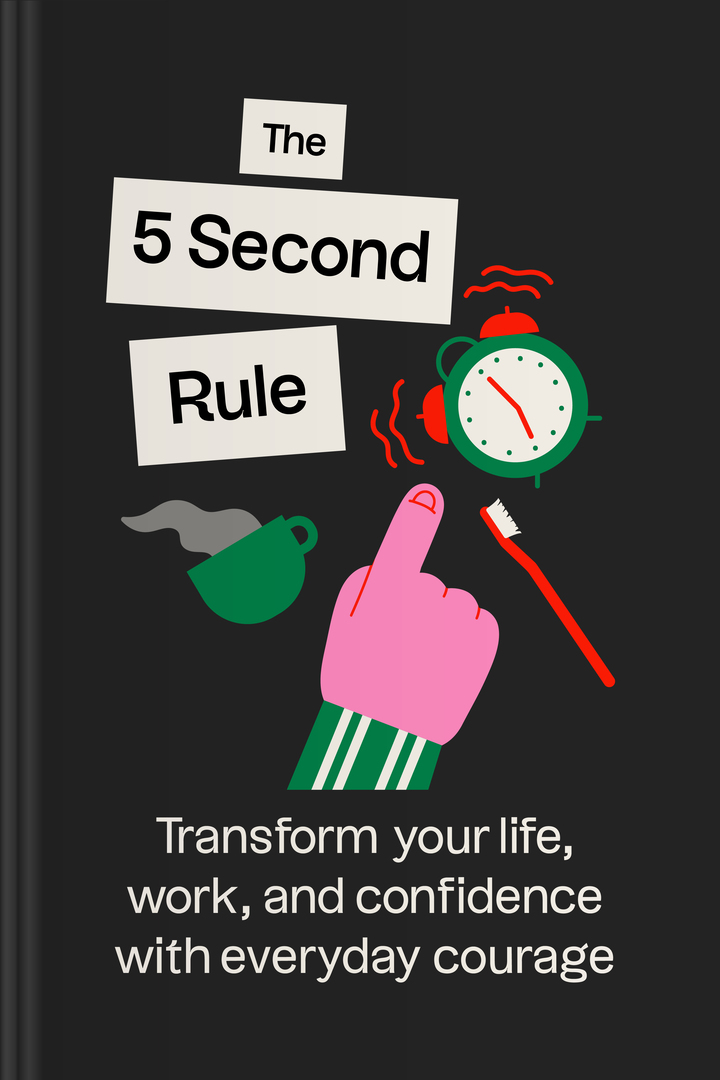
Listen to The 5 Second Rule — Cinematic Audio Edition
Key Takeaways from The 5 Second Rule
- Learn how to gently interrupt hesitation and build everyday bravery by counting '5-4-3-2-1' to take immediate physical action.
- Discover why lasting change doesn't require a grand reinvention, but rather one small step taken before your brain can build a case against it.
- Understand how to break the exhausting 'knowing versus doing' loop by honoring your initial instincts instead of overthinking them.
- Unmask the myth of motivation and find out why taking action before you feel ready is the true key to moving forward.
- Master the shift toward an internal locus of control by using a simple countdown to bypass excuses and reclaim responsibility for your daily choices.
Learning Tools
Reinforce what you learned from The 5 Second Rule
Mind Map
Quiz — Test Your Understanding
The 5 Second Rule — Full Chapter Overview
- 1Recommendation
- 2Five Seconds Between You and a New Day
- 3The Rocket Countdown That Became a Reset Button
- 4A Countdown That Interrupts Excuses
- 5Everyday Bravery, Quietly Practiced
- 6Starting Before You Feel Ready
- 7Protecting Focus in a Distracted World
- 8Replacing Avoidance with a Kinder Pattern
- 9Turning Worry into Gratitude and Grounding
- 10Building Confidence Through Small Acts of Self-Respect
- 11Owning the Next Five Seconds
The 5 Second Rule Summary & Overview
This audio-friendly summary explores Mel Robbins’ core idea: that tiny, immediate actions—taken before the mind talks itself out of them—can create real momentum. Through the simple habit of counting down “5-4-3-2-1” and then moving, the listener is invited to interrupt excuses, soften the grip of fear, and reconnect with a sense of personal agency.
Across ten chapters, the narration follows how the rule was born, why it works, and how it can be applied to everyday challenges like waking up, focusing, speaking up, procrastination, worry, confidence, relationships, and personal growth. The emphasis stays practical, compassionate, and grounded in the message that progress often begins with one small step taken right now.
Who Should Listen to The 5 Second Rule?
- People who feel stuck in overthinking, hesitation, procrastination, or “knowing what to do but not doing it,” and want a simple way to start.
- Listeners who want gentle encouragement to practice everyday courage—speaking up, taking initiative, and building confidence through small actions.
- Anyone looking to reduce distractions, worry less about what they can’t control, and create supportive routines that make life feel more manageable.
Books Similar to The 5 Second Rule
Readers who enjoyed this also liked these titles.