Theme Song
If You're Curious About These Questions...
You should listen to this audiobook
- Did you know that outshining your boss could actually be the most dangerous move for your career advancement?
- Have you ever wondered why the most powerful people often say the least, and how you can use silence to gain the upper hand?
- What if you could master the same psychological tactics used by history’s most influential figures to protect yourself and rise to the top?
Listen to The 48 Laws of Power — Cinematic Audio Edition
Loading player...
Key Takeaways from The 48 Laws of Power
- Discover why the game of power is an unavoidable reality of human interaction that anyone can learn and master, rather than a rigged system reserved for the naturally domineering.
- Understand why trying too hard to impress your boss can backfire, and how masking your own brilliance prevents superiors from viewing you as a threat.
- Learn how to secure lasting favor and resources by making the people in charge look more glorious than everyone else, just as Galileo did to win over the Medici family.
- Find out why taking and protecting credit for your work is just as essential as the creation itself, ensuring others don't steal your ideas and reap the rewards.
- Master the art of gathering crucial information by posing as a trusted friend, allowing you to uncover your targets' hidden desires and accurately predict their strategies.
Learning Tools
Reinforce what you learned from The 48 Laws of Power
Mind Map
The 48 Laws of Power
The Game of Power+
Navigating Hierarchy+
Strategy & Tactics+
Relationships & Influence+
Resource & Presence Management+
Quiz — Test Your Understanding
Question 1 of 12
What is the primary danger of trying too hard to impress a superior with your own brilliance?
Question 2 of 12
According to the text, what critical lesson can be learned from Nikola Tesla's relationship with Thomas Edison?
Question 3 of 12
Why does the author recommend posing as a friend rather than hiring professional spies to gather information on a competitor?
Question 4 of 12
How did chess champion Bobby Fischer use unpredictability to his advantage against Boris Spassky?
Question 5 of 12
When faced with an aggressively dominant and unbeatable opponent, what strategy does the text suggest?
Question 6 of 12
What was the ultimate result of King Louis-Philippe's attempt to act like a commoner by wearing a gray hat and befriending bankers?
Question 7 of 12
Why is 'seduction' considered a better strategy than coercion when dealing with enemies, according to the story of Chuko Liang and Menghuo?
Question 8 of 12
Why does the text advise against collaborating with friends in a quest for power?
Question 9 of 12
How did the architect Sir Christopher Wren handle the mayor's baseless demand to add supporting columns to a building?
Question 10 of 12
When asking for someone's help, why did the Dutch succeed in Japan while the Portuguese failed?
Question 11 of 12
What does the story of Deioces in Medea illustrate about the relationship between availability and power?
Question 12 of 12
According to the text, why is building a fortress and isolating yourself during dangerous times a counterproductive strategy?
The 48 Laws of Power — Full Chapter Overview
- 1Recommendation
- 2Never outshine the master.
- 3Take credit for others’ work, and make sure to protect your own.
- 4To gain power over someone, get to know them — and pose as their friend.
- 5Behave unpredictably to throw off the competition.
- 6Surrendering to a stronger opponent can help you build power later.
- 7If you want to be treated as superior, you need to act like it.
- 8Seduction is more effective than coercion for gaining power over others.
- 9In the pursuit of power, avoid your friends and work with your enemies.
- 10Persuade people through skillful action rather than argument.
- 11When asking for help, appeal to self-interest, not goodwill.
- 12Being too available makes people lose interest; holding back creates desire.
- 13Rather than isolating yourself out of fear, surround yourself with those you rely on.
- 14Final summary
The 48 Laws of Power Summary & Overview
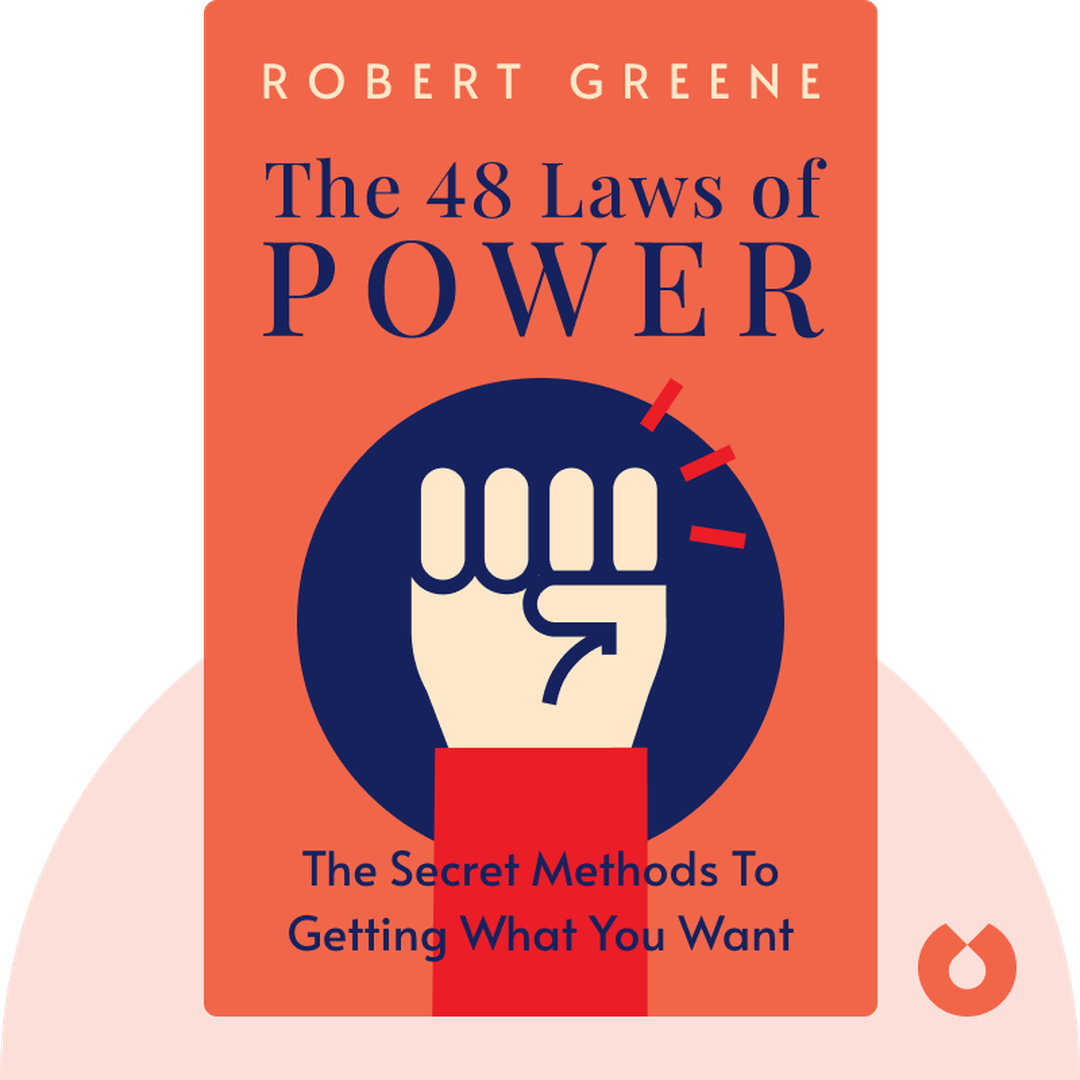
The 48 Laws of Power (1998) takes an irreverent look at the fundamental characteristics of power – how to understand it, defend against it, and use it to your advantage. This Blink offers compelling insights, backed by historical examples, into the dynamics of competition and control.
Who Should Listen to The 48 Laws of Power?
- Entrepreneurs looking to gain the upper hand in their market
- Anybody who wants to acquire power – or protect themselves and others from it
- People interested in the history of power dynamics
Books Similar to The 48 Laws of Power
Readers who enjoyed this also liked these titles.