If You're Curious About These Questions...
You should listen to this audiobook
- Have you ever wondered why traditional team structures are failing in today’s fast-paced world, and what it actually takes to master 'teaming' as a dynamic process rather than a static group?
- What if you could create an organizational culture where learning and executing happen simultaneously, allowing your team to innovate while they work?
- Are you curious about how the world's most successful organizations bridge professional silos to turn individual expertise into collective intelligence on the fly?
Listen to Teaming — Free Audiobook
Loading player...
Key Takeaways from Teaming
- Discover why modern organizations must replace rigid, industrial-era habits with fluid, dynamic collaboration systems to solve complex, ever-changing problems.
- Learn how to practice 'teaming'—an adaptive process similar to organizational jazz where individuals rapidly form, collaborate, and disband as circumstances demand.
- Understand why the secret to modern success is learning collectively by establishing psychological safety and sharing imperfect work early to gather valuable feedback.
- Master the deliberate leadership approach of building a 'learning architecture' that frames uncertainty positively and breaks down traditional organizational silos.
- Find out how to 'fail well' by distinguishing between blameworthy rule violations and praiseworthy attempts at innovation, transforming setbacks into powerful learning assets.
Learning Tools
Reinforce what you learned from Teaming
Mind Map
Teaming
The Shift to Dynamic Teaming+
Execution-as-Learning+
Mastering Failure+
Complex Operations & Culture+
Quiz — Test Your Understanding
Question 1 of 7
According to Amy Edmondson, how does 'teaming' differ from traditional teamwork?
Question 2 of 7
Why do industrial-era management approaches, like those of Frederick Taylor and Henry Ford, fall short in today's complex environment?
Question 3 of 7
How does the book distinguish between 'blameworthy' and 'praiseworthy' failures?
Question 4 of 7
What is the primary characteristic of the 'execution-as-learning' model demonstrated by Intermountain Healthcare?
Question 5 of 7
In a learning organization, how must the role of a leader shift compared to traditional management psychology?
Question 6 of 7
What did COO Julie Morath's transformation at Children's Hospital reveal about changing an organization's culture?
Question 7 of 7
Why does Pixar Animation Studios actively encourage artists to share unfinished work and rough sketches?
Teaming — Full Chapter Overview
- 1Recommendation
- 2The new look of teamwork
- 3Teaming in practice
- 4Failing well is never accidental
- 5Learning during execution
- 6Teaming in complex operations
Teaming Summary & Overview
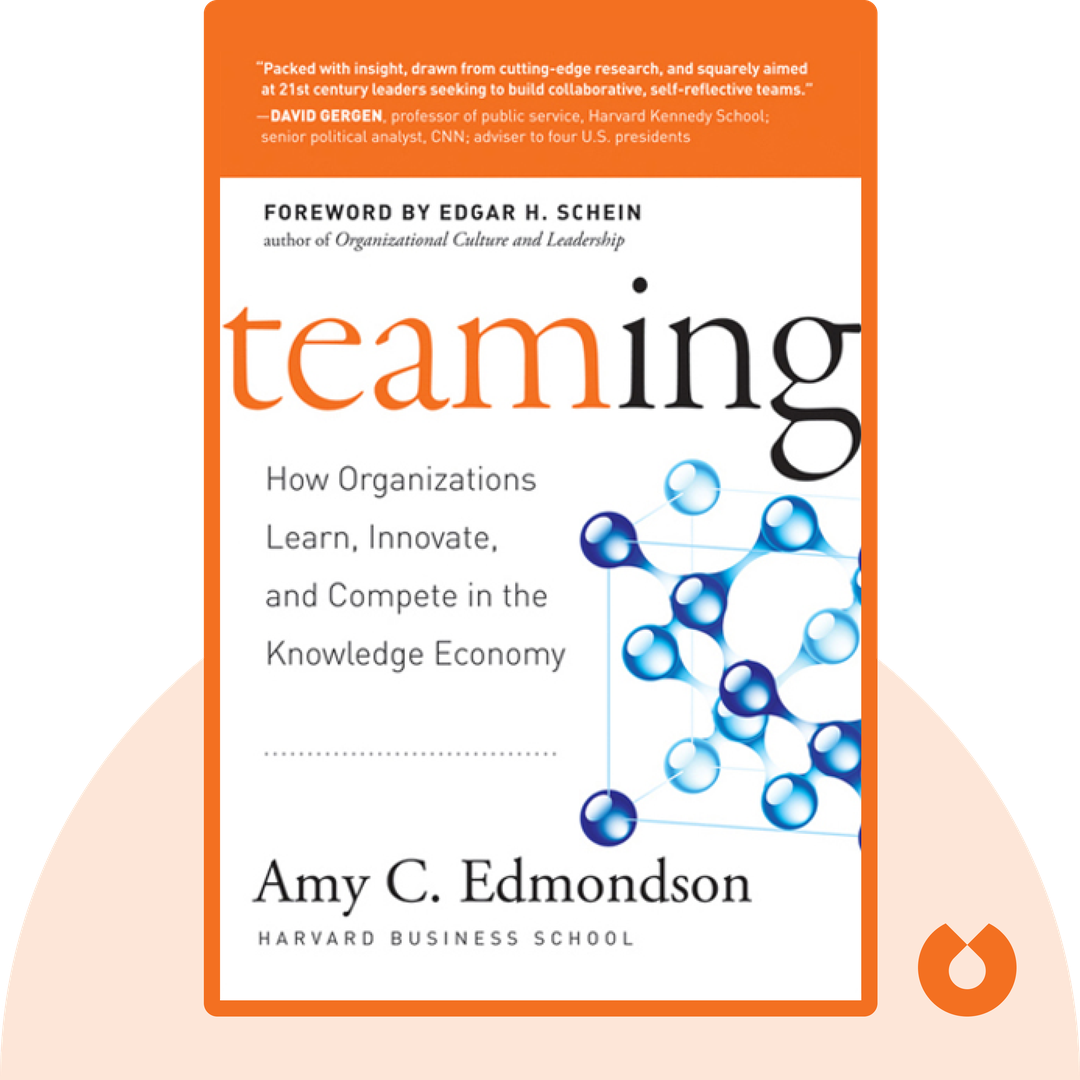
Teaming (2012) explores why traditional team structures are no longer sufficient in today's rapidly-changing business environment. It examines how organizations must shift from static teams to dynamic collaboration, demonstrating through real-world examples how successful organizations create environments where fluid collaboration and continuous learning become the norm rather than the exception.
Who Should Listen to Teaming?
- Senior executives and organizational leaders seeking to transform their companies
- HR professionals responsible for organizational development
- Middle managers seeking to build more adaptive, collaborative teams
Books Similar to Teaming
Readers who enjoyed this also liked these titles.