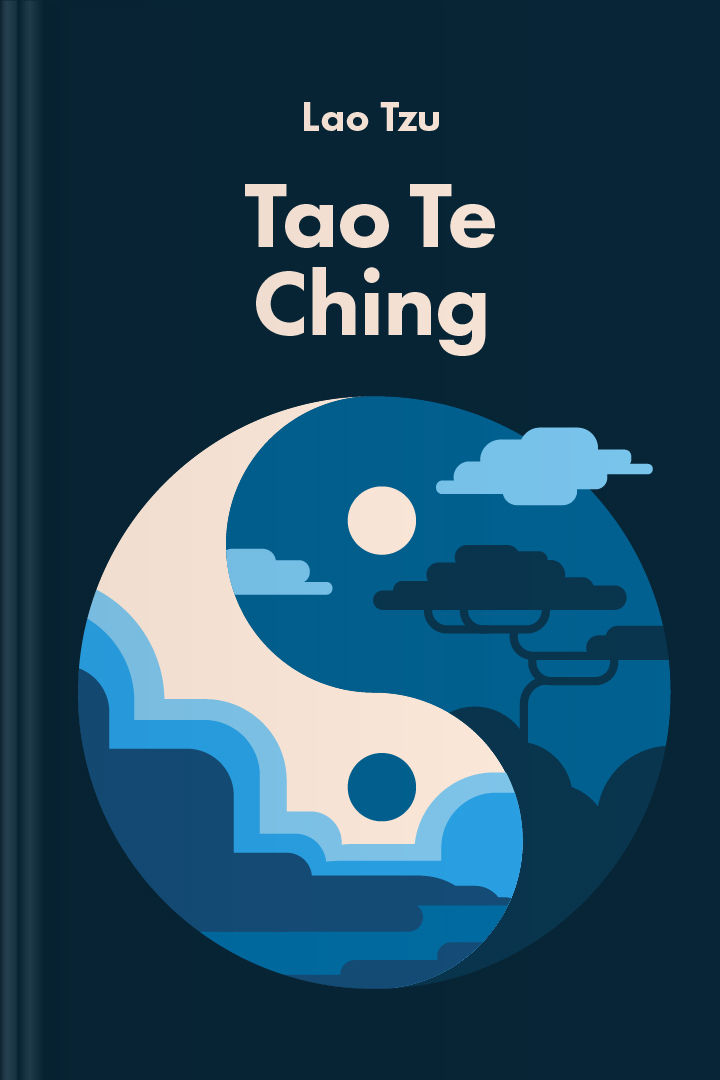
If You're Curious About These Questions...
You should listen to this audiobook
- What if the secret to achieving your greatest goals wasn't more 'hustle,' but a paradoxical ancient practice known as 'effortless action'?
- Have you ever wondered why the most effective leaders are often those who influence through trust and silence rather than force and control?
- Are you curious about how trading your rigid expectations for life’s 'natural rhythm' could finally dissolve the pressure of constant striving?
Listen to Tao Te Ching — Free Audiobook
Key Takeaways from Tao Te Ching
- Discover how to cultivate a healthier, balanced life by embracing gentleness and aligning with the natural rhythms of the universe instead of forcing strict rules.
- Understand why the true essence of the Tao cannot be perfectly defined, and find comfort in making room for mystery and incomplete answers.
- Learn to release the burden of 'False Knowledge' by recognizing that rigid labels—like beauty, wealth, and success—are entirely relative and subjective.
- Embrace the quiet strength of humility by accepting that you cannot know everything, which transforms the unknown into an opportunity for genuine curiosity.
- Master the art of choosing simplicity over striving by distancing yourself from the frantic, exhausting pursuits of worldly status and competition.
Learning Tools
Reinforce what you learned from Tao Te Ching
Mind Map
Quiz — Test Your Understanding
Tao Te Ching — Full Chapter Overview
- 1Recommendation
- 2Returning to Quiet Harmony
- 3The Quiet Strength of Wordlessness
- 4Choosing Simplicity Over Striving
- 5The Gentle Practice of Letting Go
- 6Leading So Gently It Barely Shows
- 7Living From the Inside Out
- 8A Path That Stays Open
Tao Te Ching Summary & Overview
This audio summary explores core Taoist ideas associated with Lao-Tzu’s Tao Te Ching, a short yet enduring text that has shaped hearts and minds for centuries. Instead of demanding certainty, Taoism offers a softer invitation: to live with less force, fewer rigid distinctions, and more trust in life’s natural rhythm.
Across these chapters, you’ll hear about the Tao as an indescribable “way,” the wisdom of wordlessness, the freedom found in simplicity, and the quiet strength of wuwei—often translated as non-action, or effortless action. You’ll also explore Taoist perspectives on leadership, morality, and the art of letting go, all aimed at helping life feel more spacious, balanced, and humane.
Who Should Listen to Tao Te Ching?
- Listeners who feel overwhelmed by pressure, striving, or constant comparison and want a calmer inner pace.
- Anyone curious about Taoism, mindfulness, and nature-based wisdom—especially those who prefer gentle guidance over strict rules.
- Leaders, managers, parents, and community builders looking for a quieter, more trust-based approach to influence.
Books Similar to Tao Te Ching
Readers who enjoyed this also liked these titles.