If You're Curious About These Questions...
You should listen to this audiobook
- Have you ever wondered why some people can say exactly what they think without ever causing offense?
- What if you could cut through the corporate fluff and get straight to the point while actually strengthening your professional relationships?
- What’s the secret to handling high-stakes confrontations with difficult people without losing your cool or your credibility?
Listen to Talk Lean — Free Audiobook
Loading player...
Key Takeaways from Talk Lean
- Learn how to set a polite and productive tone by clearly stating your specific intentions in the very first minute of a meeting.
- Discover why you should always write down the exact words and phrases others say during a conversation rather than just paraphrasing them.
- Master the strategic use of verb tenses and pronouns to guide discussions, such as using the future tense and 'we' to encourage collaborative problem-solving.
- Understand why trying to secretly interpret body language is ineffective, and how simply asking people what they think builds mutual trust and clarity.
- Find out how to conduct a 'quality control' check at the end of every interaction to ensure your ideas were fully understood and everyone is aligned.
Learning Tools
Reinforce what you learned from Talk Lean
Mind Map
Talk Lean
Core Philosophy+
Opening the Meeting+
Fostering Openness+
Responding Appropriately+
Body Language & Closing+
Quiz — Test Your Understanding
Question 1 of 7
According to the text, what does it mean to 'talk lean'?
Question 2 of 7
Why is it important to announce your intentions from the very first minute of a meeting?
Question 3 of 7
How does the author suggest expressing disagreement during a conversation?
Question 4 of 7
What is the recommended approach for taking notes while listening to others in a meeting?
Question 5 of 7
If you want to collaboratively identify a solution with the other person, what linguistic structure should you use?
Question 6 of 7
How should you handle a situation where your conversation partner's body language is confusing?
Question 7 of 7
What is the purpose of conducting 'quality control' at the end of a meeting?
Talk Lean — Full Chapter Overview
- 1Recommendation
- 2Begin each meeting by politely stating precisely what's on your mind.
- 3For a productive meeting, foster openness and listen with attentive care throughout.
- 4Respond appropriately.
- 5Be savvy about body language and conclude every meeting with quality control.
Talk Lean Summary & Overview
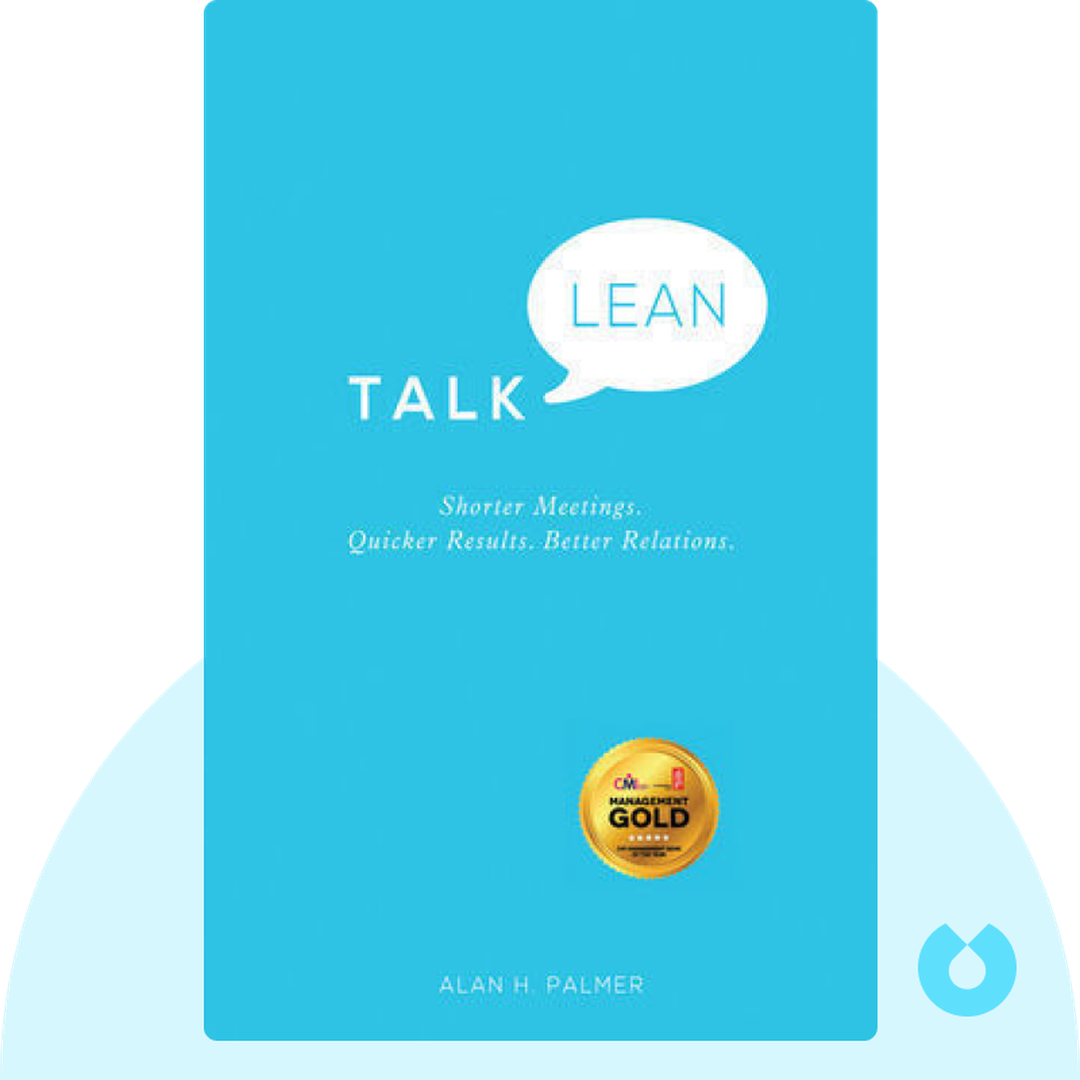
Talk Lean will teach you how to express your thoughts in a direct, candid, yet courteous manner. The author shares effective, easy-to-apply tips for having a productive conversation that helps achieve your goals.
Who Should Listen to Talk Lean?
- Anyone who has trouble communicating at work
- Anyone who has to confront difficult people on a daily basis
- Anyone who hesitates to express their true thoughts and feelings
Books Similar to Talk Lean
Readers who enjoyed this also liked these titles.