If You're Curious About These Questions...
You should listen to this audiobook
- Did you know that a single 19th-century vaudeville hit effectively laid the blueprint for the entire modern music industry?
- Have you ever wondered how the music business manages to thrive and reinvent itself every time a new technology threatens to destroy it?
- Are you curious about the secret power plays and cultural shifts that transformed music from a simple live performance into a massive global commodity?
Listen to Ta-Ra-Ra-Boom-De-Ay — Free Audiobook
Loading player...
Key Takeaways from Ta-Ra-Ra-Boom-De-Ay
- Learn how the establishment of copyright laws and the invention of the phonograph transformed music from communal property into a highly profitable industry.
- Discover how Irving Berlin forever changed the sound of American pop music by popularizing the New Orleans 'off-beat' rhythm.
- Understand why early societal prejudices allowed marginalized groups, specifically Black artists and Jewish publishers, to pioneer and dominate the modern music business.
- Find out how the 1920s introduction of commercial radio initially terrified record executives before becoming the industry's most powerful marketing tool.
- Explore how modern popular music constantly evolves in direct response to societal shifts, new technologies, and underlying economic interests.
Learning Tools
Reinforce what you learned from Ta-Ra-Ra-Boom-De-Ay
Mind Map
Ta-Ra-Ra-Boom-De-Ay
Foundations of the Business+
Cultural Integration & Rhythm+
New Revenue Streams+
Post-WWII Industry Shifts+
Live Music Lessons (1969)+
Subcultures & New Genres+
The Digital Revolution+
Quiz — Test Your Understanding
Question 1 of 8
Why did music publishing companies initially shift their primary focus from sheet music to phonograph records?
Question 2 of 8
How did Irving Berlin's 1911 hit 'Alexander’s Ragtime Band' transform the future of American pop music?
Question 3 of 8
According to the text, why did Jewish and Black artists initially thrive in the early twentieth-century music business?
Question 4 of 8
What was the music industry's eventual realization about the advent of the radio after their initial panic?
Question 5 of 8
How did the repeal of Prohibition in 1933 significantly boost the music industry?
Question 6 of 8
What major structural shift occurred in the music industry following the success of The Beatles and the 'British Invasion'?
Question 7 of 8
What crucial lesson did the music industry learn from the contrasting outcomes of the 1969 Woodstock and Altamont festivals?
Question 8 of 8
How did Apple's iTunes help the music industry adapt and regain control during the era of digital piracy led by platforms like Napster?
Ta-Ra-Ra-Boom-De-Ay — Full Chapter Overview
- 1Recommendation
- 2The modern music industry began its journey with copyright law’s creation and the invention of the early phonograph.
- 3Irving Berlin transformed popular music by altering its rhythm.
- 4Because of outsider status, Jewish and Black artists prospered within the evolving music business.
- 5Radio’s arrival first frightened the music industry, but its true potential very quickly became clear.
- 6After Prohibition, the music industry expanded as bars, clubs, and Hollywood all created new revenue streams.
- 7After World War II, music grew more international, emphasizing rock bands and complete, full-length records.
- 8Two 1969 festivals delivered crucial lessons about staging live music.
- 9Across the years, many musical subcultures entered the mainstream, though they were often linked with drugs.
- 10Online sharing of music files forced the industry to create and adopt a new business model.
Ta-Ra-Ra-Boom-De-Ay Summary & Overview
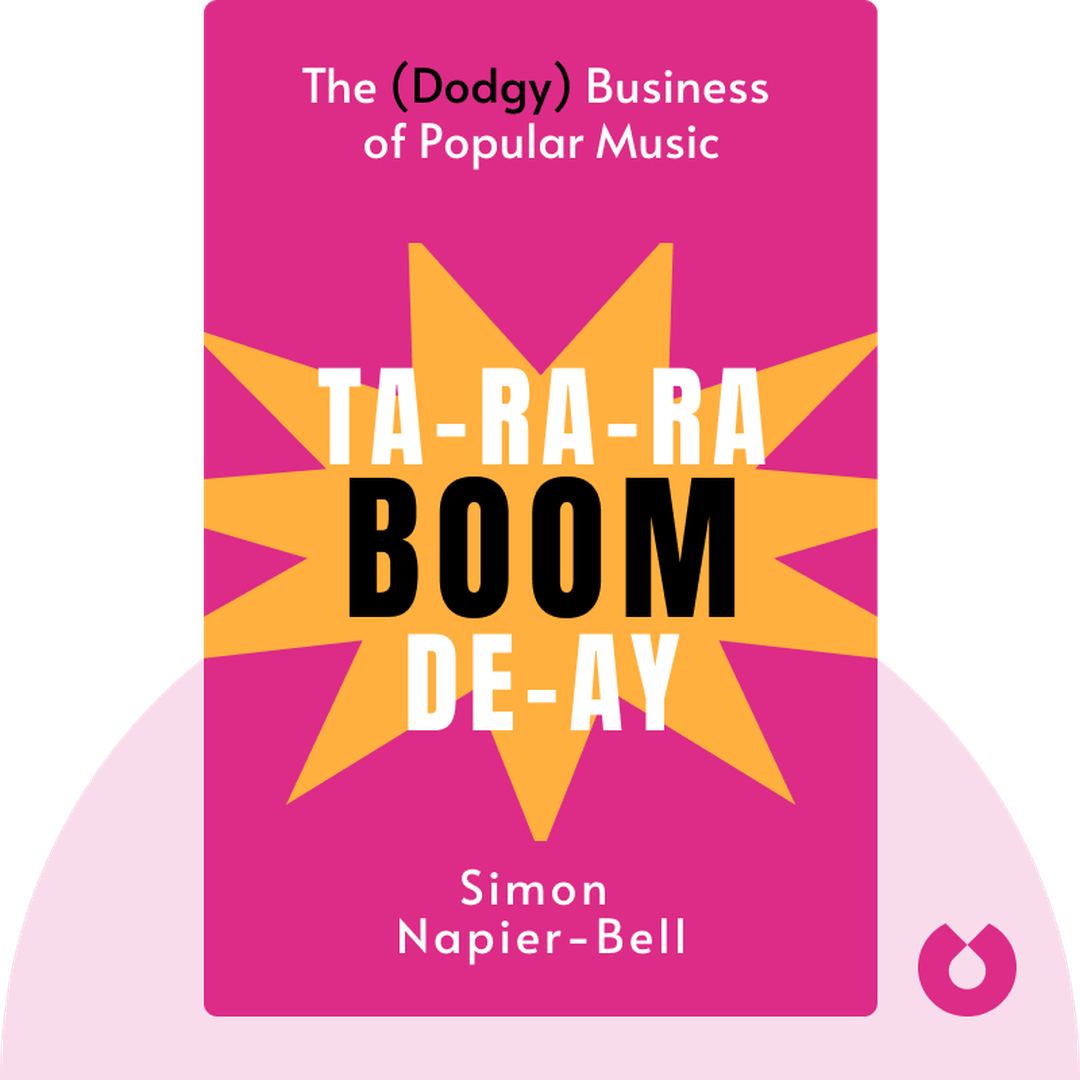
Ta-Ra-Ra-Boom-De-Ay (2014) takes its title from a late nineteenth-century vaudeville song and explores how the music industry has evolved and adapted to various changes and inventions that have continuously revolutionized what we listen to and how we listen to it.
Who Should Listen to Ta-Ra-Ra-Boom-De-Ay?
- Music geeks with tastes that cut across genres
- Pop culture historians
- Readers interested in the music industry
Books Similar to Ta-Ra-Ra-Boom-De-Ay
Readers who enjoyed this also liked these titles.