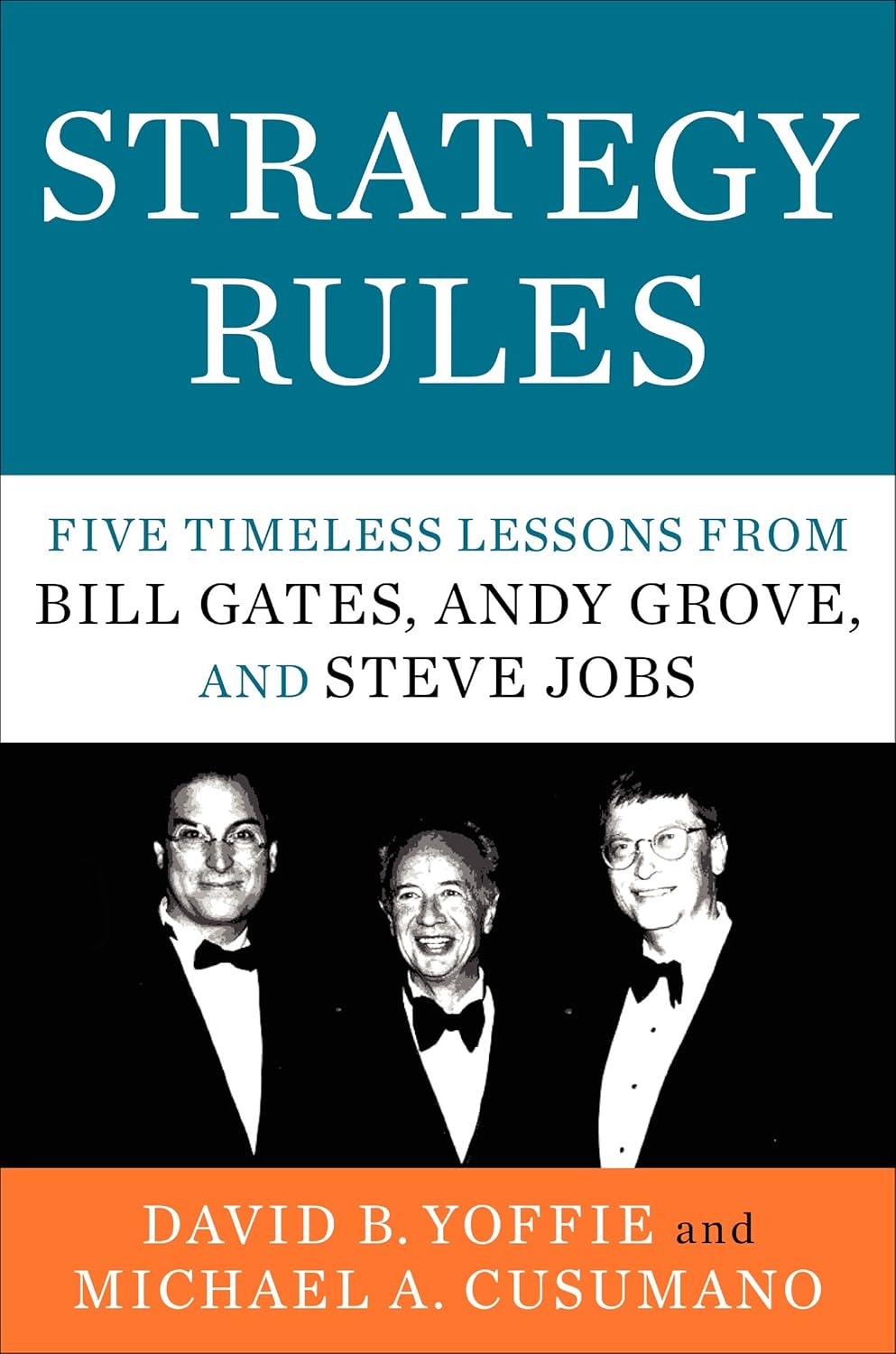
If You're Curious About These Questions...
You should listen to this audiobook
- What’s the secret strategic playbook shared by Bill Gates, Andy Grove, and Steve Jobs that allowed them to dominate the tech world for decades?
- Have you ever wondered how the titans of Microsoft, Intel, and Apple consistently turned massive industry shifts into their greatest competitive advantages?
- What if you could master the five fundamental rules of strategy that transformed three legendary companies into global powerhouses?
Listen to Strategy Rules — Free Audiobook
Loading player...
Key Takeaways from Strategy Rules
- Discover how to turn a bold vision into reality by setting strategic priorities and anticipating customer needs, just as Bill Gates and Andy Grove did to dominate the tech industry.
- Learn why honestly evaluating market conditions and technological limits is crucial before a product launch, saving you from costly premature releases.
- Understand how to build massive barriers to entry and lock out competitors by strategically pricing and distributing your product to make it the industry standard.
- Master the art of taking calculated risks without betting the entire company, including knowing exactly when to cannibalize your own successful products to drive future innovation.
- Find out why developing a strong, integrated platform—rather than just a standalone product—is the ultimate key to achieving exponential growth and locking in your customer base.
Learning Tools
Reinforce what you learned from Strategy Rules
Mind Map
Strategy Rules
Vision & Priorities+
Market Timing & Defenses+
Calculated Risk-Taking+
Platform Over Product+
Judo & Sumo Tactics+
Leadership & Team Building+
Modern Applications+
Quiz — Test Your Understanding
Question 1 of 8
How did Bill Gates use his interpretation of Moore's Law to define Microsoft's early priorities?
Question 2 of 8
Why did Intel's groundbreaking conference calling service, ProShare, fail in the 1990s?
Question 3 of 8
How did Steve Jobs mitigate the massive risk of switching Mac computers from PowerPC hardware to Intel microchips?
Question 4 of 8
What is an example of a 'Sumo' tactic in business strategy, as described in the text?
Question 5 of 8
How did Andy Grove use a platform strategy to exponentially increase Intel's microprocessor sales?
Question 6 of 8
Why was Tim Cook considered the perfect partner and successor for Steve Jobs?
Question 7 of 8
What strategic move in 2007 allowed Facebook to achieve exponential growth and surpass MySpace?
Question 8 of 8
What business lesson is demonstrated by Apple's release of the iPad, which cut into their own laptop sales?
Strategy Rules — Full Chapter Overview
- 1Recommendation
- 2Strategize by crafting a vision, setting priorities, and foreseeing customer needs.
- 3Secure your product’s success by candidly assessing market conditions and deterring rivals.
- 4Remaining competitive demands risk-taking; just don’t ever wager the entire company.
- 5Rather than building a great product, build a robust platform, the key to true hypergrowth.
- 6Strategize with agility and power, yet know when each tactic fits best.
- 7Infuse your company with your unique strengths, but consult experts for everything else.
- 8How the new generation of tech all-stars embraced the strategies of the past.
Strategy Rules Summary & Overview
Strategy Rules (2015) explores the business strategies and leadership styles of three hyper-successful tech CEOs: Bill Gates of Microsoft, Andy Grove of Intel and Steve Jobs of Apple. These blinks break down the strategic expertise necessary to build a competitive business and ensure long-term success.
Who Should Listen to Strategy Rules?
- Businesspeople who want to learn from the success of Microsoft, Intel and Apple
- CEOs looking for a strategic boost
- New entrepreneurs looking to develop a vision for their ideas
Books Similar to Strategy Rules
Readers who enjoyed this also liked these titles.