Theme Song
If You're Curious About These Questions...
You should listen to this audiobook
- Did you know that certain songs didn’t just reflect American history, but actually helped drive the country’s most pivotal political movements?
- Have you ever wondered how the same musical DNA connects early African American spirituals to the rebellious rock and roll of Elvis Presley?
- Are you curious about which iconic melodies were actually born out of the darkest moments of American defeat and the brightest sparks of protest?
Listen to Songs of America — Free Audiobook
Loading player...
Key Takeaways from Songs of America
- Understand how music has historically acted as a primary driver of American events, uniting citizens emotionally in ways that dry political rhetoric never could.
- Discover how early revolutionary anthems like 'The Liberty Song' mobilized colonists, while marginalized groups simultaneously used verse to demand their own equal rights.
- Learn the battle-scarred origins of 'The Star-Spangled Banner,' penned by Francis Scott Key to immortalize the defiance of the American flag during a brutal 1814 bombardment.
- Explore how Native Americans used music as a profound historical record to express their deep pain, trauma, and longing for salvation during periods of forced removal.
- Find out how powerful Civil War anthems like 'Battle Cry of Freedom' exposed the hypocrisy of slavery and stirred the souls of Union soldiers heading into combat.
Learning Tools
Reinforce what you learned from Songs of America
Mind Map
Songs of America
Role of Music+
Revolutionary Era+
19th Century Conflicts+
Abolition & Civil War+
Civil Rights & Suffrage+
The Great Depression+
The Vietnam War Era+
Modern Visions of America+
Quiz — Test Your Understanding
Question 1 of 7
Why was John Dickinson's 'The Liberty Song' so effective in revolutionary America?
Question 2 of 7
How did Francis Scott Key's 'The Star-Spangled Banner' differ from earlier patriotic music like 'The Liberty Song'?
Question 3 of 7
What underlying sentiment was captured in the songs of the Choctaw Nation during their forced removal in the 1830s?
Question 4 of 7
Why did African Americans gather to sing the spiritual 'Go Down Moses' on December 31, 1862?
Question 5 of 7
What motivated Woody Guthrie to write the folk song 'This Land is Your Land' during the Great Depression?
Question 6 of 7
During the Vietnam War, how did songs like Merle Haggard's 'Okie from Muskogee' resonate with America's 'silent majority'?
Question 7 of 7
According to the book, how did Bruce Springsteen's musical message in the 1980s contrast with the cultural legacy of Elvis Presley?
Songs of America — Full Chapter Overview
- 1Recommendation
- 2Early American patriots found inspiration to compose their revolutionary songs.
- 3Harsh nineteenth-century wars drove Native Americans and white settlers to compose poignant music.
- 4Activists voiced their vision of world without slavery through song.
- 5Music underscored the struggles and victories of women and Black Americans.
- 6The Great Depression spawned songs of both hopefulness and profound frustration for many.
- 7The Vietnam War ignited songs of protest, and of conformity nationwide.
- 8Elvis Presley and Bruce Springsteen embodied two contrasting visions of America.
Songs of America Summary & Overview
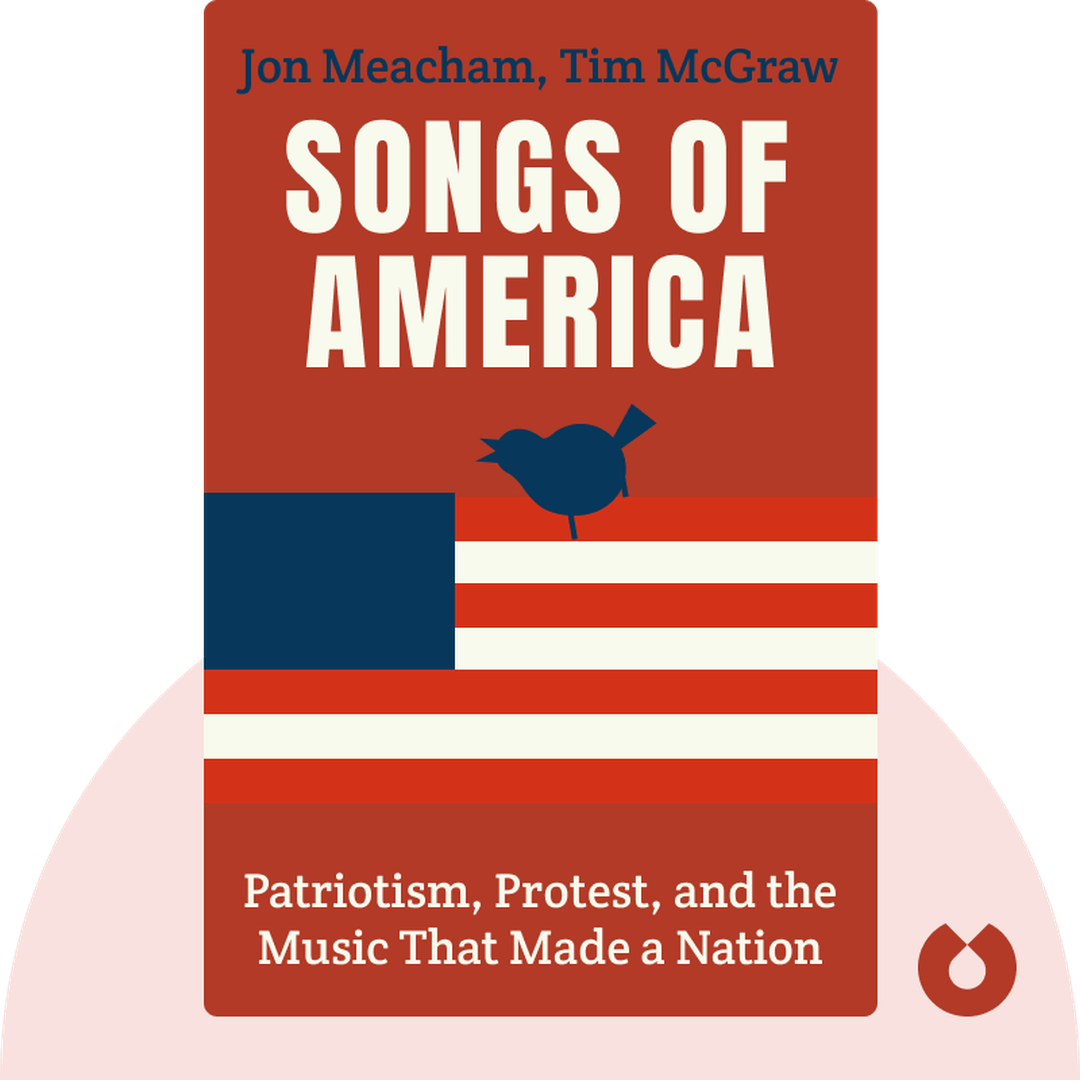
Songs of America (2019) explores the music that has shaped American History. From African American spirituals to Elvis Presley’s rock and roll, these blinks shine a light on the music that has defined the progress, defeats and protests of Americans from all walks of life, over the last three centuries.
Who Should Listen to Songs of America?
- History buffs looking for a fresh perspective
- Music geeks seeking a deeper understanding of song in America’s political struggles
- Social justice warriors hoping for inspiration
Books Similar to Songs of America
Readers who enjoyed this also liked these titles.