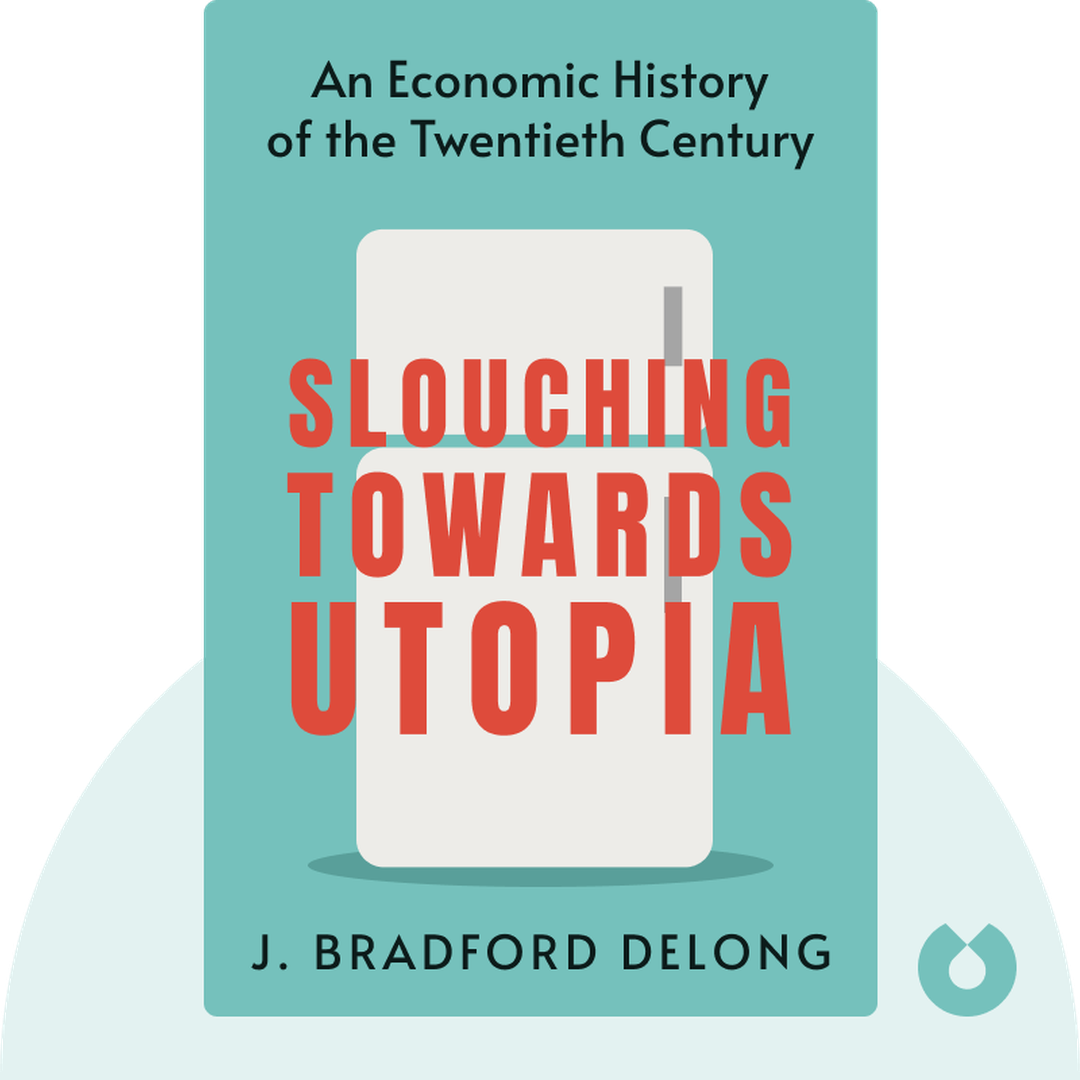
Theme Song
Slouching Towards Utopia
Start ListeningDownload Try free on iPhoneScan to start in 5 seconds
Categories:
If You're Curious About These Questions...
You should listen to this audiobook
- Did you know that for over a century, the world was on a slow, steady march toward a utopia that we might have actually reached—only to see it slip away in 2010?
- Have you ever wondered why the year 1870 was the most important turning point in human history, triggering a technological explosion that changed everything about how we live today?
- What’s the secret to how the "long century" managed to triple the pace of human progress, and why has that engine of growth suddenly started to fail us?
Listen to Slouching Towards Utopia — Free Audiobook
Loading player...
Key Takeaways from Slouching Towards Utopia
- Discover how the year 1870 marked a historical turning point when humanity 'invented invention' through industrial research labs, allowing technology to finally outpace population growth.
- Understand the economic mechanics behind humanity's escape from the Malthusian trap, where centuries of dire poverty were replaced by an unprecedented explosion of global wealth.
- Learn how breakthroughs in transportation and communication fueled rapid globalization, lifting the Global North into prosperity while leaving the Global South burdened by imperialist divisions of labor.
- Find out why the unprecedented international trade and economic integration of the early twentieth century failed to prevent the devastating chaos and command-driven economies of World War I.
- Explore why the rapid economic progress toward a global utopia ground to a halt in 2010, revealing that relying solely on the economy cannot solve all of humanity's political and social problems.
Learning Tools
Reinforce what you learned from Slouching Towards Utopia
Mind Map
Slouching Towards Utopia
The Long Century (1870-2010)+
Globalization & Imperialism+
Crises & Ideological Wars+
Post-WWII Social Democracy+
Persistent Inequality+
Neoliberal Turn & Collapse+
Quiz — Test Your Understanding
Question 1 of 8
According to the book, what fundamental shift occurred around 1870 that allowed humanity to escape the 'Malthusian devil'?
Question 2 of 8
How does the book contrast the economic philosophies of Friedrich Hayek and Karl Polanyi?
Question 3 of 8
What was the primary reason the economies of the Global South failed to prosper alongside the Global North during the late 19th and early 20th centuries?
Question 4 of 8
What commonality does the author highlight between twentieth-century fascism and 'really-existing' socialism?
Question 5 of 8
Which economic approach characterized the prosperous 'Thirty Glorious Years' in the US and Europe following World War II?
Question 6 of 8
What was the principal outcome of the 'neoliberal turn' that began in the 1970s?
Question 7 of 8
According to the author, how did the US and European governments mishandle the 2008 financial crisis?
Question 8 of 8
What timeframe does DeLong define as the 'long century' of unprecedented, yet uneven, economic and technological progress?
Slouching Towards Utopia — Full Chapter Overview
- 1Recommendation
- 2Technological advances helped humanity finally evade the Malthusian demon completely.
- 3Globalization sped up growth, yet distributed gains unevenly overall.
- 4In World War I, humanity’s utopian vision started to blur badly.
- 5The Great Depression showed that only active government can mitigate economic crises effectively overall.
- 6Fascism and socialism promised utopia, yet ultimately slaughtered millions of innocent people.
- 7Following World War II, social democracy and capitalism triumphed in Cold War.
- 8Economic gains didn’t lift everyone equally.
- 9The neoliberal shift of the 1970s deepened income inequality significantly.
- 10The 2008 financial crisis marked the end of the long century abruptly.
Slouching Towards Utopia Summary & Overview
Slouching Towards Utopia (2022) examines the “long century” between 1870 and 2010, during which technological progress, globalization, and the advent of social democracy opened a new horizon of human progress. Barring the horror years of World Wars I and II, humanity seemed to be on a slow, uneven crawl toward utopia. But in 2010, the tables turned. Economic progress in the Global North ground to a halt.
Who Should Listen to Slouching Towards Utopia?
- History buffs
- John Maynard Keynes fans
- Anyone wondering how the world became so unequal
Books Similar to Slouching Towards Utopia
Readers who enjoyed this also liked these titles.