If You're Curious About These Questions...
You should listen to this audiobook
- Did you know that attention deficit disorder might not be an inherited illness, but a developmental response to the environment you grew up in?
- Have you ever wondered why ADD often develops within specific family and social contexts, even when genes aren't the primary cause?
- What if the real key to treating ADD isn't just medication, but understanding the psychological factors that are actually driving the symptoms?
Listen to Scattered Minds — Cinematic Audio Edition
Loading player...
Key Takeaways from Scattered Minds
- Understand why ADD is far more complex than a simple inability to focus, deeply impairing a person's capacity for self-regulation and time perception.
- Discover how the right prefrontal cortex functions in a 'sleeping mode' for those with ADD, causing overwhelming struggles with impulse management and task prioritization.
- Learn why genetics only provide a predisposition for ADD, while early environmental factors, starting from a mother's emotional state in the womb, actually trigger its development.
- Find out how chronic stress during infancy disrupts the orbitofrontal cortex, starving the developing brain of dopamine and leading to hypersensitivity or emotional dissociation.
- Explore how modern socioeconomic pressures and overworked caretakers can unintentionally plant the seeds of trauma that exacerbate ADD symptoms in emotionally sensitive children.
Learning Tools
Reinforce what you learned from Scattered Minds
Mind Map
Scattered Minds
Holistic Perspective+
Core Traits of ADD+
Neurobiology & Development+
The Genetic Link+
The Social Crisis+
Treatment Paradigm+
Quiz — Test Your Understanding
Question 1 of 8
According to the text, what is Gabor Maté's primary argument regarding the cause of ADD?
Question 2 of 8
How does the text explain the phenomenon of a child with ADD spending hours intensely studying maps?
Question 3 of 8
Which of the following is true regarding the three defining traits of ADD (poor attention, impulsiveness, hyperactivity)?
Question 4 of 8
What happens in the prefrontal cortex of a child with ADD when they are presented with a task like a math problem?
Question 5 of 8
In the context of early childhood development, what does the psychological term 'attunement' refer to?
Question 6 of 8
According to the text, why does an infant 'tune out' when they do not experience attunement and feel stressed?
Question 7 of 8
If there is no specific 'ADD gene,' what heritable condition explains the genetic link to ADD?
Question 8 of 8
How does the author primarily explain the 36 percent increase in the reported prevalence of ADD in recent decades?
Scattered Minds — Full Chapter Overview
- 1Recommendation
- 2ADD has three core traits.
- 3Stress hinders brain development and can cause tuning out.
- 4Rising ADD rates reflect a broad social crisis that deeply affects parenting today.
Scattered Minds Summary & Overview
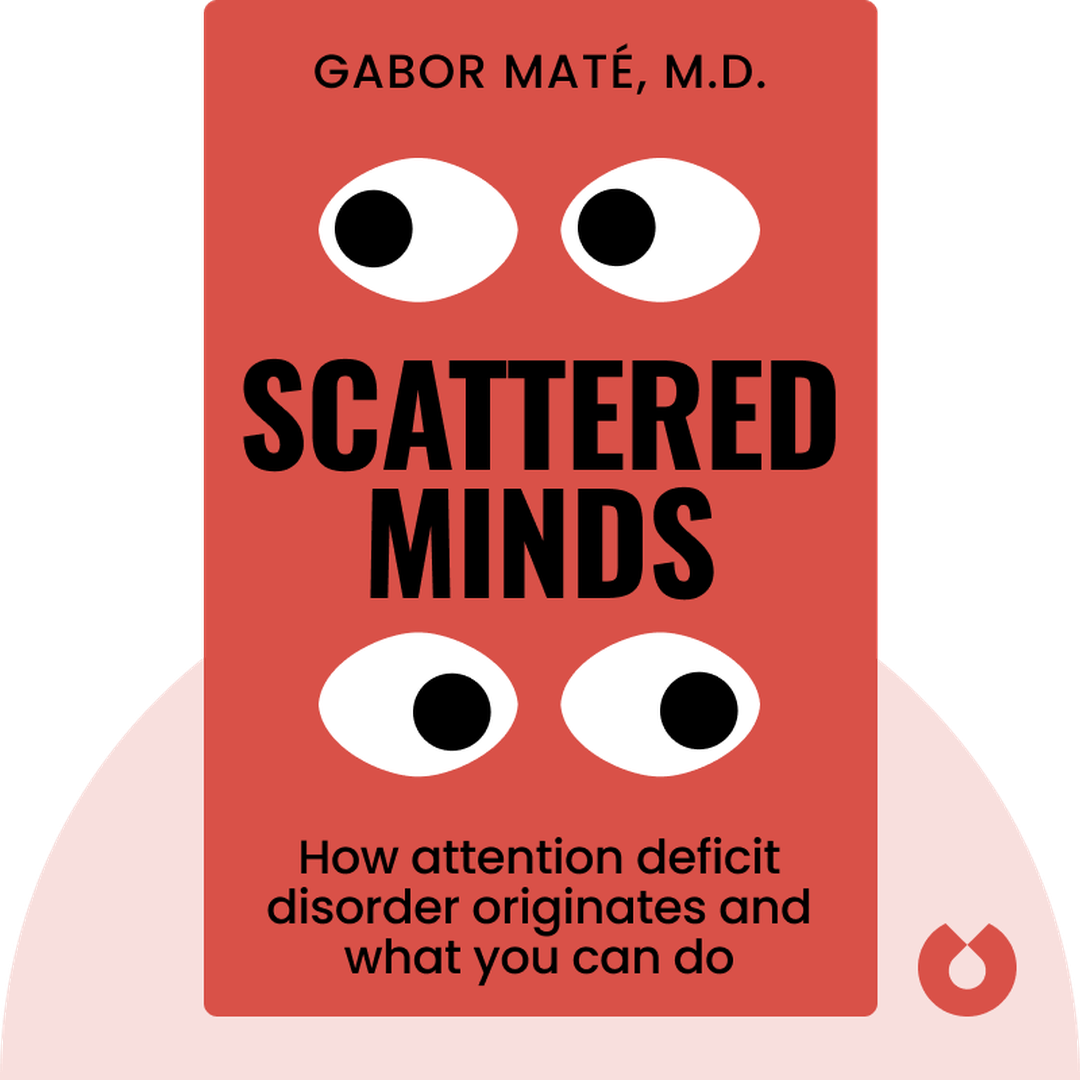
Scattered Minds (1999) takes aim at a well-established myth: that attention deficit disorder, or ADD for short, is an inherited illness. It doesn’t deny the biological foundations of the disorder – genes also play a role. But it urges us to widen our perspective and pay closer attention to psychological and social factors that may be contributing to the symptoms. ADD often develops within specific familial and societal contexts. Recognizing this isn’t just about correcting the scientific record – it offers a key to effective treatment.
Who Should Listen to Scattered Minds?
- Science aficionados
- People who have attention deficit disorder
- Anyone interested in the connection between society and psychology
Books Similar to Scattered Minds
Readers who enjoyed this also liked these titles.