If You're Curious About These Questions...
You should listen to this audiobook
- Did you know that the secret to sustainable weight loss might lie in ancient Buddhist wisdom rather than just counting calories?
- Have you ever wondered how changing your mental approach to eating can physically transform your body and your sense of happiness?
- What if you could achieve your health goals not through restriction, but by learning to deeply appreciate the richness of every single moment?
Listen to Savor — Free Audiobook
Loading player...
Key Takeaways from Savor
- Discover how combining Buddhist spiritual principles with modern nutritional science provides a sustainable, holistic solution to weight loss that fad diets completely miss.
- Learn the four fundamental Buddhist steps to transform your health: acknowledging your physical suffering, identifying its emotional root causes, believing in present change, and practicing mindful living.
- Master the practice of mindful eating by focusing your attention entirely on your food in the present moment, which naturally eliminates unhealthy cravings and helps you stop eating when you are full.
- Understand the deep interconnectedness of our world to recognize how your dietary choices affect global resources, inspiring a natural, compassionate shift toward a sustainable, plant-rich lifestyle.
- Find out why true transformation requires you to carefully monitor how you feed your mind with daily sensory impressions like media and advertisements, rather than just focusing on the food you put in your body.
Learning Tools
Reinforce what you learned from Savor
Mind Map
Savor
Core Problem & Solution+
Four Steps to Transformation+
Mindfulness vs. Mindlessness+
Interconnectedness+
Feeding the Mind+
Nutritional Science+
Exercise & Rest+
Habits & Strategies+
7 Practices of a Mindful Eater+
Quiz — Test Your Understanding
Question 1 of 9
According to the book, why do mainstream weight-loss industry solutions often fail?
Question 2 of 9
What is the second step in the Buddhist approach to transforming unhealthy eating habits?
Question 3 of 9
How does the book describe the state of 'mindlessness'?
Question 4 of 9
What profound lesson does the book illustrate using the example of eating an orange?
Question 5 of 9
In Buddhism, our minds are fed by 'volition.' What does this term refer to in the context of the book?
Question 6 of 9
What is the book's stance on macronutrients like carbohydrates and fats?
Question 7 of 9
Along with 2.5 hours of moderate-intensity aerobic exercise per week, what else does the book recommend for a healthy exercise routine?
Question 8 of 9
What is the primary purpose of creating an 'InEating' strategy?
Question 9 of 9
Which of the following is ONE of the 'seven practices of a mindful eater' mentioned in the text?
Savor — Full Chapter Overview
- 1Recommendation
- 2Buddhism offers four essential steps to help you understand your weight problem and transform your life.
- 3To overcome unhealthy eating habits, learn to calmly focus on your mind and body in the present moment.
- 4Because we are connected to everyone and everything on the planet, we must stay aware of how we consume resources.
- 5Losing weight and transforming your life is not only about feeding your body; it is also about feeding your mind.
- 6To eat healthily, focus carefully on the quality, not just the quantity, of the nutrients you consume.
- 7Make regular physical exercise a key part of your effort to lose weight and live a healthy life.
- 8Think carefully about how to break free from bad habits that keep you stuck in an unhealthy lifestyle.
- 9Create eating and exercise strategies that help you follow your weight-loss plans through to the end.
- 10Final Summary
- 11Actionable advice
Savor Summary & Overview
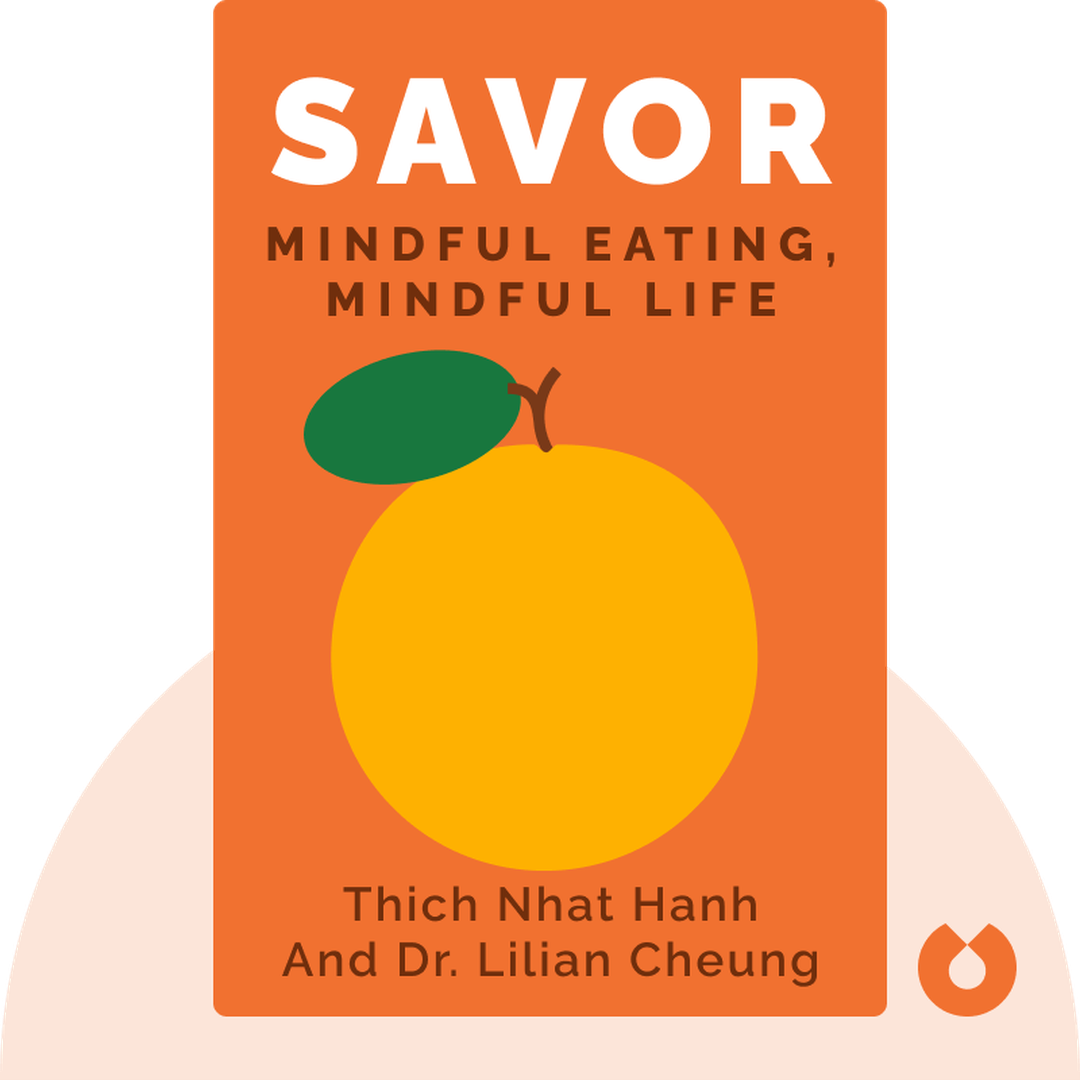
Savor (2010) provides advice and inspiration on how to find inner peace, joy and strength – especially for those trying to sustainably lose weight – with Buddhist teachings and techniques for appreciating the richness of life in the present moment. It also draws on the latest nutritional science research on the best ways to eat and exercise, presenting readers with a holistic method for improving their physical, psychological and spiritual well-being, and thereby transforming their lives.
Who Should Listen to Savor?
- Anyone wanting to sustainably lose weight
- Anyone wanting more peace and happiness in everyday life
Books Similar to Savor
Readers who enjoyed this also liked these titles.