If You're Curious About These Questions...
You should listen to this audiobook
- Have you ever wondered why the world's most successful 'Ultra-High Performers' rely more on emotional intelligence than traditional sales techniques to close the biggest deals?
- Did you know that your potential buyers are often making their final decision based on subconscious feelings long before you’ve finished your logical pitch?
- What if you could master the hidden psychological triggers that allow you to stay in total control of the sales conversation, even when the pressure is at its peak?
Listen to Sales EQ — Free Audiobook
Loading player...
Key Takeaways from Sales EQ
- Learn how to disrupt a buyer's expectations with creative thinking to instantly capture their attention and score the deal.
- Discover why getting prospects to talk about themselves triggers a dopamine rush that subconsciously builds mutual trust and reciprocation.
- Understand why buyers lead with emotion and close with logic, and how syncing with this timeline prevents you from pitching your product too early.
- Master the art of reducing a prospect's cognitive dissonance by avoiding the fatal mistake of bad-mouthing their current vendor.
- Find out how to navigate a sale according to your prospect’s emotional temperature instead of relying on rational arguments that actually work against you.
Learning Tools
Reinforce what you learned from Sales EQ
Mind Map
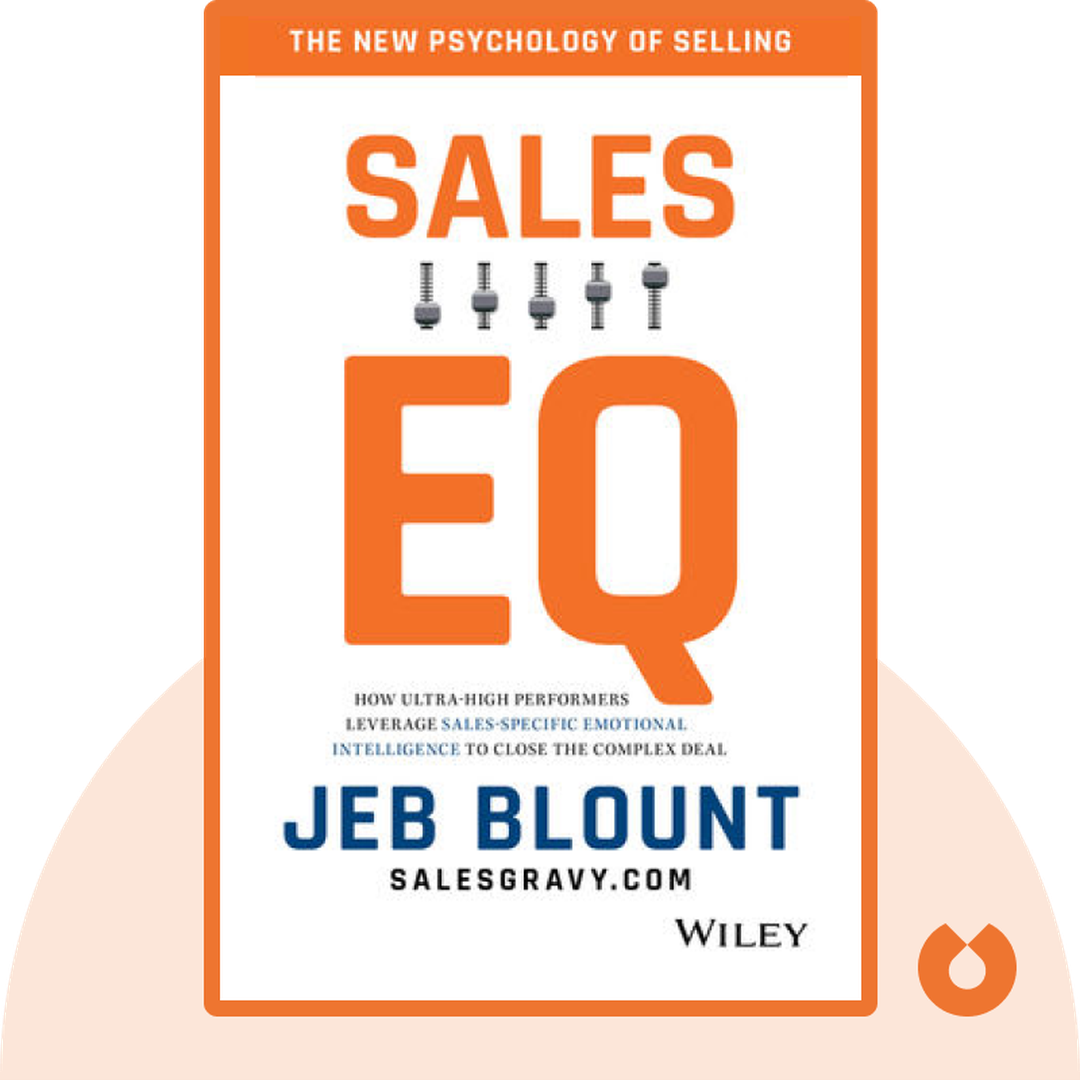
Sales EQ
Emotional Buying+
Disrupting Expectations+
Cognitive Dissonance+
Leveraging Empathy+
Emotional Control+
Likability+
Building Trust+
Quiz — Test Your Understanding
Question 1 of 8
How do buyers and salespeople typically differ in their emotional and logical approaches during the sales process?
Question 2 of 8
In the story of the artisanal baker, why did the sales mentor Joe ask the baker to explain why his bread was worth more than supermarket bread?
Question 3 of 8
Why is it usually a mistake for a salesperson to present undeniable evidence that a prospect's current vendor is doing a terrible job?
Question 4 of 8
What is the recommended strategy for discussing a prospect's existing vendor without causing them emotional distress?
Question 5 of 8
According to the text, how can you test if you are a naturally empathetic person?
Question 6 of 8
What happens to a salesperson's brain when a stressful situation triggers the fight-or-flight response?
Question 7 of 8
Many salespeople talk too much instead of listening. According to the text, which of the following is NOT an emotional reason behind this behavior?
Question 8 of 8
How does the author describe the process of building trust with a prospect?
Sales EQ — Full Chapter Overview
- 1Recommendation
- 2The best salespeople think creatively to disrupt roles and score better sales deals.
- 3Our emotions, not logic, are what drive our purchasing decisions.
- 4You’ll close more sales by reducing your prospect’s overall cognitive dissonance.
- 5Great sellers use empathy to guide buyers through their emotions and purchases successfully.
- 6Ultra high performers remain in complete control of their own emotions.
- 7We buy more from those we like.
- 8Trust is a tricky yet vital part of the sales process.
Sales EQ Summary & Overview
Sales EQ (2017) explores how sales professionals can leverage the power of human emotion to boost their performance. It outlines the feelings that potential buyers experience and explains how sellers can learn to keep their own emotions in check during the sales process.
Who Should Listen to Sales EQ?
- Sales professionals seeking fresh insights
- Entrepreneurs who want to get their business off the ground
- Business students looking for a new perspective
Books Similar to Sales EQ
Readers who enjoyed this also liked these titles.