If You're Curious About These Questions...
You should listen to this audiobook
- Have you ever wondered why the most uncomfortable 'in-between' moments of your life are actually the ones shaping your future the most?
- What if the feeling of your life unraveling isn’t a sign of failure, but a necessary step toward your next big breakthrough?
- Are you curious about the secret to finding clarity and purpose when you’re stuck between who you used to be and who you’re still becoming?
Listen to Resurface — Free Audiobook
Loading player...
Key Takeaways from Resurface
- Identify the four unique types of life transitions—expected milestones, sudden blindsides, nonevents, and slow sleepers—to better navigate the unpredictable changes unfolding in your life.
- Understand why past versions of yourself linger as 'ghosts' and learn how accepting the natural grief of a lost identity allows you to stop suffering and find renewed purpose.
- Master the crucial three-step framework of retelling your personal story, rebuilding your relationship with past losses, and reinventing who you are today.
- Learn how to survive the uncomfortable 'murk' of the in-between phase by resisting the urge to rush and boldly asking others for help to unlock new opportunities.
- Discover how the hard-earned skills and emotional resilience you built in your previous chapter can be translated directly into powerful tools for your new path.
Learning Tools
Reinforce what you learned from Resurface
Mind Map
Resurface
Nature of Transitions+
Processing Grief & The Past+
Navigating The Murk+
Letting Go & Quitting+
Forging an Authentic Path+
Radical Acceptance of Change+
Quiz — Test Your Understanding
Question 1 of 8
According to the book, what are the four different types of transitions people experience?
Question 2 of 8
How does the book define a 'nonevent' transition, as illustrated by Karie's story of infertility?
Question 3 of 8
What are the three steps recommended by the author to help move forward from the grief of a transition?
Question 4 of 8
What does Cassidy Krug mean by the term the 'murk' during a transition?
Question 5 of 8
Why did Cassidy have to unlearn the perfectionism that made her a great Olympic diver?
Question 6 of 8
How does the book reframe the concept of 'quitting,' as demonstrated by Toya's decision to leave her law career?
Question 7 of 8
According to the book's 'law of inertia' regarding transitions, what happens the longer you stay stuck in one phase?
Question 8 of 8
What lesson did the author learn from her friend Heather's response to a terminal cancer diagnosis?
Resurface — Full Chapter Overview
- 1Recommendation
- 2The different types of transition
- 3Recognizing the ghosts of transitions
- 4Seeking help in the murky middle ground
- 5The strength of letting go
- 6Following your personal path
- 7Accepting the changes
Resurface Summary & Overview
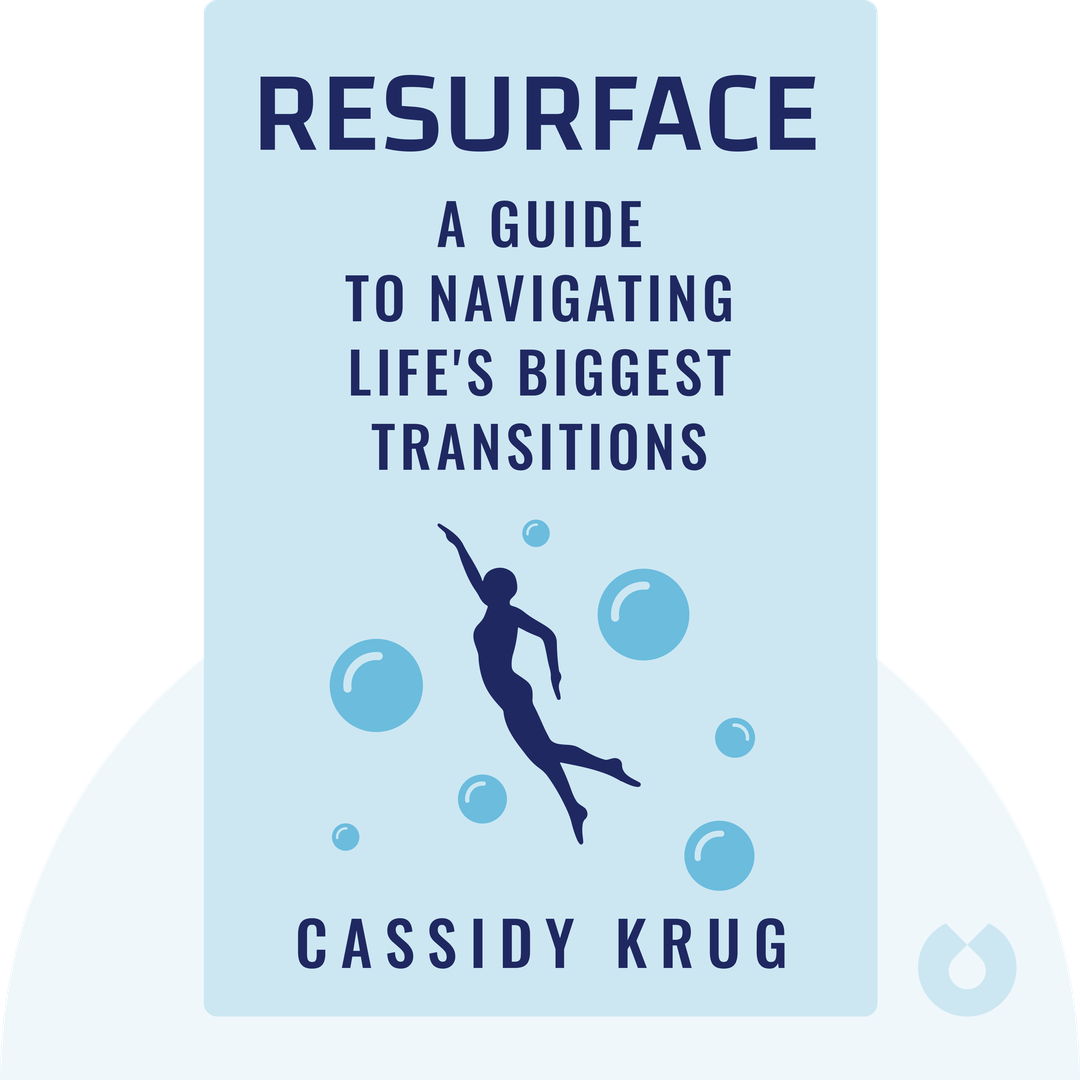
Resurface (2025) is for anyone who’s ever felt stuck between who you were and who you’re supposed to become. It dives into that murky middle, showing how transitions – big and small – shape us in ways we often don’t see until later. It’s a warm, honest reminder that even when life feels like it’s unraveling, you’re still moving toward something new.
Who Should Listen to Resurface?
- People grieving loss
- Recent graduates or career changers
- Anyone feeling restless in life
Books Similar to Resurface
Readers who enjoyed this also liked these titles.