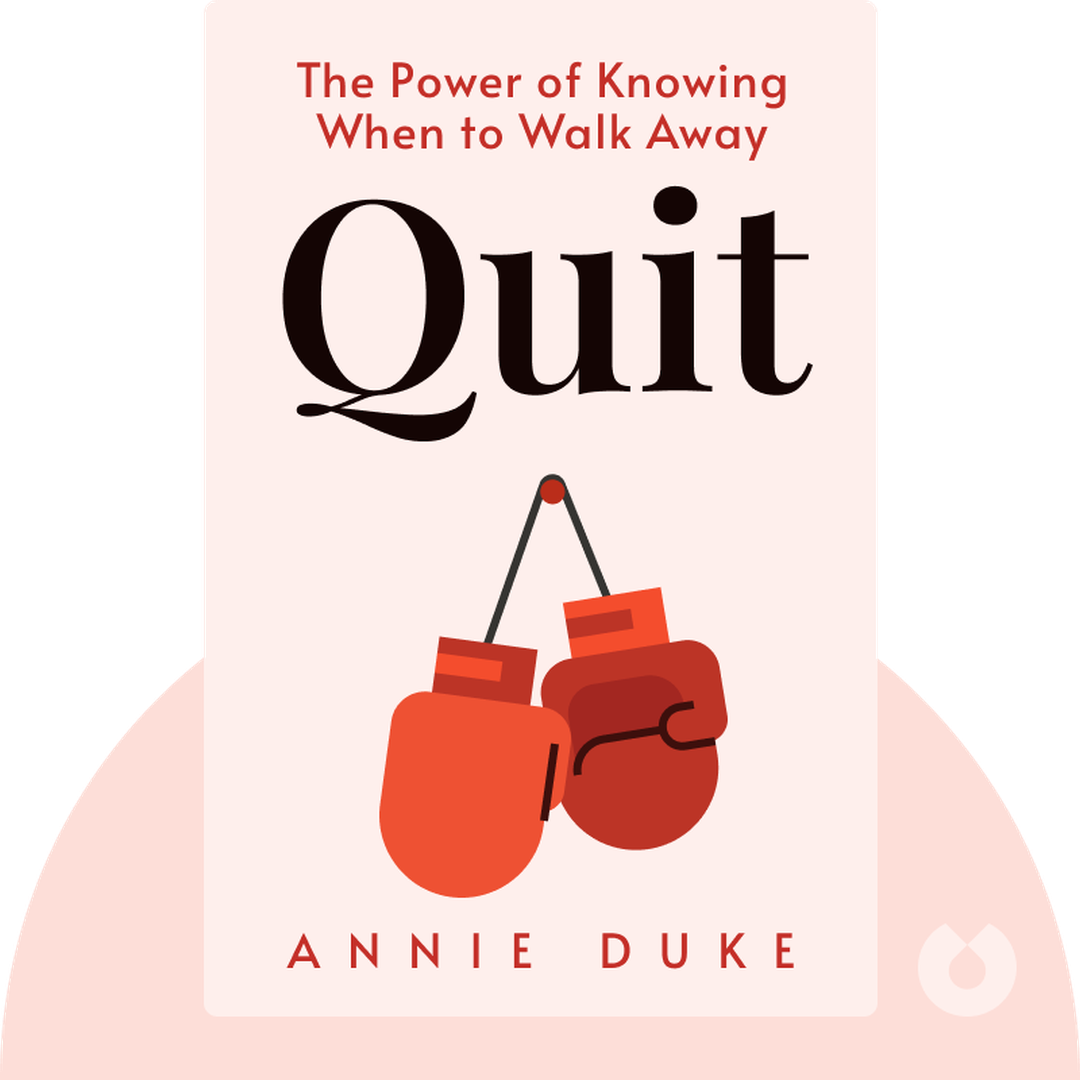
If You're Curious About These Questions...
You should listen to this audiobook
- Did you know that the secret to reaching your biggest goals might not be grit and perseverance, but actually mastering the art of walking away?
- Have you ever wondered why we often stay in dead-end careers or projects long after we should have left, and how you can break that cycle?
- What if you could transform quitting from a sign of failure into a strategic skill that actually accelerates your path to success?
Listen to Quit — Free Audiobook
Loading player...
Key Takeaways from Quit
- Discover why society's obsession with grit and blind persistence can actually hold you back from achieving your true goals.
- Understand how quitting is not a sign of weakness, but a vital and strategic reaction to changing circumstances that protects your time and money.
- Learn how to calculate the expected value of your decisions to confidently abandon doomed projects and pursue more rewarding opportunities.
- Recognize psychological traps like the sunk cost fallacy that trick you into sticking with bad investments just because you have already spent resources on them.
- Master the ability to stop the escalation of commitment so you can avoid doubling down on unwinnable situations and pivot toward success.
Learning Tools
Reinforce what you learned from Quit
Mind Map
Quit
Cultural Bias Against Quitting+
The Virtue of Quitting+
Psychological Barriers+
The Cost of Not Quitting+
Strategies for Smart Quitting+
The Problem with Goals+
Quiz — Test Your Understanding
Question 1 of 8
According to the book, what distinguishes professional poker players from amateurs when it comes to quitting?
Question 2 of 8
How did Stewart Butterfield's decision to shut down the game 'Glitch' demonstrate the concept of 'expected value'?
Question 3 of 8
Which scenario best illustrates the 'sunk cost fallacy' as described in the text?
Question 4 of 8
Why did Sears ultimately face bankruptcy, in contrast to the success of Philips?
Question 5 of 8
In the 'monkeys and pedestals' metaphor used by Alphabet's X team, what does the 'monkey' represent?
Question 6 of 8
What is the purpose of conducting a 'premortem' when establishing 'kill criteria'?
Question 7 of 8
What is the main danger of the 'finish line mentality' when pursuing goals?
Question 8 of 8
Why does the author recommend getting a 'quitting coach'?
Quit — Full Chapter Overview
- 1Recommendation
- 2Quitting can be the right choice.
- 3We often keep going for far too long.
- 4The sunk cost fallacy and other barriers to quitting
- 5Your identity can stop you from quitting.
- 6Monkeys and kill criteria: countering our tendencies
- 7The downside of goals
- 8Final summary
Quit Summary & Overview
Quit (2022) makes the case for an undervalued and important skill that can lead to success: knowing when to bow out. It lends nuance to the old-school advice that grit and perseverance are necessary to achieve goals – and offers a manual on how to quit, even when it’s difficult.
Who Should Listen to Quit?
- People facing a big decision or planning ahead for a major life change
- Highly motivated people who find the prospect of quitting appalling
- Those stuck in a career or project that feels like a dead end
Books Similar to Quit
Readers who enjoyed this also liked these titles.