If You're Curious About These Questions...
You should listen to this audiobook
- Have you ever wondered why traditional employee engagement strategies often fail to deliver results, and what the missing emotional link might be?
- Did you know that there are specific, science-backed types of happiness that can supercharge productivity and team motivation more than any bonus ever could?
- What if you could stop chasing engagement metrics and instead unlock a simple shift in focus that makes both your employees and your organization thrive?
Listen to Put Happiness to Work — Free Audiobook
Loading player...
Key Takeaways from Put Happiness to Work
- Discover why fostering authentic workplace happiness, rather than just chasing numerical targets, is the true gateway to unlocking employee engagement and profitability.
- Understand the difference between meaningful workplace happiness and fleeting office perks, enabling you to build an environment where genuine positive emotions thrive.
- Learn how to close the appreciation gap in your organization by consistently expressing authentic gratitude, which creates a contagious upward spiral of positivity.
- Master a daily gratitude practice that trains your brain to proactively spot positive, work-related moments, empowering you to effectively motivate your team.
- Find out how to cultivate vital social connections at work through daily acts of genuine care and transparency, rather than relying on one-off company retreats.
Learning Tools
Reinforce what you learned from Put Happiness to Work
Mind Map
Put Happiness to Work
Happiness Drives Engagement+
Authentic Appreciation+
Social Connection & Care+
Rethinking Stress+
Coaching vs. Managing+
Quiz — Test Your Understanding
Question 1 of 6
What is a common mistake organizations make when trying to foster workplace happiness?
Question 2 of 6
According to the text, the act of expressing appreciation operates at the intersection of which two profound drivers of happiness?
Question 3 of 6
What strategy does the author suggest for managers who struggle to naturally build social connections with their team?
Question 4 of 6
What does the author mean by the 'stress paradox'?
Question 5 of 6
How does simply recognizing and acknowledging stress help a person manage it better?
Question 6 of 6
Why does the author argue against relying solely on a traditional, directive management approach?
Put Happiness to Work — Full Chapter Overview
- 1Recommendation
- 2Engaged teams are happier – and boost productivity
- 3Appreciation leads to happy, productive teams
- 4Real leaders care
- 5Stress isn't always bad
- 6Effective leaders both manage and coach
Put Happiness to Work Summary & Overview
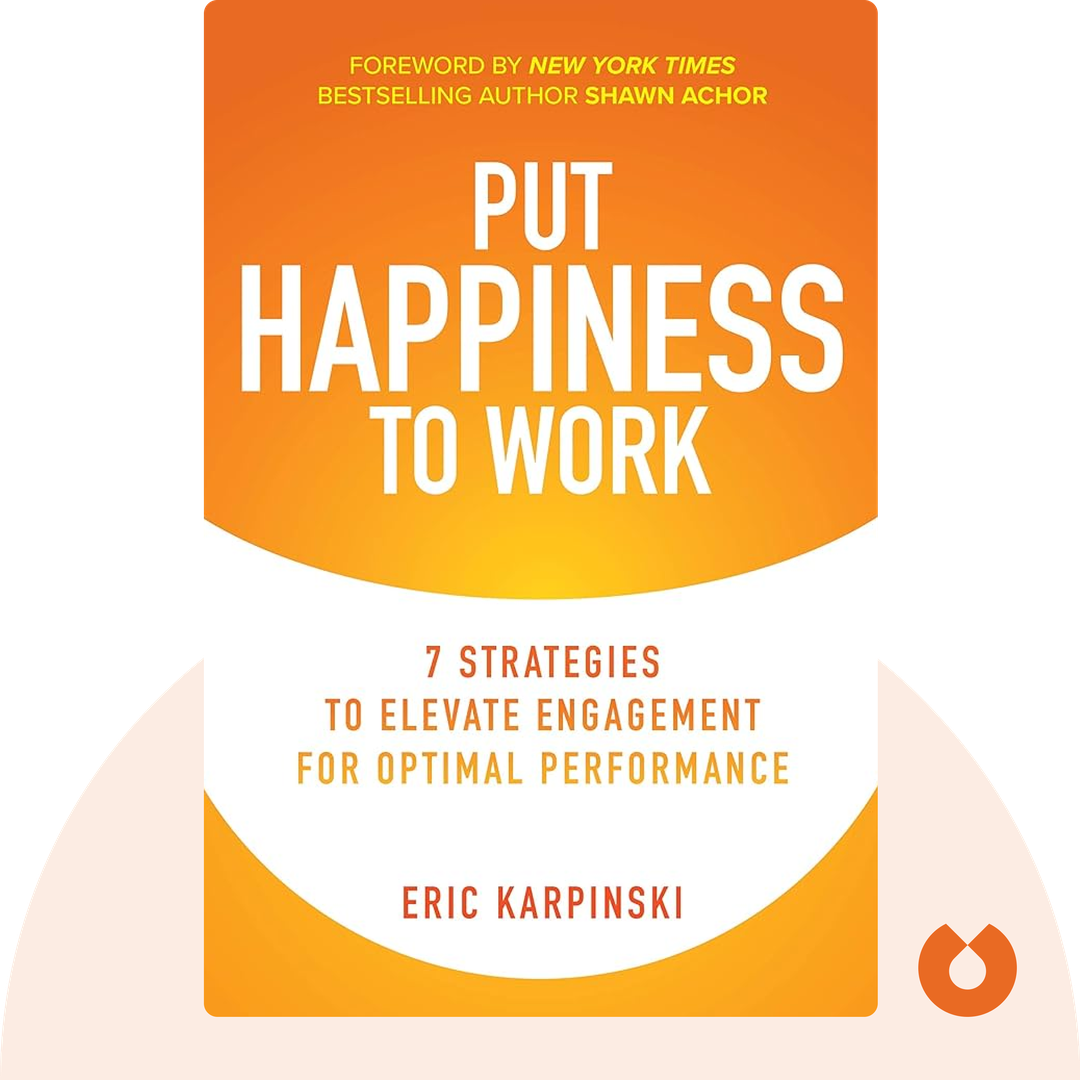
Put Happiness to Work (2021) delves into the shortcomings of traditional methods of enhancing employee engagement, highlighting how genuine motivation stems from happiness. The book reveals the particular types of happiness that can amplify engagement, guiding managers and team leaders to strategies that benefit both employees and organizational performance. The underlying message is clear: prioritize happiness, and everyone thrives.
Who Should Listen to Put Happiness to Work?
- Managers seeking increased team engagement
- Enthusiasts of positive workplace psychology
- Professionals aiming for organizational transformation
Books Similar to Put Happiness to Work
Readers who enjoyed this also liked these titles.