If You're Curious About These Questions...
You should listen to this audiobook
- Did you know that one of the world’s most successful tech giants credits its massive growth and talent retention to a culture of giving rather than just profit?
- What if the secret to avoiding burnout and finding deep professional fulfillment isn't about changing your job, but about adopting a specific 'purpose mindset'?
- Have you ever wondered how embedding social impact into your company's DNA can actually make your team more innovative and resilient?
Listen to Purpose Mindset — Free Audiobook
Loading player...
Key Takeaways from Purpose Mindset
- Discover how transitioning from a growth mindset to a purpose mindset empowers you to leverage your unique skills and passions for lasting societal change.
- Learn how to build a purpose-driven corporate culture by exploring Microsoft's highly successful, year-round grassroots initiatives like microvolunteering and dollars-for-doers.
- Understand why focusing on inherent strengths rather than trying to 'fix' weaknesses can transform personal adversity into powerful opportunities for meaningful innovation.
- Master the art of overcoming a scarcity mentality by adopting an abundance mindset that creatively mobilizes overlooked resources to achieve large-scale social impact.
- Find out how to redirect your corporate business skills and personal efficiency toward collective progress to solve global issues and improve community well-being.
Learning Tools
Reinforce what you learned from Purpose Mindset
Mind Map
Purpose Mindset
Core Concept+
Microsoft's Culture of Purpose+
Principle 1: Build on Talents+
Principle 2: Utilize Resources Innovatively+
Principle 3: Impact Community Progress+
Principle 4: Foster Change Through Movements+
Principle 5: Prioritize Collective Well-being+
Quiz — Test Your Understanding
Question 1 of 7
What is the primary difference between a 'growth mindset' and a 'purpose mindset' as described in the text?
Question 2 of 7
How does Microsoft ensure its philanthropic giving culture is sustained and constantly energized?
Question 3 of 7
What key realization transformed Roberto D’Angelo and Francesca Fedeli’s approach to their son Mario's medical condition?
Question 4 of 7
According to the second principle of the purpose mindset, what does adopting an 'abundance mindset' entail?
Question 5 of 7
How did Tony Mestres apply a purpose-driven mindset to his role as CEO of the Seattle Foundation?
Question 6 of 7
Why does the fourth principle of the purpose mindset emphasize 'movements' over traditional organizations?
Question 7 of 7
What overarching shift in the definition of success is highlighted in the fifth principle of the purpose mindset?
Purpose Mindset — Full Chapter Overview
- 1Recommendation
- 2How Microsoft nurtures a purpose mindset
- 3Principle #1: Build upon talents
- 4Principle #2: Use resources creatively
- 5Principle #3: Advance broader community progress
- 6Principle #4: Drive societal change via movements
- 7Principle #5: Put collective well-being above individual gain
Purpose Mindset Summary & Overview
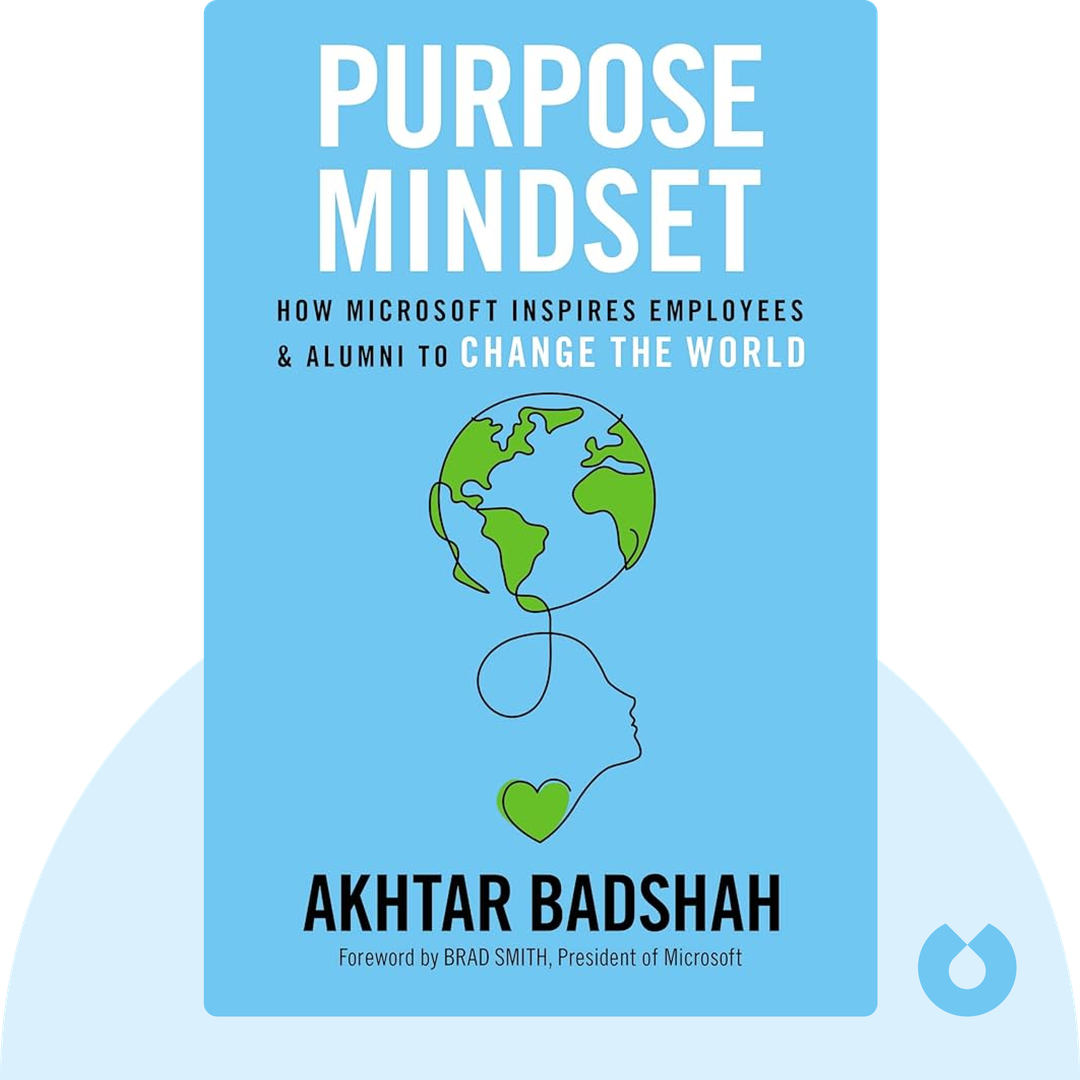
Purpose Mindset (2020) dives into how embedding a sense of purpose within organizations can lead to greater individual and collective success. It outlines how Microsoft developed a culture of giving and volunteerism, which enhanced employee satisfaction while helping the company attract and retain top talent. It also illustrates how a strong sense of purpose can drive both individual fulfillment and broader social change.
Who Should Listen to Purpose Mindset?
- Individuals seeking to align career with social impact and purpose
- Leaders aiming to foster a purpose-driven culture in organizations
- Professionals interested in using talents for societal and community change
Books Similar to Purpose Mindset
Readers who enjoyed this also liked these titles.