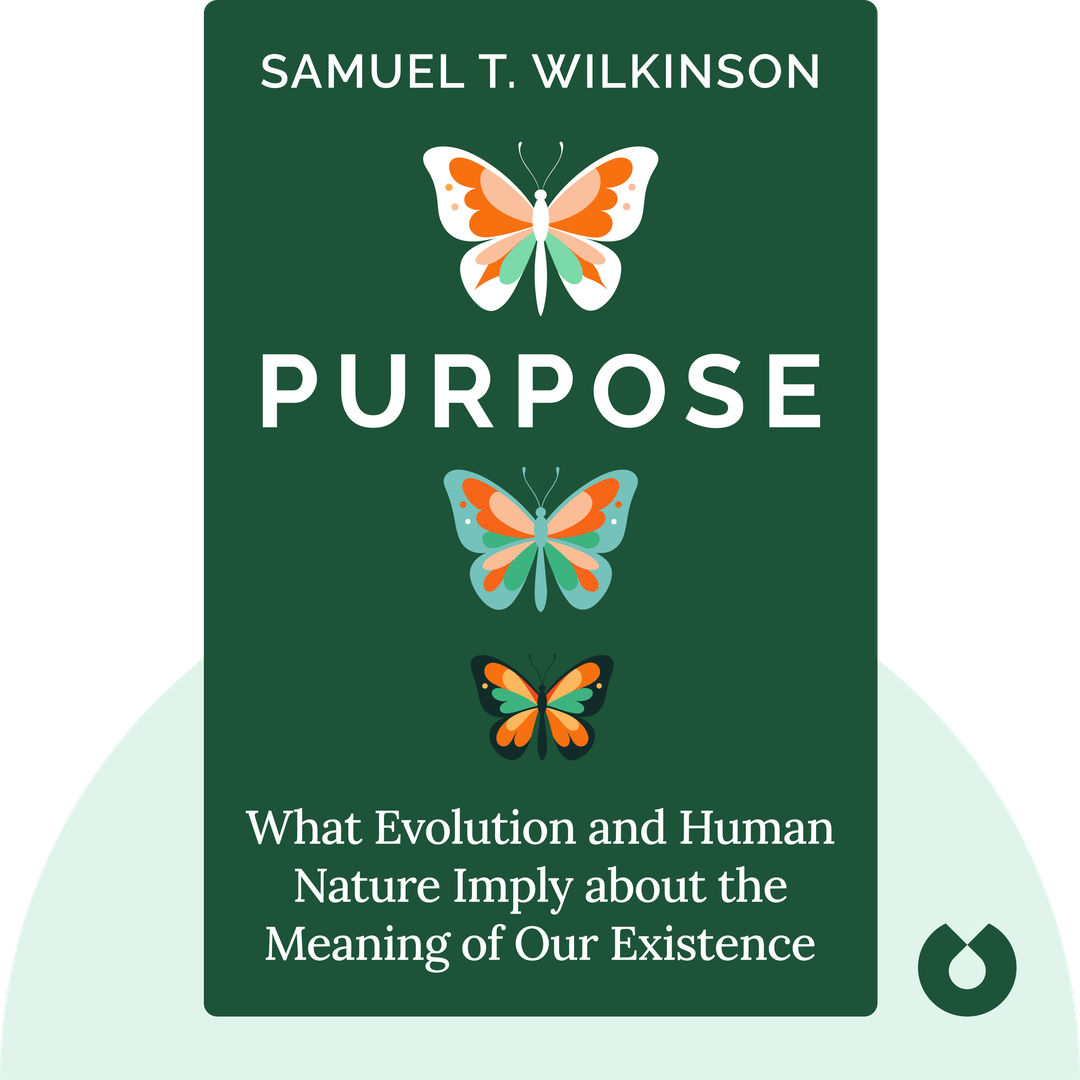
If You're Curious About These Questions...
You should listen to this audiobook
- Have you ever wondered if the complex process of evolution actually points toward a universal purpose rather than just random chance?
- What if the inner conflict between your biological instincts and your moral choices is the secret to understanding your life’s true meaning?
- Are you curious about how the latest scientific insights into free will could bridge the gap between our biological nature and a higher calling?
Listen to Purpose — Free Audiobook
Loading player...
Key Takeaways from Purpose
- Understand how evolutionary biology and spiritual beliefs can harmonize to reveal a deeper, overarching purpose behind human existence.
- Discover why the phenomenon of convergent evolution suggests that human life is not a random accident, but a guided outcome shaped by the laws of nature.
- Learn how multilevel selection theory explains the origins of human altruism, proving that evolution favors group cooperation just as much as individual selfishness.
- Explore the fascinating duality of human nature by uncovering how opposing traits, such as aggression and cooperation, coevolved to ensure our ultimate survival.
- Find out how the evolutionary tension between short-term mating strategies and the need to protect vulnerable infants shaped our profound drive for long-term love and stable pair bonds.
Learning Tools
Reinforce what you learned from Purpose
Mind Map
Purpose
Reconciling Science & Faith+
Mechanisms of Evolution+
Duality of Human Nature+
The Meaning of Free Will+
The Power of Family+
Quiz — Test Your Understanding
Question 1 of 6
What does the phenomenon of convergent evolution suggest about the nature of life's development, according to the text?
Question 2 of 6
How does 'multilevel selection theory' help explain the existence of altruistic behavior in humans and animals?
Question 3 of 6
According to the text, what evolutionary necessity likely favored the emergence of love, intimacy, and sexual fidelity in humans?
Question 4 of 6
What role does free will play in the context of our evolutionary drives, according to the author?
Question 5 of 6
Why did utopian experiments like the 19th-century Oneida Community ultimately fail, according to the text?
Question 6 of 6
What is the 'marriage premium' mentioned in the text?
Purpose — Full Chapter Overview
- 1Recommendation
- 2The purposeful journey of evolution
- 3The puzzle of human evolution
- 4The divided nature of humanity
- 5The significance of free will
- 6The power of family
Purpose Summary & Overview
Purpose (2024) presents a provocative exploration of human evolution, challenging the notion that life is devoid of inherent meaning. By integrating insights from various scientific disciplines, it argues that there is a universal purpose rooted in the dualities of being human and our ability to exercise free will, suggesting a profound connection between our biological nature and the existence of a higher purpose.
Who Should Listen to Purpose?
- Individuals interested in the intersection of science and spirituality
- Readers seeking a deeper understanding of human evolution and its implications
- Professionals and students in psychology, psychiatry, and evolutionary biology
Books Similar to Purpose
Readers who enjoyed this also liked these titles.