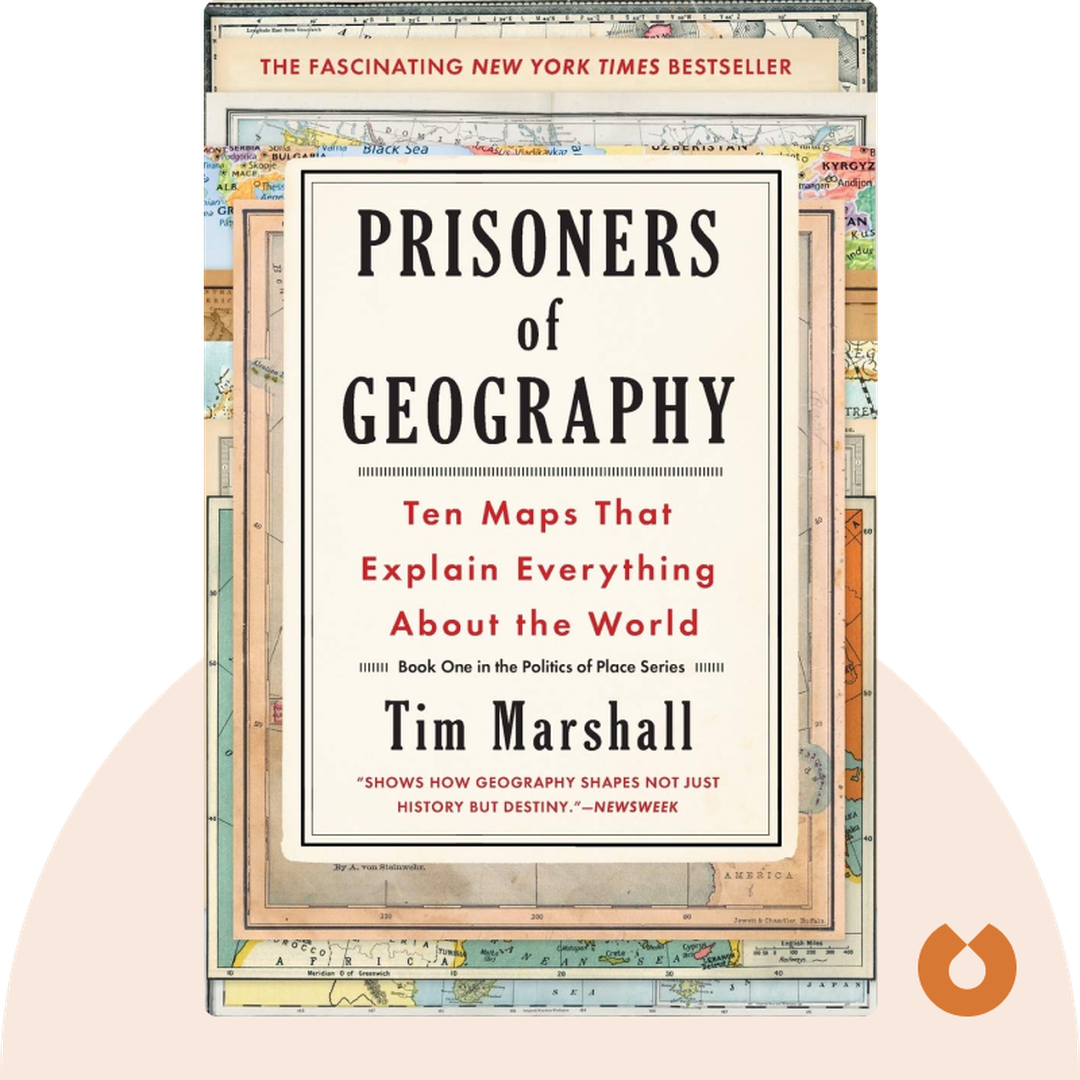
Prisoners of Geography
Start ListeningDownload Try free on iPhoneScan to start in 5 seconds
Categories:
If You're Curious About These Questions...
You should listen to this audiobook
- How does a seemingly harmless, pizza-shaped stretch of flatland explain Russia's centuries-old fear of Western invasion and its modern-day aggression in the Baltic states?
- Why does China view the occupation of Tibet not just as a political goal, but as a critical geographical necessity to protect its national water supply from India?
- In what ways do Africa's breathtaking waterfalls and smooth, picturesque coastlines actually act as geographical curses that have historically hindered the continent's global trade?
Listen to Prisoners of Geography — Cinematic Audio Edition
Loading player...
Key Takeaways from Prisoners of Geography
- Russia's aggressive stance in Eastern Europe is largely driven by its historical vulnerability to invasions across the flat, hard-to-defend North European Plain.
- China occupies Tibet not just to maintain a mountainous buffer zone against India, but to control the vital water sources of its three main rivers.
- The United States enjoys unprecedented geographical security due to its oceanic borders, vast neighboring countries, and an armed civilian populace.
- The economic divide between Northern and Southern Europe is rooted in geography, with the North benefiting from highly fertile land that naturally fosters agricultural surplus and urban growth.
- Africa's economic potential has been severely hindered by its smooth, shallow coastlines that lack natural deepwater harbors and internal rivers plagued by unnavigable waterfalls.
Learning Tools
Reinforce what you learned from Prisoners of Geography
Mind Map
Prisoners of Geography
Core Thesis+
Russia+
China+
United States+
Europe+
Africa+
Korean Peninsula+
Quiz — Test Your Understanding
Question 1 of 6
Why does Russia maintain an aggressive presence in the Baltics and Eastern Europe according to the text?
Question 2 of 6
What are China's primary strategic reasons for maintaining control over Tibet?
Question 3 of 6
Which combination of geographic and social factors makes the United States uniquely difficult to invade?
Question 4 of 6
According to the text, what is the primary geographical reason for the economic disparity between Northern and Southern Europe?
Question 5 of 6
Why have Africa's waterways historically hindered the continent's economic development?
Question 6 of 6
What geographical disadvantage makes South Korea highly vulnerable to an attack from North Korea?
Prisoners of Geography — Full Chapter Overview
- 1Recommendation
- 2Russia is aggressive in the Baltics because it fears attack from the West.
- 3China’s fear of Indian attack and water shortages keeps its grip on Tibet firm.
- 4Firepower and geographic luck make the United States almost untouchable.
- 5Geography has favored northern Europe and burdened the south.
- 6Geography has given Africa lovely yet unworkable waterways.
- 7Geography has given North Korea hills and left flat land in South Korea up to Seoul.
Prisoners of Geography Summary & Overview
Prisoners of Geography (2015) explains how, all over the world, political decision making is greatly influenced by geography. Even choices that may appear arbitrary are in fact driven by the Earth’s mountains, valleys, rivers and seas.
Who Should Listen to Prisoners of Geography?
- Political junkies interested in international relations
- Students curious about how geography informs foreign policy
- Readers interested in world history
Books Similar to Prisoners of Geography
Readers who enjoyed this also liked these titles.