If You're Curious About These Questions...
You should listen to this audiobook
- Have you ever wondered why we draw a moral line between humans and other animals, and whether that distinction can actually be justified by logic?
- What if the simple choices you make every day—like what you buy or eat—carry a much heavier moral weight than you ever realized?
- Are you curious about the specific criteria that actually grant a being the "right to life," and how that definition changes everything we think about today's biggest ethical debates?
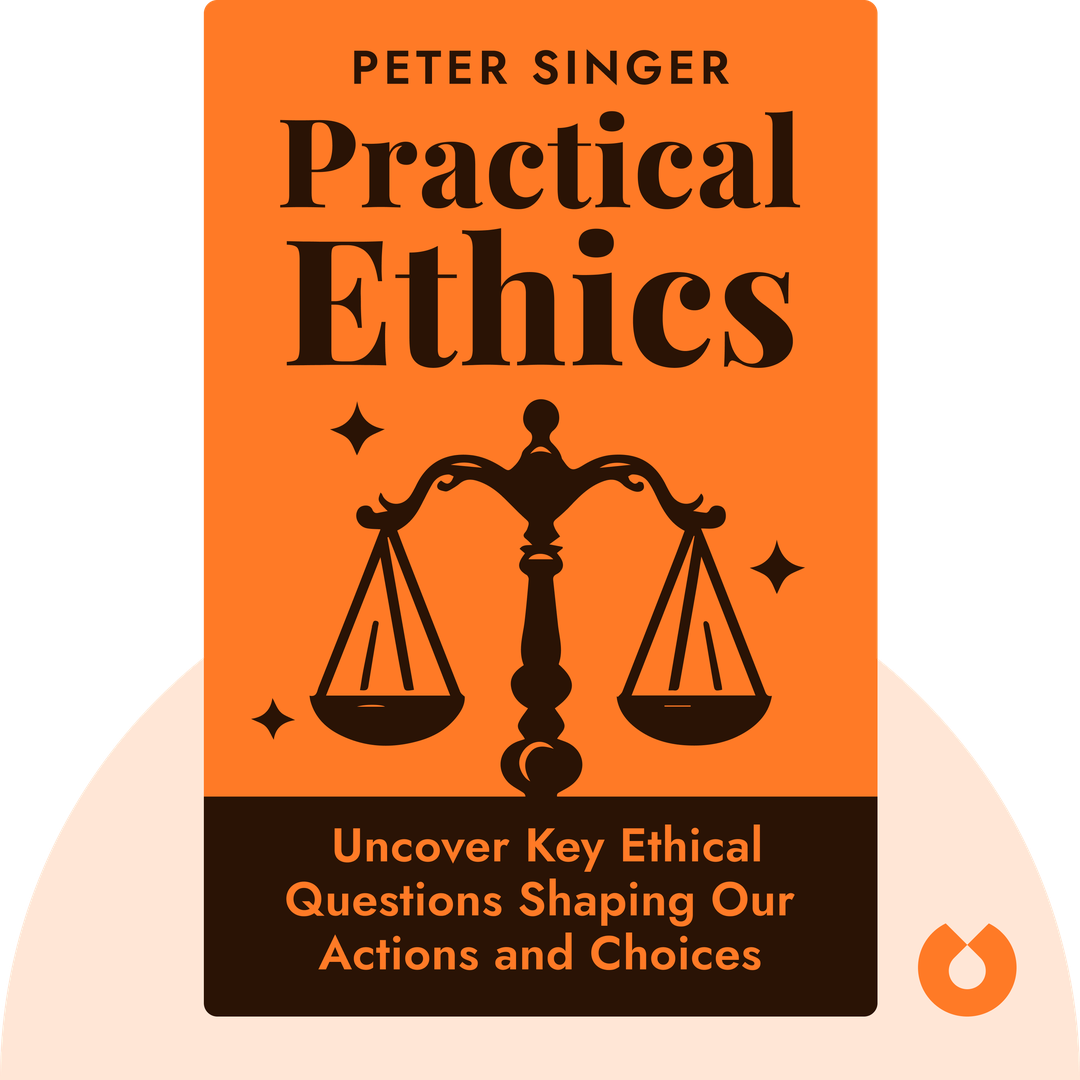
Listen to Practical Ethics — Free Audiobook
Loading player...
Key Takeaways from Practical Ethics
- Understand why ethics is not about blindly following religious or societal rules, but rather a practical tool for critically examining the global impact of your everyday choices.
- Learn how to apply 'preference utilitarianism' to your decisions, ensuring you maximize the well-informed, long-term well-being of everyone affected instead of just pursuing short-term pleasures.
- Discover the principle of the 'equal consideration of interests,' which challenges you to give equal moral weight to the comparable suffering of all beings regardless of their species, location, or generation.
- Recognize why expanding your moral circle to include distant strangers means reevaluating your spending habits, such as weighing the purchase of a personal luxury item against donating to save a life.
- Find out how the capacity to suffer determines a being's moral status, revealing why human intelligence alone cannot justify the immense harm inflicted upon animals in practices like factory farming.
Learning Tools
Reinforce what you learned from Practical Ethics
Mind Map
Practical Ethics
Core Philosophy+
Animal Ethics+
Life and Death+
Global Poverty+
Quiz — Test Your Understanding
Question 1 of 6
According to Peter Singer, what is 'preference utilitarianism'?
Question 2 of 6
How does Singer's principle of 'the equal consideration of interests' apply to a scenario where a human and a dog are both in pain?
Question 3 of 6
How does Singer counter the common argument that humans justify treating animals poorly because humans are more intelligent?
Question 4 of 6
When discussing the ethics of the beginning and end of life, what does Singer argue is the most important factor in determining moral 'personhood'?
Question 5 of 6
What is the primary purpose of Singer's 'drowning child in a shallow pond' analogy?
Question 6 of 6
What approach does Singer advocate for when individuals decide how to give to charity?
Practical Ethics — Full Chapter Overview
- 1Recommendation
- 2Is it ethical?
- 3The equal consideration of interests
- 4Ethics and animals
- 5Ethics at the beginning and end of life
- 6Expanding the moral circle: ethics and global poverty
Practical Ethics Summary & Overview
Practical Ethics (1979) explores how ethical reasoning can be applied to real-world issues and everyday decisions. It challenges readers to critically examine their moral assumptions, offering thought-provoking arguments on topics ranging from animal rights and abortion to global poverty and environmental responsibility.
Who Should Listen to Practical Ethics?
- Philosophy lovers with an interest in ethics and society
- Those interested in the ethical and moral implications of contemporary political rhetoric and governmental policies
- Anyone interested in exploring their personal values and worldviews
Books Similar to Practical Ethics
Readers who enjoyed this also liked these titles.