If You're Curious About These Questions...
You should listen to this audiobook
- Did you know that certain popular ideologies can act like biological parasites, literally "infecting" your mind and hijacking your ability to think rationally?
- Have you ever wondered why emotional reasoning is rapidly replacing scientific facts and logic in our universities, businesses, and politics?
- What if the greatest threat to your personal freedom isn't a government or a law, but a set of "idea pathogens" that have quietly reshaped how you are allowed to speak and think?
Listen to Parasitic Mind — Free Audiobook
Loading player...
Key Takeaways from Parasitic Mind
- Discover how dangerous 'idea pathogens' spread from university campuses into mainstream culture to erode reason, freedom, and intellectual diversity.
- Understand the danger of applying emotional processing to logical decisions, and how prioritizing feelings over facts stifles open debate and public discourse.
- Recognize why absolute free speech is the foundation of a modern society and how social media gatekeepers and academic self-censorship threaten this vital pillar.
- Learn how modern ideological movements replace objective reality and scientific truths with subjective narratives, endangering evidence-based understanding.
- Master the defense of truth and intellectual freedom by returning to critical thinking rooted in science, logic, and a courageous refusal to conform to ideological pressure.
Learning Tools
Reinforce what you learned from Parasitic Mind
Mind Map
Parasitic Mind
The Threat of Idea Pathogens+
Emotions Overriding Reason+
The Crisis of Free Speech+
Ideology Replacing Reality+
Campus Victimhood Culture+
The Dangers of Denialism+
Reclaiming Reason and Truth+
Quiz — Test Your Understanding
Question 1 of 7
According to Gad Saad, where do the 'idea pathogens' that threaten reason and intellectual freedom primarily originate?
Question 2 of 7
How does the book describe the fundamental problem with modern decision-making in institutions like universities?
Question 3 of 7
What does the 'blank slate theory', which is criticized by Saad, propose?
Question 4 of 7
What is 'victimhood homeostasis' in the context of campus culture?
Question 5 of 7
Saad uses the term 'ostrich parasitic syndrome' to describe which behavior?
Question 6 of 7
To combat stubborn cognitive biases and seek objective truth, Saad recommends which scientific approach?
Question 7 of 7
How does the push for identity politics negatively impact scientific inquiry, according to the text?
Parasitic Mind — Full Chapter Overview
- 1Recommendation
- 2Defending freedom and truth
- 3How emotions erode rational decisions in society
- 4Free speech is the bedrock of a free society
- 5When ideology overrides reality and denies scientific truths
- 6How victimhood culture suppresses free speech on campuses
- 7The risks of denying scientific facts for comfort
- 8How to pursue truth via diverse evidence and reasoning
Parasitic Mind Summary & Overview
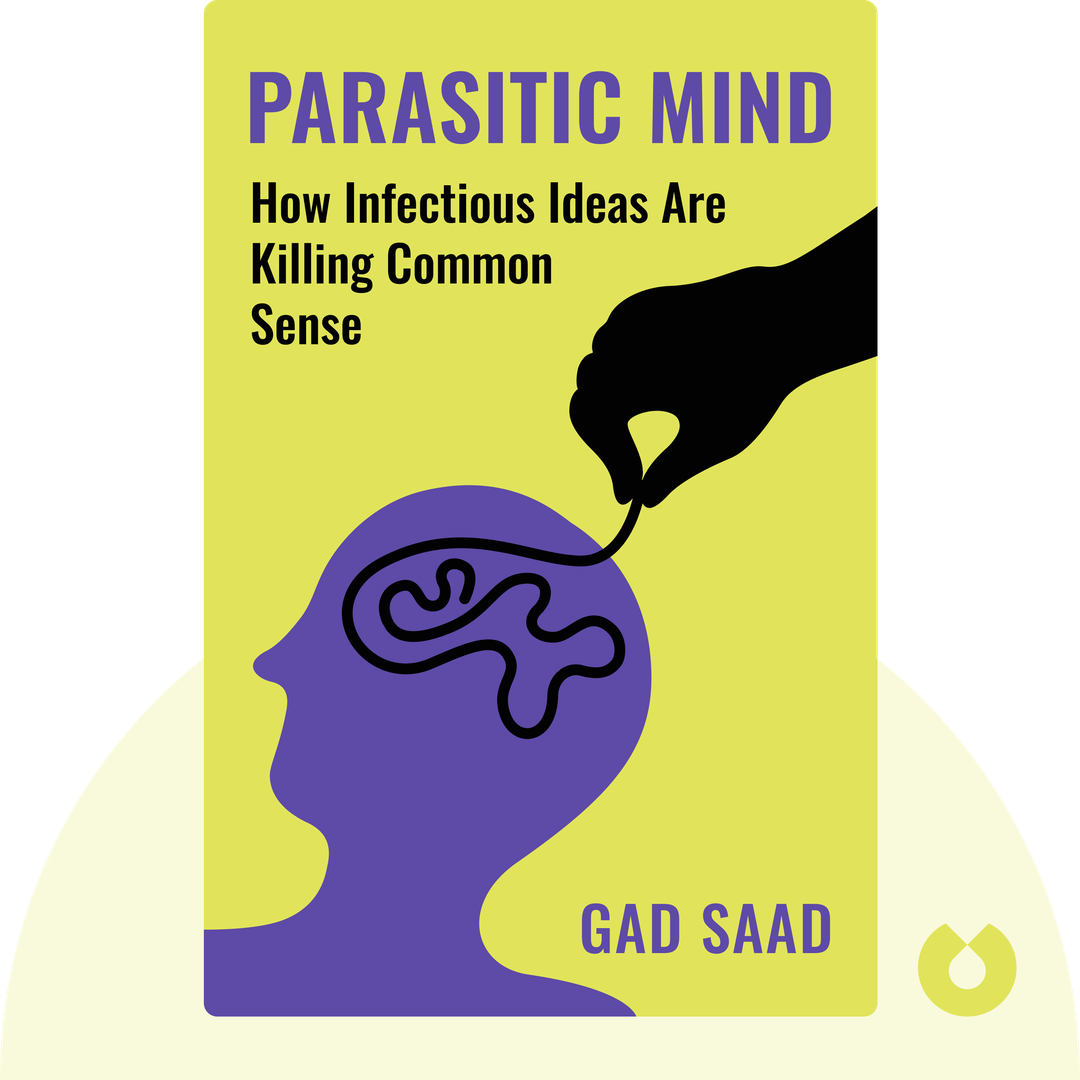
The Parasitic Mind (2020) examines how certain ideologies have infiltrated modern society, threatening reason, freedom, and intellectual diversity. It explores how these “idea pathogens” spread from universities to politics, business, and culture, leading to emotional thinking and intellectual conformity. It argues for a return to critical thinking, science, and free speech to combat these harmful beliefs.
Who Should Listen to Parasitic Mind?
- Critical thinkers concerned about the erosion of free speech
- University students navigating ideological conformity in academic environments
- Educators seeking to promote intellectual diversity and free inquiry
Books Similar to Parasitic Mind
Readers who enjoyed this also liked these titles.