If You're Curious About These Questions...
You should listen to this audiobook
- Have you ever wondered why some civilizations experience explosive growth and innovation while others stagnate for centuries?
- Did you know that the secret behind the success of history’s greatest empires, from the Phoenicians to the Dutch, lies in a single policy toward outsiders?
- Are you curious about how the simple act of being 'open' can solve the most complex problems of the modern world?
Listen to Open — Free Audiobook
Loading player...
Key Takeaways from Open
- Discover why free trade and social openness are the true engines of human prosperity, and how giving in to fear during crises historically leads to economic collapse.
- Learn how the division of labor and a willingness to travel allowed Homo sapiens to thrive, while the isolated, closed-minded nature of Neanderthals led to their extinction.
- Understand the true origins of cities by exploring how early globalists like the Phoenicians used interconnected trade to invent the alphabet, advance science, and generate immense wealth.
- Find out how the Roman Empire achieved its greatest heights through tolerance and open borders, and why its eventual shift toward religious persecution caused its inevitable collapse.
- Uncover the myth of European exceptionalism by exploring how the Islamic Golden Age preserved scientific advancements and enlightenment while a closed-minded Europe languished in the Dark Ages.
Learning Tools
Reinforce what you learned from Open
Mind Map
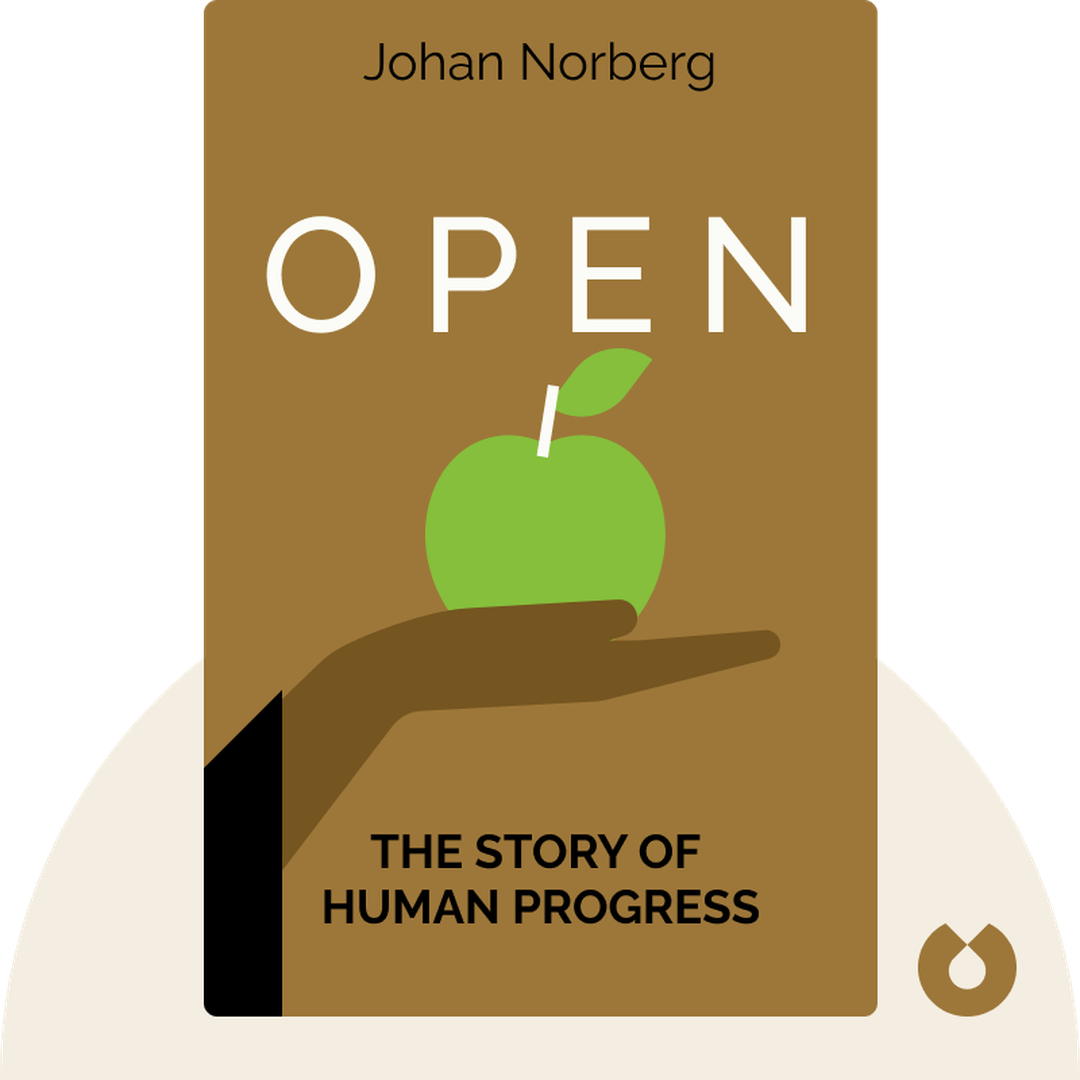
Open
Evolution of Cooperation+
Historical Eras of Openness+
Economics of Free Trade+
Threats to Openness+
Solving Modern Crises+
Quiz — Test Your Understanding
Question 1 of 8
According to the text, why did Homo sapiens thrive and form prosperous societies while Neanderthals died out?
Question 2 of 8
What does the author suggest was the actual reason early humans began building cities?
Question 3 of 8
What common historical event led to the closing off and decline of both the Islamic Golden Age and China's Song dynasty?
Question 4 of 8
How did the Dutch Republic achieve tremendous economic success during the emergence of global trade?
Question 5 of 8
How does the author characterize the global economy and free trade?
Question 6 of 8
According to the psychological studies mentioned in the text, how do human beings instinctively react when reminded of their own mortality or faced with crises?
Question 7 of 8
Why do authoritarian regimes, such as the Soviet Union or North Korea, historically struggle with technological innovation?
Question 8 of 8
According to the author, what was the true origin of China's recent economic boom?
Open — Full Chapter Overview
- 1Recommendation
- 2Cooperation is key to human progress.
- 3The first globalists revealed the enduring benefits of free trade and an open society.
- 4Throughout history, enlightenment was happening outside a close-minded Europe.
- 5In Europe, openness took hold as new trade possibilities emerged.
- 6The global economy is not a zero-sum game.
- 7In many ways, human instincts are in conflict with openness.
- 8Authoritarianism is also rooted in human impulse – but it doesn’t help.
- 9The problems facing the world today can only be solved through openness.
Open Summary & Overview
Open (2020) traces the progress of ancient and modern human accomplishments, and reveals that behind all of our major advancements is a policy of openness, tolerance, and free trade. You’ll see how, from the Phoenicians to the Dutch East India Trading Company, the free flow of commerce and ideas has led to wealth, innovation, and problem-solving that would have never been possible otherwise.
Who Should Listen to Open?
- History buffs
- Those interested in the Brexit debate
- People keen to know the secrets of innovation and progress
Books Similar to Open
Readers who enjoyed this also liked these titles.