If You're Curious About These Questions...
You should listen to this audiobook
- What’s the secret to building lasting emotional resilience so you can thrive in the classroom rather than just surviving the school year?
- Have you ever wondered how specific mindfulness techniques can help you navigate daily pressures and prevent the common trap of educator burnout?
- What if you could master the art of change-management to turn even the most daunting school-wide challenges into opportunities for growth?
Listen to Onward — Free Audiobook
Loading player...
Key Takeaways from Onward
- Discover how building emotional resilience can help educators overcome severe burnout and rediscover their original passion for teaching.
- Understand the six-part cycle of emotions and learn how intervening at any stage can help you shift negative reactions into positive outcomes.
- Find out why prioritizing a strong community and sharing time with your peers is an absolute necessity for preventing workplace isolation.
- Learn how practicing mindfulness can help you weather adversity and process the heavy emotional toll of working closely with children.
- Master the ability to pause before reacting to challenging student behavior, enabling you to break bad habits and accept that difficult emotions are only temporary.
Learning Tools
Reinforce what you learned from Onward
Mind Map
Onward
Understanding Emotions+
Cultivating Community+
Practicing Mindfulness+
Prioritizing Self-Care+
The Importance of Play+
Navigating Change+
Practicing Gratitude+
Celebrating Transitions+
Quiz — Test Your Understanding
Question 1 of 8
According to Elena Aguilar, what is a crucial realization about the six-part cycle of emotions?
Question 2 of 8
Why did Elena Aguilar choose to reject a job offer that would have increased her annual salary by $10,000?
Question 3 of 8
What valuable lesson does practicing mindfulness teach us about our emotions?
Question 4 of 8
If a teacher neglects self-care because he believes he is undeserving of it and fears people will lose respect for him if he rests, which type of 'gap' is he experiencing?
Question 5 of 8
According to psychiatrist Stuart Brown, which of the following is a defining characteristic of 'real play'?
Question 6 of 8
When faced with an unwanted or scary change at work, what does Aguilar recommend as your first reaction?
Question 7 of 8
Based on a 2006 study at Northeastern University, what is a proven benefit of feeling grateful for the help of others?
Question 8 of 8
What actionable advice does Aguilar give regarding the frequent beginnings and endings experienced in a teaching career?
Onward — Full Chapter Overview
- 1Recommendation
- 2Grasping the emotional cycle is crucial for building strong resilience.
- 3Cultivate a sense of community to build resilience.
- 4Mindfulness helps us endure adversity and comprehend our emotions.
- 5Practicing self-care matters, but it may not always come naturally.
- 6Increase your happiness and performance by making time to play.
- 7Build resilience to change by pausing, assessing, and making your energy count.
- 8Make your school a better place through practicing gratitude.
Onward Summary & Overview
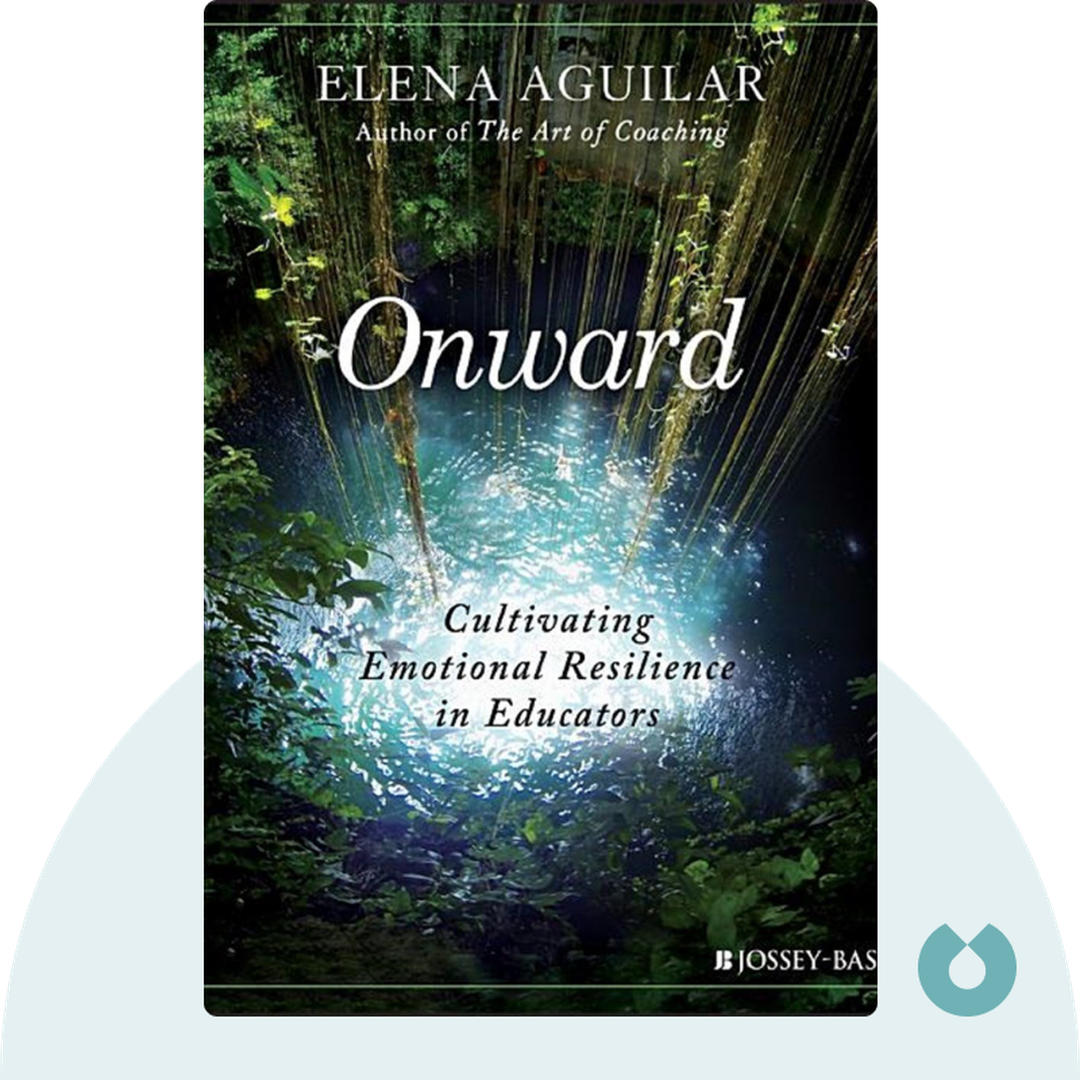
Onward (2018) explains how educators can cope better with adversity so that they and their students can thrive in the classroom. Filled with rich insights from author Elena Aguilar’s experiences as an educator, these blinks also explore mindfulness and change-management techniques.
Who Should Listen to Onward?
- New teachers struggling to cope
- Experienced educators seeking fresh insights
- Psychology buffs wanting a new angle
Books Similar to Onward
Readers who enjoyed this also liked these titles.