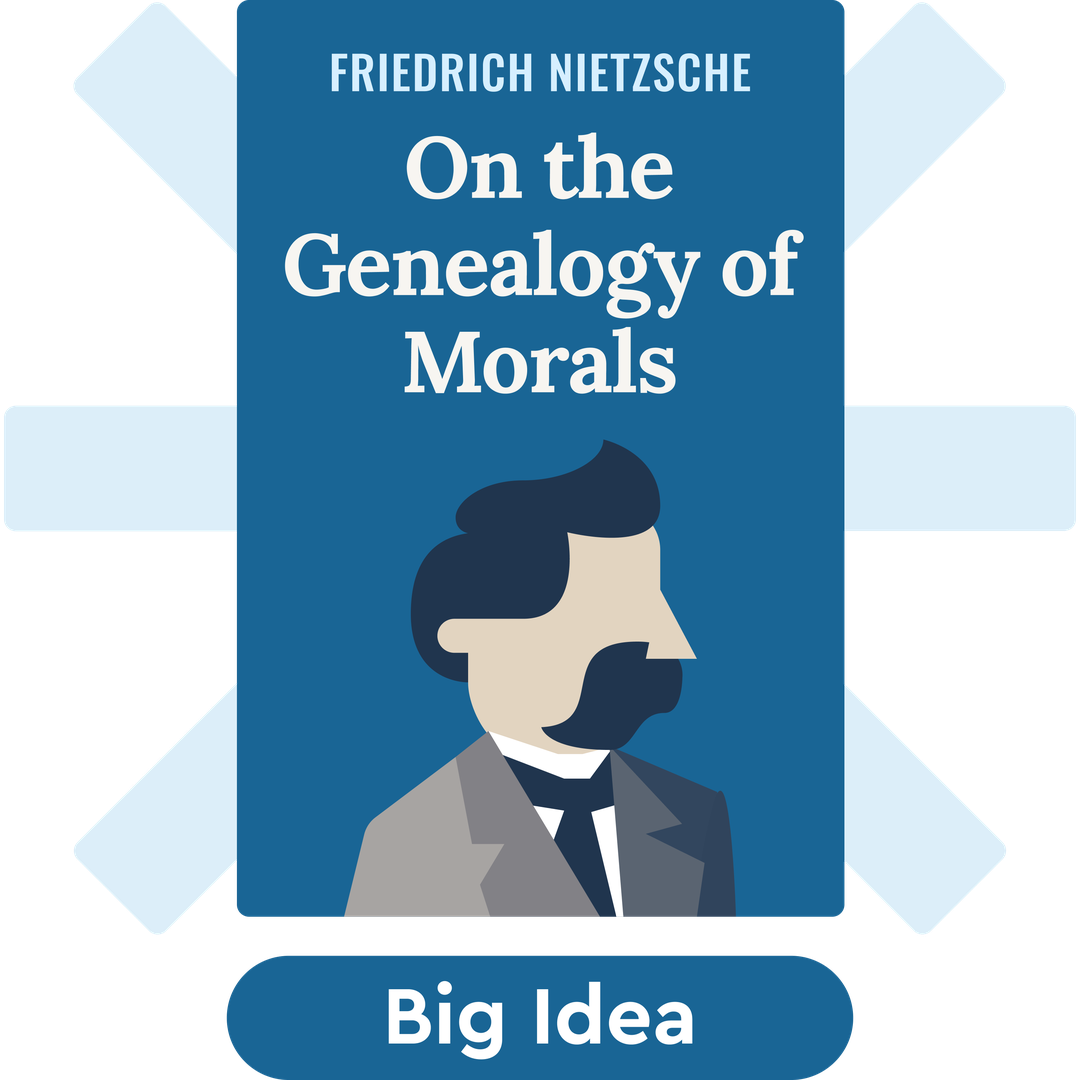
On the Genealogy of Morals
Start ListeningDownload Try free on iPhoneScan to start in 5 seconds
Categories:
If You're Curious About These Questions...
You should listen to this audiobook
- Have you ever wondered if our concepts of 'good' and 'evil' were actually born out of deep-seated resentment rather than objective truth?
- Did you know that your sense of guilt and conscience might have a much more violent and surprising history than you’ve ever imagined?
- Are you curious about why humanity began to see self-denial and suffering as the ultimate signs of virtue?
Listen to On the Genealogy of Morals — Free Audiobook
Loading player...
Key Takeaways from On the Genealogy of Morals
- Understand why our moral values are not universal natural truths, but rather evolving concepts created and shaped by society over time.
- Discover the fundamental difference between 'master morality' and 'slave morality,' and how modern virtues were born from the resentment of the oppressed.
- Learn how to critically examine the origins of 'good' and 'evil,' recognizing that these concepts stem from historical power dynamics rather than inherent qualities.
- Find out how rejecting blind obedience to traditional rules in favor of values that celebrate life and creativity can lead to a more liberated human condition.
- Explore how treating morality as a fluid, ongoing conversation helps us navigate modern ethical shifts and thoughtfully engage with diverse human beliefs.
Learning Tools
Reinforce what you learned from On the Genealogy of Morals
Mind Map
On the Genealogy of Morals
Core Premise: Morality is Fluid+
The Two Types of Morality+
Morality as a Societal Tool+
Nietzsche's Call to Action+
Quiz — Test Your Understanding
Question 1 of 5
According to the text, what is Nietzsche's primary view on the nature of morality?
Question 2 of 5
How does Nietzsche explain the origin of 'slave morality'?
Question 3 of 5
How does Nietzsche view the concepts of 'good' and 'evil'?
Question 4 of 5
Why does Nietzsche encourage us to critically examine the origins of our moral values?
Question 5 of 5
What modern example is provided in the text to illustrate the fluid and evolving nature of morality?
On the Genealogy of Morals — Full Chapter Overview
- 1Recommendation
- 2Morality on Trial
- 3Good, Bad, and the Rebellion of the Weak
- 4Ressentiment and the Manufacture of Ideals
- 5Guilt, Debt, and the Memory of Pain
- 6The Birth of Bad Conscience
- 7Punishment, Justice, and the Uses of Power
- 8Ascetic Ideals and the Meaning of Suffering
- 9Science, Truth, and the Last Shadow of God
- 10Ecce Homo and Nietzsche’s Self-Portrait
- 11Revaluation, Danger, and the Future
On the Genealogy of Morals Summary & Overview
On the Genealogy of Morals (1887) delves deeply into Nietzsche’s evolving moral philosophy, exploring the origins and meanings of traditional Western morality. It suggests a radical departure from it and posits the emergence of new moral constructs.
Who Should Listen to On the Genealogy of Morals?
- Philosophers and thinkers
- Readers interested in morality
- Nietzsche’s followers
Books Similar to On the Genealogy of Morals
Readers who enjoyed this also liked these titles.