If You're Curious About These Questions...
You should listen to this audiobook
- Have you ever wondered how one of the world’s wealthiest, oil-rich nations can simultaneously be home to millions of citizens living in abject poverty?
- Did you know that despite its status as a global powerhouse, Saudi Arabia’s education system has struggled with some of the world’s lowest rankings—and do you know why?
- Are you curious about the secret internal dynamics that allow the complex Saudi royal family to maintain control amidst rising religious fanaticism and social unrest?
Listen to On Saudi Arabia — Free Audiobook
Loading player...
Key Takeaways from On Saudi Arabia
- Understand how King Ibn Saud used the strict doctrines of Wahhabism to unite nomadic Bedouin tribes and ensure unquestioning loyalty to an absolute monarchy.
- Grasp how the Saudi royal family maintains total control over its citizens by strategically managing the nation's media, civic organizations, and vast oil wealth.
- Discover how public disputes among top religious leaders regarding gender mixing are showing citizens that Wahhabi Islamic rules may not be completely absolute.
- Learn how social media and the internet are dismantling generations of cultural isolation, empowering Saudis to unite and actively criticize government mismanagement.
- Find out why modern Saudi women are challenging their restricted societal roles by looking back to the historically empowered and accomplished women described in the Qur'an.
Learning Tools
Reinforce what you learned from On Saudi Arabia
Mind Map
On Saudi Arabia
History & Governance+
Religion & Society+
Modern Catalysts for Change+
The Royal Family+
Education & Employment+
Economic Crisis+
Quiz — Test Your Understanding
Question 1 of 8
How did King Ibn Saud ensure the loyalty of the nomadic Bedouin tribes when forming the Saudi state?
Question 2 of 8
What event led Saudi citizens to begin feeling that Wahhabi Islamic rules might not be absolute and unwavering?
Question 3 of 8
How did social media impact Saudi society following the devastating floods in 2009 and 2011?
Question 4 of 8
King Abdullah made several reforms regarding women's rights, such as allowing them to take part in parliament elections. How does the book characterize these gestures?
Question 5 of 8
What was the subject of Feras Bugnah's viral short film, 'We Are Screwed', which led to his temporary arrest?
Question 6 of 8
According to the book, what is true about the thousands of Saudi princes with direct lineage to the throne?
Question 7 of 8
Despite spending more money on education than the United States, why does Saudi Arabia struggle to improve its educational outcomes?
Question 8 of 8
How did King Abdullah's attempt to help the unemployed by creating new government jobs and raising public sector wages inadvertently hurt the economy?
On Saudi Arabia — Full Chapter Overview
- 1Recommendation
- 2Saudi Arabia remains among the few countries that still have an absolute monarchy, partly sustained by strong religious influence.
- 3Saudi Arabia is deeply religious, yet leaders disagree over the proper ways to practice that faith there.
- 4Saudi Arabians have long remained isolated from each other, but social media is changing that.
- 5Women are pushing back against traditional roles in Saudi society, and their efforts are beginning to show.
- 6A new generation of rebellious youth has emerged in Saudi Arabia, reflecting broader social unrest.
- 7Saudi Arabia hosts an unusually large number of princes, yet most of them strive to serve the country well.
- 8Despite massive spending on public education, Saudi Arabia’s unemployment rate remains alarmingly and dangerously high.
- 9Saudi Arabia’s economy depends too much on oil and foreign labor, and efforts to fix this have already failed.
On Saudi Arabia Summary & Overview
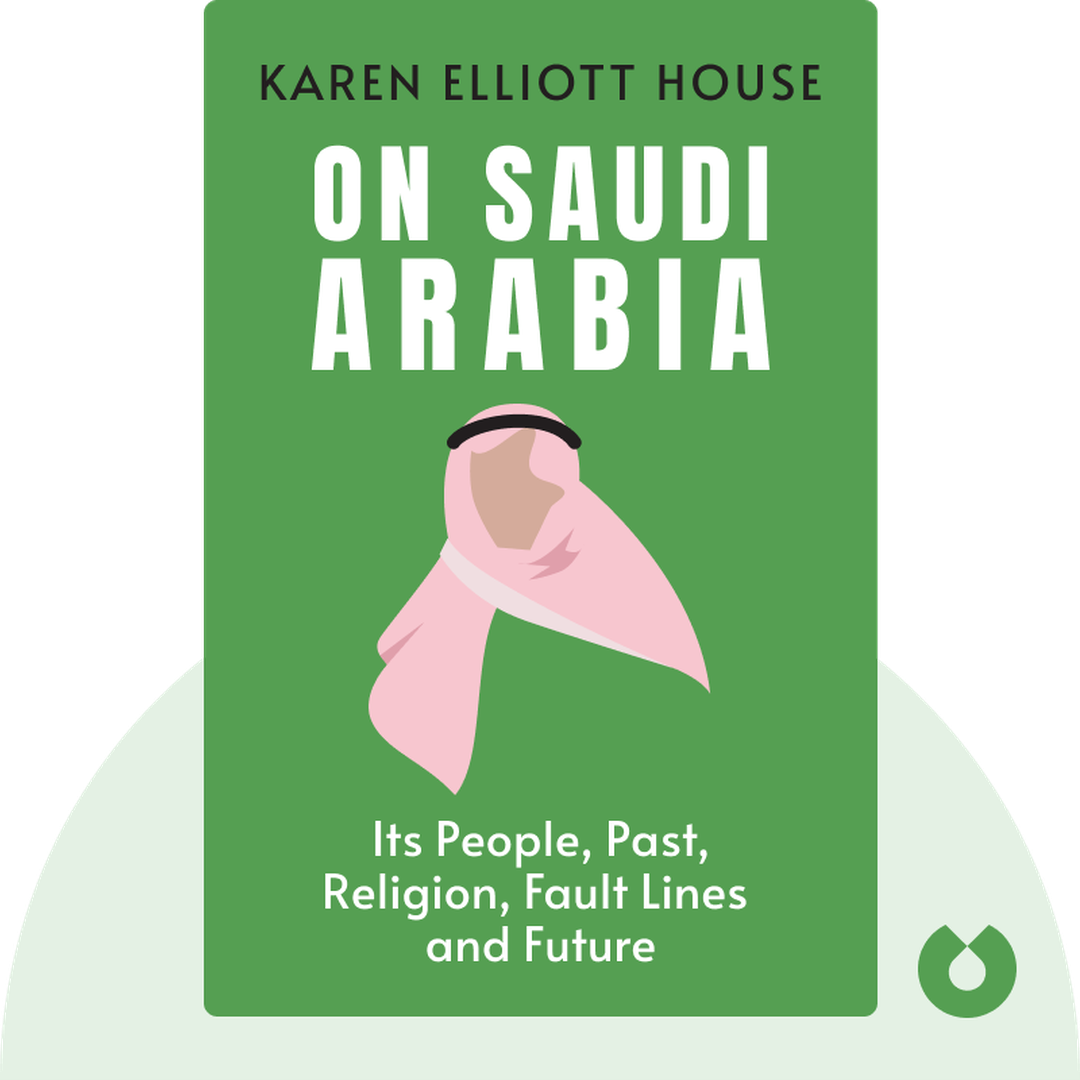
On Saudi Arabia (2012) gives a fascinating overview of a country rife with contradictions. Despite being immensely wealthy, Saudi Arabia is filled with people who live in abject poverty. And although on its way to being counted among the world’s most powerful countries, it has an education system that’s received execrable rankings. Add to this a liberal dose of religious fanaticism and a complex royal family and you’ll begin to see why Saudi Arabia has struggled to come to terms with itself.
Who Should Listen to On Saudi Arabia?
- Readers wanting to know more about life in Saudi Arabia
- Economists interested in a rich yet struggling nation
- Travelers considering a visit to Saudi Arabia
Books Similar to On Saudi Arabia
Readers who enjoyed this also liked these titles.