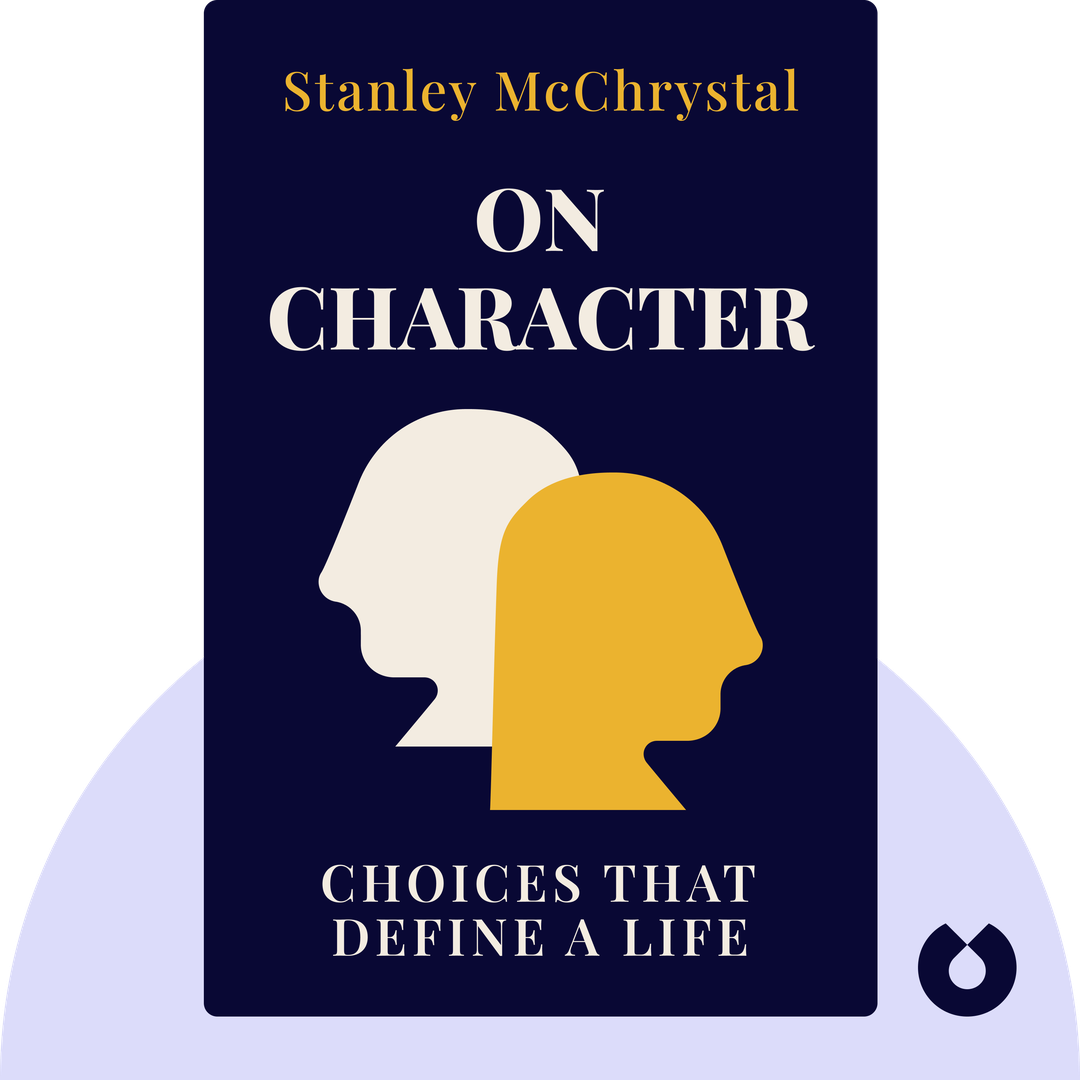
If You're Curious About These Questions...
You should listen to this audiobook
- Did you know that true character isn’t a trait you’re born with or a title you earn, but a skill built through the smallest choices you make every single day?
- Have you ever wondered how to bridge the gap between who you are right now and the person you’re truly capable of becoming?
- What if the secret to authentic leadership isn't found in your achievements, but in the way you handle the personal struggles no one else sees?
Listen to On Character — Free Audiobook
Loading player...
Key Takeaways from On Character
- Discover the simple but powerful formula for building character: multiplying your deep convictions by the daily discipline required to live them out.
- Understand why unshakeable character is never innate or tied to a prestigious title, but forged through the accumulation of countless small, daily choices.
- Learn how to identify your authentic convictions by questioning the beliefs you’ve unconsciously absorbed from society and actively thinking for yourself.
- Find out why connecting your daily work to a deeper purpose offers far more fulfillment than simply chasing money as your primary motivator.
- Master the art of building lasting self-discipline by focusing on steady, daily consistency rather than striving for unattainable perfection.
Learning Tools
Reinforce what you learned from On Character
Mind Map
On Character
The Core Formula+
Defining Authentic Convictions+
The Practice of Discipline+
Daily Leadership+
The Test of Time and Pressure+
Quiz — Test Your Understanding
Question 1 of 7
According to the author, what is the formula for building authentic character?
Question 2 of 7
Why does the author warn against blindly absorbing beliefs from parents, society, or institutions?
Question 3 of 7
What lesson did elite special forces operators learn during the 2003 retention crisis when many left for high-paying private contractor jobs?
Question 4 of 7
How does the author view the concept of discipline in relation to character?
Question 5 of 7
According to the text, what is a common mistake that young leaders often make?
Question 6 of 7
What does the example of Juul Labs illustrate about character and convictions?
Question 7 of 7
How does the author suggest individuals handle the transition when they retire or are no longer 'essential' in their former roles?
On Character — Full Chapter Overview
- 1Recommendation
- 2Character is forged, never granted.
- 3In order to grasp your true convictions, see yourself from all angles.
- 4It takes a lifetime to truly discover what really matters.
- 5Discipline isn’t about perfection, but about consistency.
- 6Being a good leader is a daily decision.
- 7True character reveals itself through time and under pressure.
On Character Summary & Overview
On Character (2025) reveals the simple but powerful formula behind authentic character. Drawing from decades of military leadership and personal struggles, four-star general Stanley McChrystal argues that true character isn't something you're born with or earn through titles – it's built through countless daily choices over a lifetime. This practical guide offers both philosophical insights and actionable strategies for anyone seeking to close the gap between who they are and who they're capable of becoming.
Who Should Listen to On Character?
- Leaders and executives seeking to align their decision-making with their values
- Students and young professionals at formative career stages
- Anyone interested in moral philosophy and self-improvement
Books Similar to On Character
Readers who enjoyed this also liked these titles.