If You're Curious About These Questions...
You should listen to this audiobook
- What’s the secret to successfully advising seven different U.S. presidents while navigating the intense and often polarized intersection of science and politics?
- Have you ever wondered what it’s really like to be the person 'on call' when the world’s most terrifying infectious diseases begin to surface?
- Did you know that the hard-won lessons from the HIV/AIDS crisis decades ago are still fundamentally shaping how we respond to global health threats today?
Listen to On Call — Free Audiobook
Loading player...
Key Takeaways from On Call
- Discover how Anthony Fauci’s upbringing in a Brooklyn pharmacy and his early fascination with deadly but curable infectious diseases shaped his historic medical career.
- Learn how a puzzling 1981 CDC report about a rare pneumonia prompted Fauci to shift his entire professional focus toward battling the emerging AIDS epidemic.
- Understand how Fauci championed crucial partnerships between the NIH and pharmaceutical companies to transform HIV/AIDS from a tragic death sentence into a manageable condition.
- Find out how the tragic events of 9/11 expanded Fauci's public health responsibilities, leading him to helm the $6 billion Project BioShield to protect the public from bioterrorism.
- Explore the evolution of one of the world's most recognizable doctors as he guided the United States through decades of unprecedented viral threats and global health crises.
Learning Tools
Reinforce what you learned from On Call
Mind Map
On Call
Early Life & Origins+
The HIV/AIDS Epidemic+
Global Health & Bioterrorism+
Politicization of Public Health+
COVID-19 & The Trump Era+
Reflections & Future Outlook+
Quiz — Test Your Understanding
Question 1 of 7
What initially prompted Dr. Fauci to shift his career focus entirely in 1981?
Question 2 of 7
What significant medical advancement transformed AIDS from a death sentence into a manageable condition?
Question 3 of 7
What was the primary focus of the PEPFAR program initiated during George W. Bush's presidency?
Question 4 of 7
According to the book, what major obstacle hindered the US government's ability to quickly fund a response to the Zika virus outbreak in 2016?
Question 5 of 7
Why did Dr. Fauci publicly contradict the Trump administration regarding the use of Hydroxychloroquine for COVID-19?
Question 6 of 7
How did Dr. Fauci view his ethical responsibility to the American people during the COVID-19 pandemic?
Question 7 of 7
What did Dr. Fauci identify as a major contributing factor to the unnecessarily high mortality rates during the COVID-19 pandemic?
On Call — Full Chapter Overview
- 1Recommendation
- 2A smart Brooklyn boy
- 3A fresh purpose in life
- 4Thinking globally about AIDS relief
- 5Viruses get politicized
- 6The dual challenges of COVID and a new administration
- 7Retiring while hopeful for the future
On Call Summary & Overview
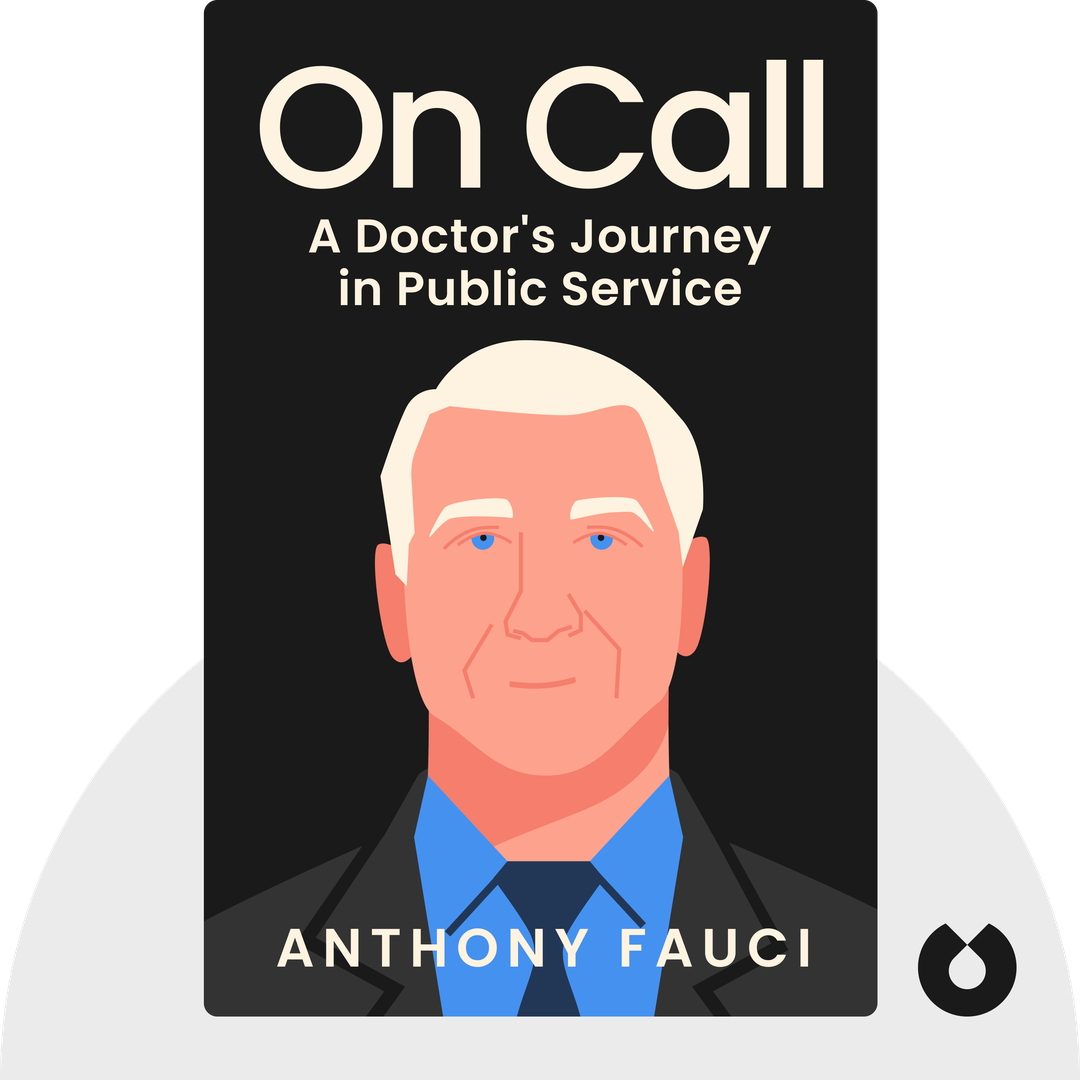
On Call (2024) is a unique memoir that offers an insider’s perspective on the challenges and triumphs of battling some of the most significant public health crises of our time. It provides valuable insights into the intersection of science, politics, and society, making it an essential read for anyone seeking to understand the complexities of modern public health in the US.
Who Should Listen to On Call?
- People curious about infectious diseases
- Science buffs
- Anyone interested in the intersection of medicine and politics
Books Similar to On Call
Readers who enjoyed this also liked these titles.