If You're Curious About These Questions...
You should listen to this audiobook
- What’s the secret to looking past surface-level noise to spot the hidden trends that will actually define our future?
- Have you ever wondered why some visionaries can see massive shifts in the market long before they become obvious to everyone else?
- What if you could learn a repeatable process to identify the 'non-obvious' ideas that are currently shaping the world of tomorrow?
Listen to Non-Obvious — Free Audiobook
Loading player...
Key Takeaways from Non-Obvious
- Understand why obvious predictions about the future usually fail and how to look beneath the surface to spot the hidden trends shaping modern society.
- Learn to act like a 'trend curator' by gathering seemingly disconnected pieces of information from various fields and extracting their deeper meaning.
- Master the five-step 'haystack method' to systematically identify trends by gathering, aggregating, elevating, naming, and proving your ideas.
- Discover why being fickle is actually a valuable trait that prevents you from getting fixated on a single concept while generating more ideas to curate.
- Find out how to thoughtfully reflect on your findings and elegantly communicate your trend predictions using clear, simple, and memorable language.
Learning Tools
Reinforce what you learned from Non-Obvious
Mind Map
Non-Obvious
Trend Curation Concept+
The Haystack Method+
Essential Curator Traits+
Applying Discovered Trends+
Key Business Trends+
Quiz — Test Your Understanding
Question 1 of 10
According to the book, how does a 'trend curator' differ from someone who makes obvious predictions?
Question 2 of 10
In the 'haystack method' of identifying trends, what does the 'elevating' step involve?
Question 3 of 10
Why does the author argue that being 'fickle' is a positive trait for a trend curator?
Question 4 of 10
How does the book define being 'elegant' in the context of trend curation?
Question 5 of 10
When running a workshop to figure out how to use a trend, who should be chosen as the leader?
Question 6 of 10
The trend of 'Everyday Stardom' is best illustrated by which of the following examples?
Question 7 of 10
What shift in consumer behavior defines the 'reversible retail' trend?
Question 8 of 10
The Teatreneu Club in Barcelona, which uses facial recognition technology to charge attendees based on how much they laugh, is an example of which trend?
Question 9 of 10
What is 'intersectional thinking' as described in the book?
Question 10 of 10
What is the defining characteristic of 'disruptive distribution'?
Non-Obvious — Full Chapter Overview
- 1Recommendation
- 2You curate trends by closely observing non-obvious patterns across today's modern society.
- 3Identify hidden trends with the haystack method.
- 4Become a trend curator by remaining curious, fickle, and observant.
- 5Trend curators also need to be thoughtful and elegant.
- 6After finding a trend, use workshops or intersectional thinking to determine how best you can use it.
- 7This year, we will see new trends in the ways we purchase services.
- 8We will also see new trends in the ways people interact with companies.
- 9Some upcoming trends relate to shifts in the way we consume products.
Non-Obvious Summary & Overview
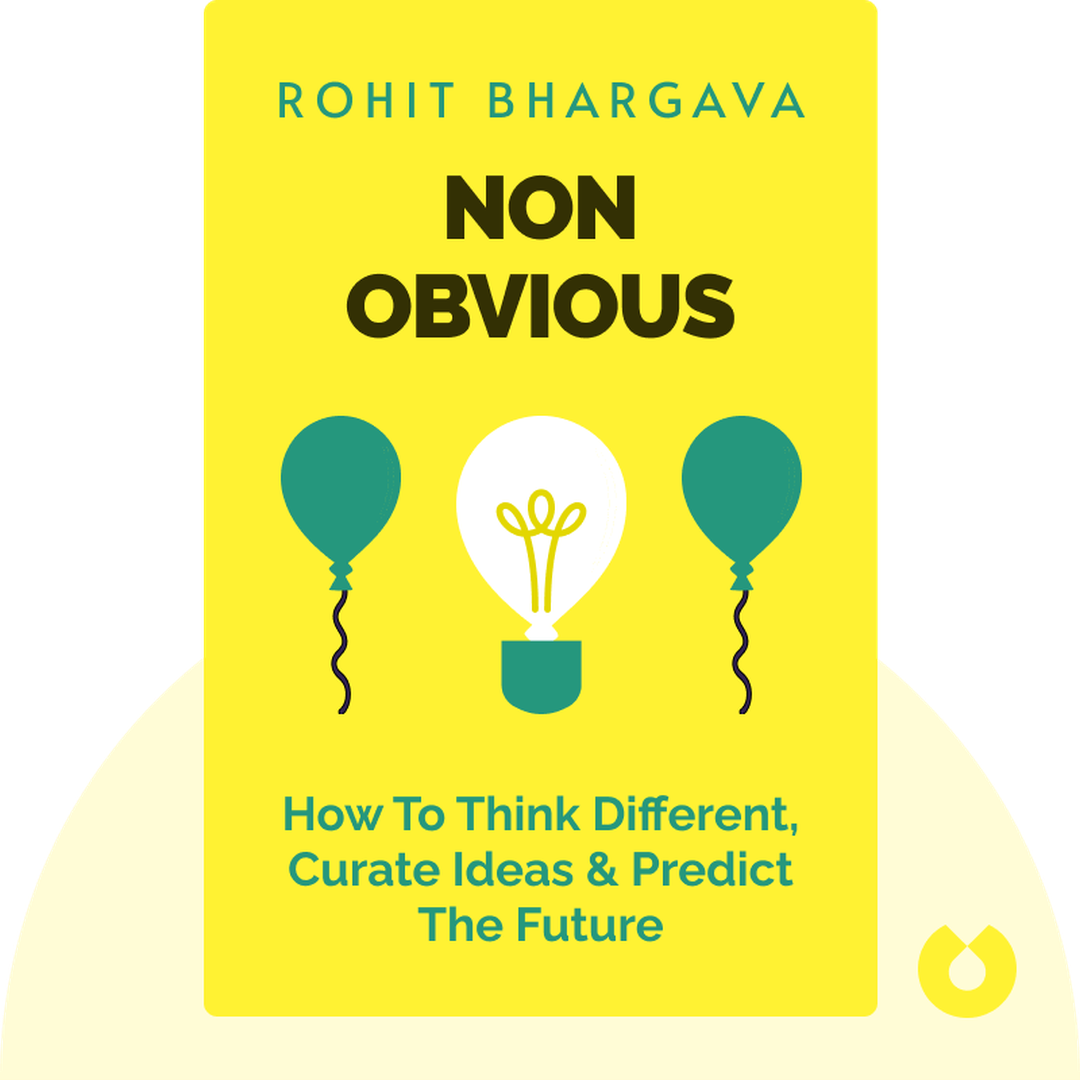
Non-Obvious is all about detecting important trends, an essential part of running a business. You can't accurately predict the future by looking at obvious, surface-level influences – the important ones are hidden underneath. These blinks offer advice on identifying meaningful changes, while outlining some prominent trends we're likely to see in the future.
Who Should Listen to Non-Obvious?
- Anyone who wants to learn about spotting trends
- Movers and shakers searching for an investment with high potential
- Curious readers who want to know what tomorrow's trends will be
Books Similar to Non-Obvious
Readers who enjoyed this also liked these titles.