If You're Curious About These Questions...
You should listen to this audiobook
- Did you know that the groundbreaking technology behind Google Earth almost disappeared into obscurity before a high-stakes deal changed the tech world forever?
- Have you ever wondered how a small team of Silicon Valley outsiders managed to organize the entire physical world into a digital map we carry in our pockets?
- Are you curious about the visionary risks and leadership secrets that turned a struggling startup into the indispensable global phenomenon we now know as Google Maps?
Listen to Never Lost Again — Free Audiobook
Loading player...
Key Takeaways from Never Lost Again
- Discover how the ubiquitous Google Maps and Google Earth technologies originated from a small 1990s start-up called Keyhole.
- Learn how Keyhole survived the devastating dot-com crash by pivoting its target audience from individual consumers to diverse clients like real estate developers and government agencies.
- Find out how early digital mapping technology proved its real-world value by helping investigators map GPS data to solve the high-profile Scott Peterson murder case.
- Understand why the 2003 Iraq War became a massive catalyst for digital mapping after a strategic CNN broadcast deal skyrocketed public demand for EarthViewer.
- Discover how the pursuit of high-resolution satellite imagery led to crucial partnerships with aerial photographers and secured a lucrative CIA-backed venture capital contract.
Learning Tools
Reinforce what you learned from Never Lost Again
Mind Map
Never Lost Again
Origins: Keyhole Start-up+
Surviving the Dot-Com Crash+
The Turning Point: Iraq War+
Google Acquisition (2004)+
Building Google Maps+
The Mapping Revolution+
Mapping for Good+
Quiz — Test Your Understanding
Question 1 of 8
What was the original name of the start-up that developed the technology behind Google Maps and Google Earth?
Question 2 of 8
How did Keyhole manage to survive the financial turmoil of the dot-com bubble burst?
Question 3 of 8
What major world event served as a catalyst for massive public exposure to Keyhole's EarthViewer?
Question 4 of 8
Why did Google founders Larry Page and Sergey Brin believe Keyhole's mapping technology was a perfect fit for Google's core business?
Question 5 of 8
What crucial contribution did the Rasmussen brothers' start-up, Where2Tech, bring to the development of Google Maps?
Question 6 of 8
How did Google's decision to make Google Maps free and easy to customize impact the broader tech and business ecosystem?
Question 7 of 8
How did the Coast Guard utilize Google Earth to save lives during the aftermath of Hurricane Katrina?
Question 8 of 8
What was the result of Rebecca Moore's use of Google Earth in the Santa Cruz mountains?
Never Lost Again — Full Chapter Overview
- 1Recommendation
- 2The Google Maps story begins with a small start-up called Keyhole.
- 3Keyhole survived the dot-com bubble by serving a wide range of clients.
- 4The US-led invasion of Iraq changed Keyhole’s fortunes.
- 5Google expanded its search capabilities by acquiring Keyhole in 2004.
- 6The Keyhole team and skilled Google employees built Google Maps.
- 7Google Maps launched an information and commercial revolution.
- 8Google’s mapping technology has become a powerful force for good.
- 9Final summary
Never Lost Again Summary & Overview
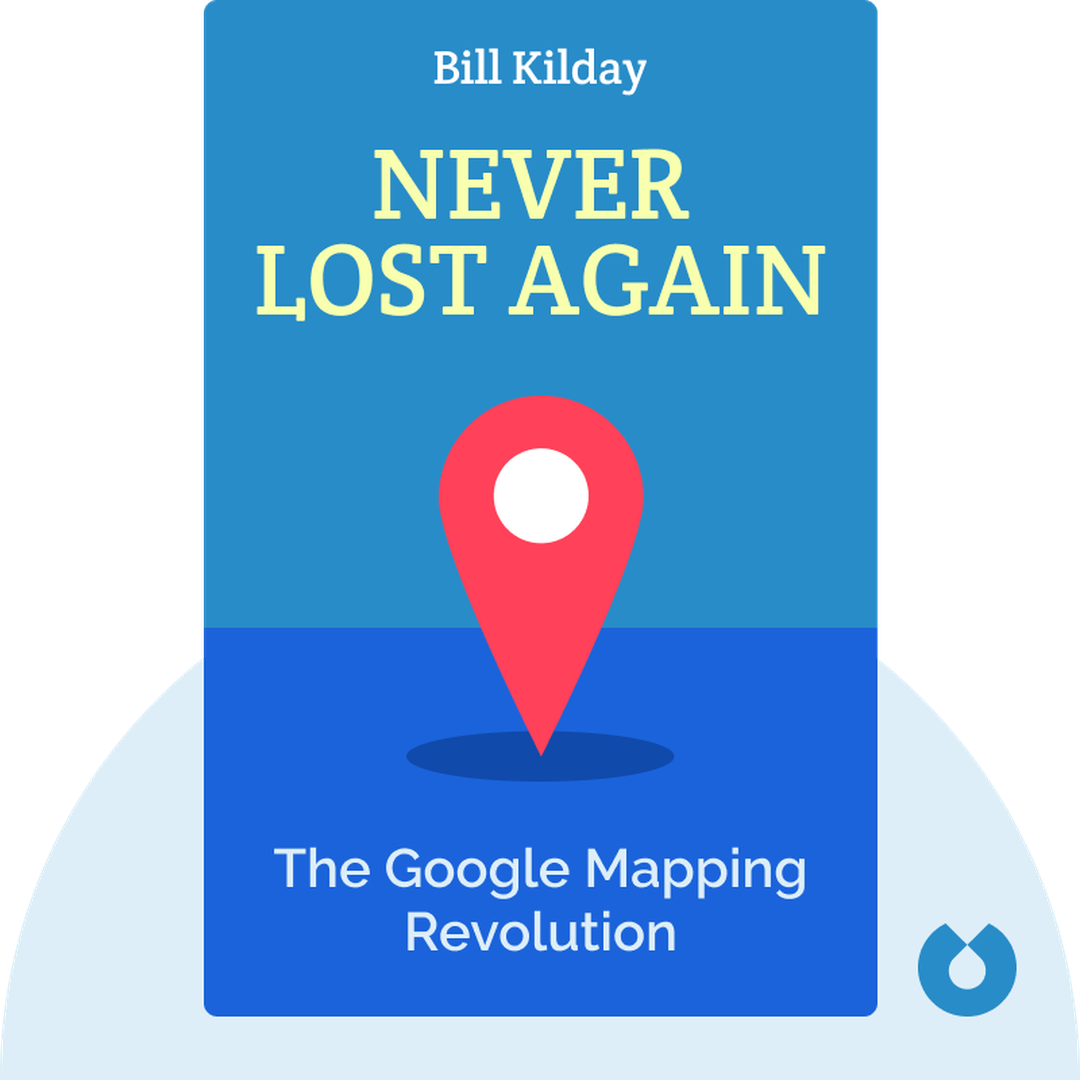
Never Lost Again (2018) details the story of Google Maps and Google Earth – from their origins with Keyhole, a little-known Silicon Valley start-up, to their roll-out under Google in 2005. In addition to following the different characters who made the applications happen, Never Lost Again explores how the world has changed forever since the Google mapping revolution began.
Who Should Listen to Never Lost Again?
- Anyone interested in Silicon Valley
- Coders, software developers, and tech enthusiasts
- Company leaders looking for an inspiring vision
Books Similar to Never Lost Again
Readers who enjoyed this also liked these titles.