If You're Curious About These Questions...
You should listen to this audiobook
- Have you ever wondered why today's high-achieving students are feeling more overwhelmed and anxious than any generation before them?
- Did you know that the very ways we encourage our children to succeed might be inadvertently damaging their sense of self-worth?
- What’s the secret to helping the next generation feel like they are 'enough' in a society that constantly demands more?
Listen to Never Enough — Free Audiobook
Loading player...
Key Takeaways from Never Enough
- Understand how childhood has been transformed into a 'professionalized' marathon that puts students from high-achieving schools at severe risk for anxiety and depression.
- Discover why modern economic insecurity and a parental scarcity mindset are driving today's hyper-focused, pressure-filled achievement culture.
- Learn how tying a child's identity to their accomplishments leads to destructive perfectionism and makes them feel their worth is conditional.
- Find out how to mitigate toxic stress in your child's life by consciously disentangling their fundamental self-worth from their academic and extracurricular successes.
- Master the psychological concept of 'mattering' to protect your child's mental well-being by ensuring they feel intrinsically valued regardless of their performance.
Learning Tools
Reinforce what you learned from Never Enough
Mind Map
Never Enough
The Achievement Culture Crisis+
The Root Cause: Economic Anxiety+
The Solution: The Power of 'Mattering'+
Intrinsic vs. Extrinsic Values+
Creating a Culture of Abundance+
Quiz — Test Your Understanding
Question 1 of 6
According to recent research mentioned in the text, which surprising demographic is now identified as part of the 'at-risk' youth category?
Question 2 of 6
What primary economic shift has driven contemporary parents to adopt a 'scarcity mindset' and become more overbearing?
Question 3 of 6
What does the story of Molly, the high school junior who runs laps with her eyes closed, symbolize in the text?
Question 4 of 6
In the context of the book, what is the psychological concept of 'mattering'?
Question 5 of 6
How does psychologist Tim Kasser describe the relationship between extrinsic values (like financial success) and intrinsic values (like community involvement)?
Question 6 of 6
What does the Sanskrit term 'mudita' represent in the context of the book's proposed solutions?
Never Enough — Full Chapter Overview
- 1Recommendation
- 2Childhood has been “professionalized” — and it’s harming young people
- 3Economic shifts are making parents anxious — and more pushy
- 4Parents can help kids handle today’s ultra-competitive world by showing them they matter
- 5The nonstop chase for status makes us unhappy
- 6Embrace mattering and increase joy
- 7Final summary
Never Enough Summary & Overview
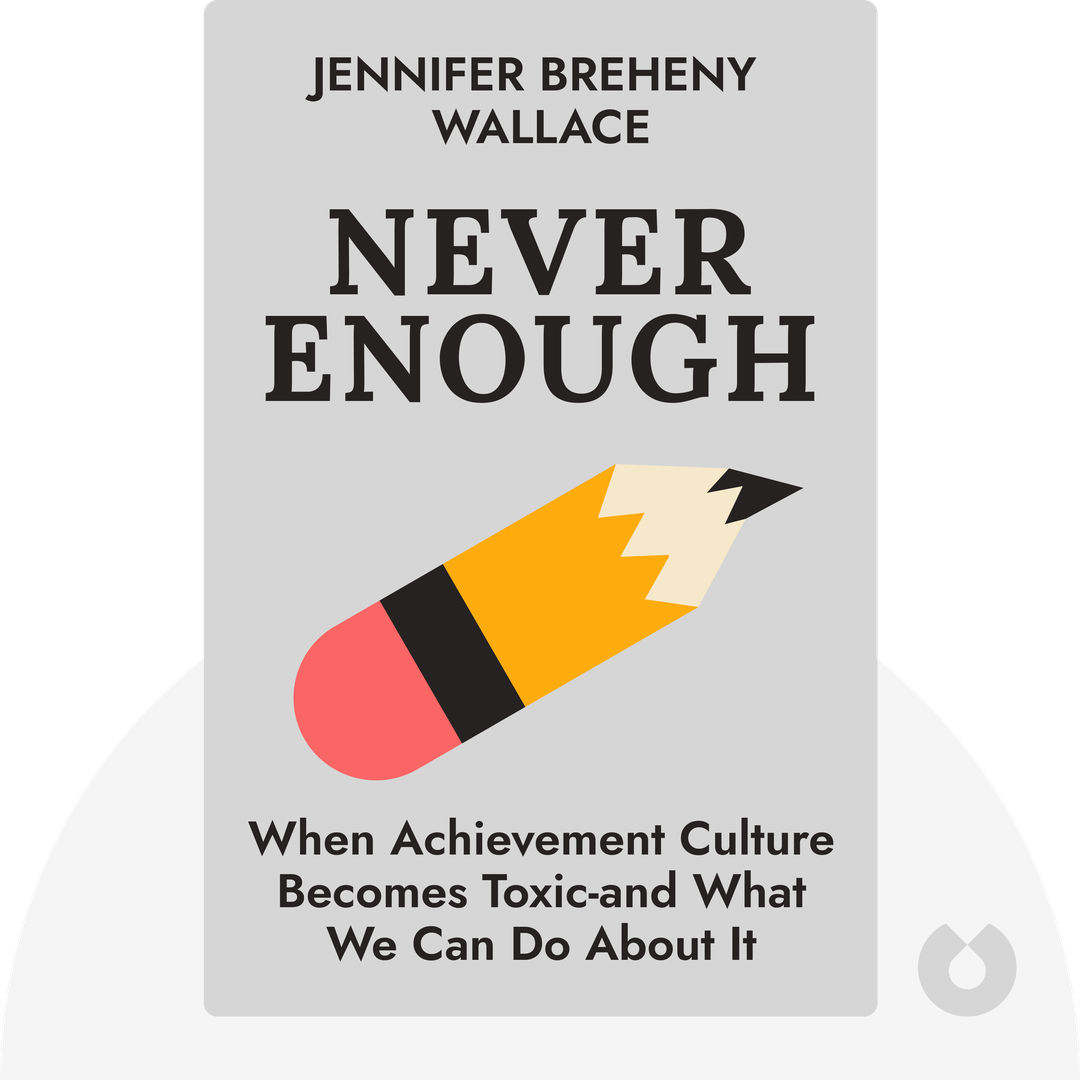
Never Enough (2023) delves into the harmful nature of achievement culture, exploring its origins and implications for society. Through extensive interviews and a comprehensive survey, discover how societal structures have instilled in children the corrosive belief that their worth is solely tied to their achievements – and what we can do about it.
Who Should Listen to Never Enough?
- Parents navigating modern achievement pressures
- Educators seeking understanding on student stress
- Readers exploring societal influence on success
Books Similar to Never Enough
Readers who enjoyed this also liked these titles.