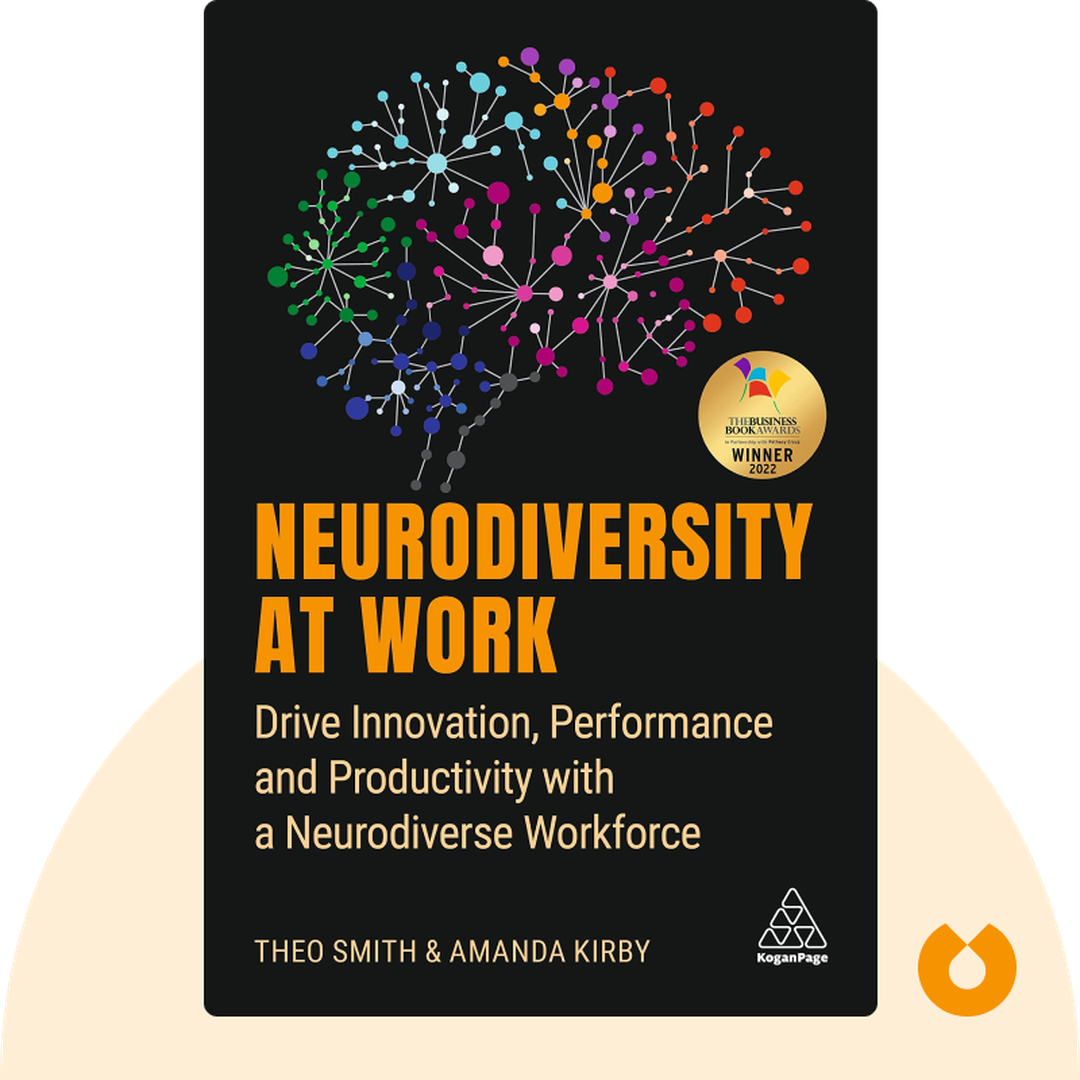
Neurodiversity at Work
Start ListeningDownload Try free on iPhoneScan to start in 5 seconds
Categories:
If You're Curious About These Questions...
You should listen to this audiobook
- Have you ever wondered why traditional hiring practices often filter out some of your most innovative and talented potential employees?
- What if the secret to building a truly future-proof and creative team lies in rethinking how you define 'the ideal candidate'?
- Did you know that updating a few archaic workplace habits could be the key to unlocking the full potential of neurodiverse talent in your organization?
Listen to Neurodiversity at Work — Cinematic Audio Edition
Loading player...
Key Takeaways from Neurodiversity at Work
- Understand the true spectrum of neurodiversity and discover why incorporating unique ways of processing information leads to unexpected solutions for complex problems.
- Discover why traditional, highly ritualized hiring practices exclude talented neurodiverse individuals and ultimately weaken your company's potential for innovation.
- Learn how to confront your unconscious biases during recruitment to stop hiring for a 'culture fit' that merely creates weak, homogenous teams.
- Find out how to optimize your job descriptions by stripping away unnecessary requirements, avoiding buzzwords, and explicitly stating your commitment to neurodiversity.
- Master the art of transforming the job interview from a high-pressure exam into an accessible collaboration that lets all candidates truly showcase their capabilities.
Learning Tools
Reinforce what you learned from Neurodiversity at Work
Mind Map
Neurodiversity at Work
Understanding Neurodiversity+
Step 1: Confront Hidden Biases+
Step 2: Collaborative Interviewing+
Step 3: Person-Centered Environments+
Broader Impact & Action+
Quiz — Test Your Understanding
Question 1 of 7
Why do traditional hiring processes often exclude neurodiverse candidates?
Question 2 of 7
According to the text, what is the danger of hiring managers relying heavily on their 'intuition'?
Question 3 of 7
When writing a job advertisement, what is a recommended strategy to attract neurodiverse talent?
Question 4 of 7
How can hiring managers adjust the interview process to make it a more productive collaboration?
Question 5 of 7
What does a 'person-centered approach' mean in the context of supporting neurodiverse employees?
Question 6 of 7
Why does the text emphasize the importance of putting implicit workplace expectations in writing?
Question 7 of 7
What is the primary purpose of a neurodiversity network in the workplace?
Neurodiversity at Work — Full Chapter Overview
- 1Recommendation
- 2What is neurodiversity, and why is it important?
- 3Step one: face your hidden biases, and stop searching for someone who “fits” the team.
- 4Step two: turn your interview process into a productive collaboration, not an exam.
- 5Step three: build a person-centered environment that supports different ways of working.
- 6Final summary
Neurodiversity at Work Summary & Overview
Neurodiversity at Work (2022) is a practical guide to recruiting neurodiverse employees and creating work environments that allow them to thrive. Thanks to the digital revolution, the world of work has changed dramatically over the last decades. Yet corporate culture has remained trapped in archaic hiring practices that don’t work for the neurodiverse. By updating these practices, you’ll create a more inclusive workplace, which will yield more successful and innovative teams.
Who Should Listen to Neurodiversity at Work?
- Hiring managers seeking to attract neurodiverse candidates
- Leaders looking to create a communicative, trusting workplace
- Anyone who wants to learn how to advocate for themselves in a corporate environment
Books Similar to Neurodiversity at Work
Readers who enjoyed this also liked these titles.