If You're Curious About These Questions...
You should listen to this audiobook
- Did you know that many of the most popular strategic principles preached by business gurus actually have no scientific evidence to support them?
- Have you ever wondered why common-sense management advice so often fails to deliver results in the real world?
- What if you could distinguish between a passing business fad and a rigorous, research-backed strategy that actually drives long-term success?
Listen to Myths of Strategy — Free Audiobook
Loading player...
Key Takeaways from Myths of Strategy
- Learn how to balance deliberate, high-level planning with an emergent strategy that empowers leaders to adapt to unexpected challenges.
- Discover why social influence and luck often play a much larger role in a product's success than pure talent.
- Understand the dangers of hyper-focusing on single, hard-line goals and how adopting multiple metrics and an indirect aim can protect your company's long-term health.
- Find out why stretch goals only yield positive results when a company is already thriving, rather than struggling.
- Recognize why trying to beat competitors solely on extreme price or quality is highly risky, and how operating in the middle ground offers safer stability.
Learning Tools
Reinforce what you learned from Myths of Strategy
Mind Map
Myths of Strategy
The Foundation of Strategy+
Myth 1: Careful Planning is Required+
Myth 2: Talent is the Main Factor+
Myth 3: Firm Goals Lead to Success+
Myth 4: Best Strategy is Beating Competition+
Myth 5: Being Best or Cheapest Wins+
Myth 6: Best Leaders Have Vision+
Quiz — Test Your Understanding
Question 1 of 8
According to the book, what is the primary flaw in the strategic advice given by many business gurus and consultants?
Question 2 of 8
Based on the story of IKEA, what is an 'emergent strategy'?
Question 3 of 8
What did the Music Lab experiment reveal about the relationship between talent and success?
Question 4 of 8
According to the text, under what condition do 'stretch goals' actually yield positive results?
Question 5 of 8
What does the principle of 'obliquity' suggest in the context of business strategy?
Question 6 of 8
Why is the advice to 'beat competitors on price or quality' in a flourishing sector considered high-risk?
Question 7 of 8
What was a primary driver of the massive success of both the Apple iPhone and Amazon's online retail store?
Question 8 of 8
When deciding whether to hire an insider or an outsider for a top leadership position, what do studies suggest?
Myths of Strategy — Full Chapter Overview
- 1Recommendation
- 2Myth: “Success Depends on Careful Planning”
- 3Myth: “Talent Is the Main Driver of Success”
- 4Myth: “Firm Goals Lead to Success”
- 5Myth: “The Best Strategy Is to Beat the Competition”
- 6Myth: “Being the Best or the Cheapest Leads to Success”
- 7Myth: “The Best Leaders Have Vision”
- 8Final summary
Myths of Strategy Summary & Overview
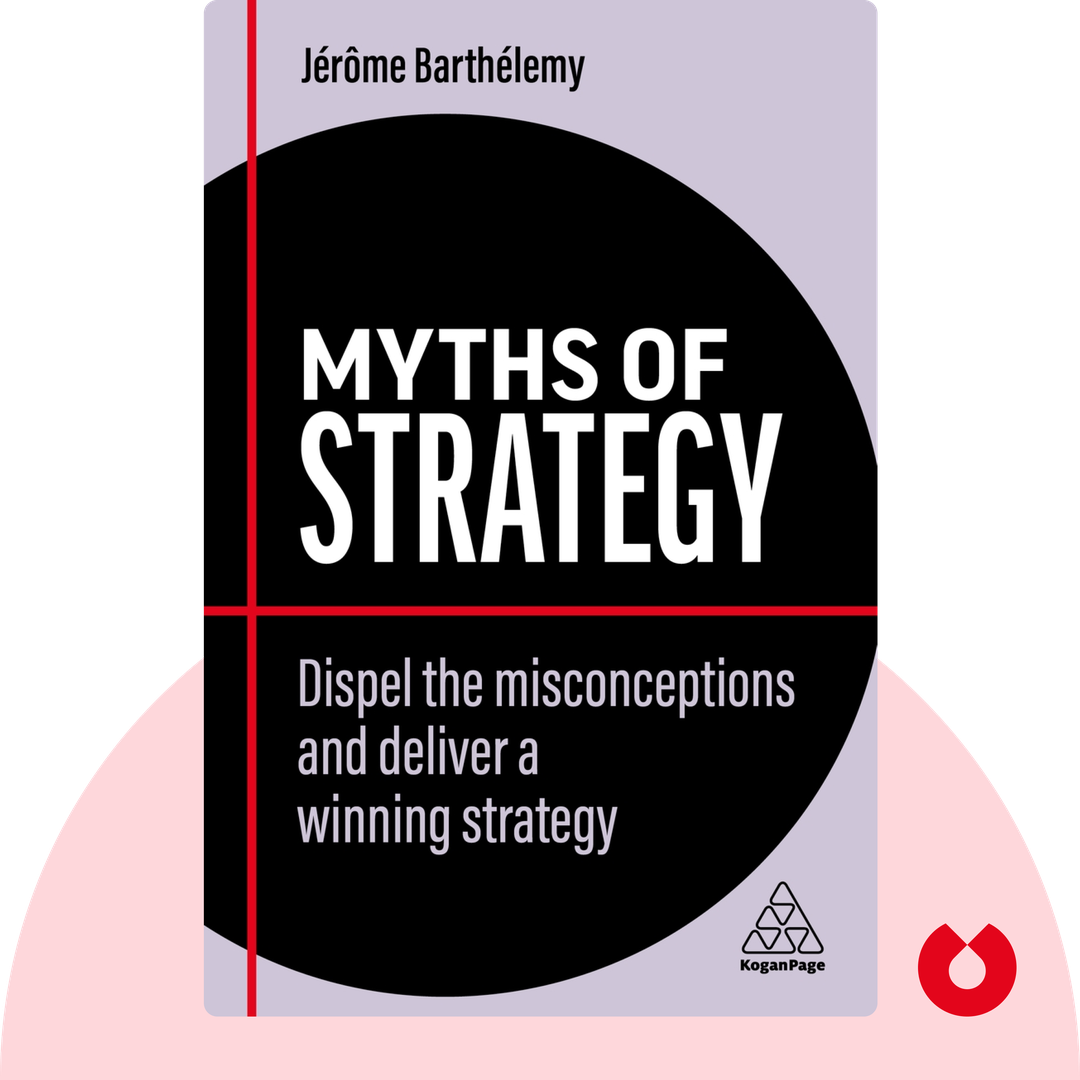
Myths of Strategy (2022) responds to the oversimplified generalizations of modern business gurus and consultants by debunking assertions about strategy. Using peer-reviewed research, the book holds advice on business strategy to the same stringent standards as other scientific and sociological fields of study.
Who Should Listen to Myths of Strategy?
- Entrepreneurs and business leaders
- C-Suite executives
- Business students
Books Similar to Myths of Strategy
Readers who enjoyed this also liked these titles.