If You're Curious About These Questions...
You should listen to this audiobook
- Have you ever wondered how your mother’s own body image might have silently shaped your relationship with food and self-worth?
- Are you curious about the complex psychological factors that drive binge-eating disorder in a world obsessed with diet culture?
- What's the secret to dismantling years of internalized shame and finding a more compassionate way to inhabit your own body?
Listen to More, Please — Free Audiobook
Loading player...
Key Takeaways from More, Please
- Understand how generational diet culture and unspoken maternal expectations shape your body image, allowing you to examine these early influences without blame to begin your healing process.
- Discover why achieving a target weight or following strict diet programs often just morphs your shame rather than solving life's underlying emotional challenges.
- Learn how to separate your self-worth from the number on the scale by reframing your relationship with food around true nourishment instead of punishment.
- Explore how societal expectations and hyper-critical professional environments can trigger disordered eating, even within supposedly liberating communities.
- Find out how to reclaim your personal agency and silence the internal voice that equates your worth with your physical size, embracing a non-linear but rewarding path to recovery.
Learning Tools
Reinforce what you learned from More, Please
Mind Map
More, Please
Maternal & Generational Influence+
Diet Culture & Self-Worth+
Navigating Societal Pressures+
Redefining Movement+
Recovery & Inner Peace+
Quiz — Test Your Understanding
Question 1 of 6
How does Emma view her mother's influence on her early body image and eating habits?
Question 2 of 6
What critical realization did Emma have about weight loss and her identity after finding success on programs like Weight Watchers?
Question 3 of 6
How did moving to Brooklyn and embracing her queer identity impact Emma's struggle with body image?
Question 4 of 6
How did Emma's perspective on physical exercise evolve during her recovery?
Question 5 of 6
What specific tool did Emma discover during the 2020 quarantine that helped guide her through recovery?
Question 6 of 6
According to Emma's journey, what is the most realistic expectation for someone recovering from an eating disorder?
More, Please — Full Chapter Overview
- 1Recommendation
- 2The unseen impact of a mother’s influence
- 3Redefining self-worth beyond weight
- 4Embracing self-acceptance in a judgmental society
- 5Finding joy in movement, not only fitness
- 6Finding inner peace through self-reflection
- 7Final summary
More, Please Summary & Overview
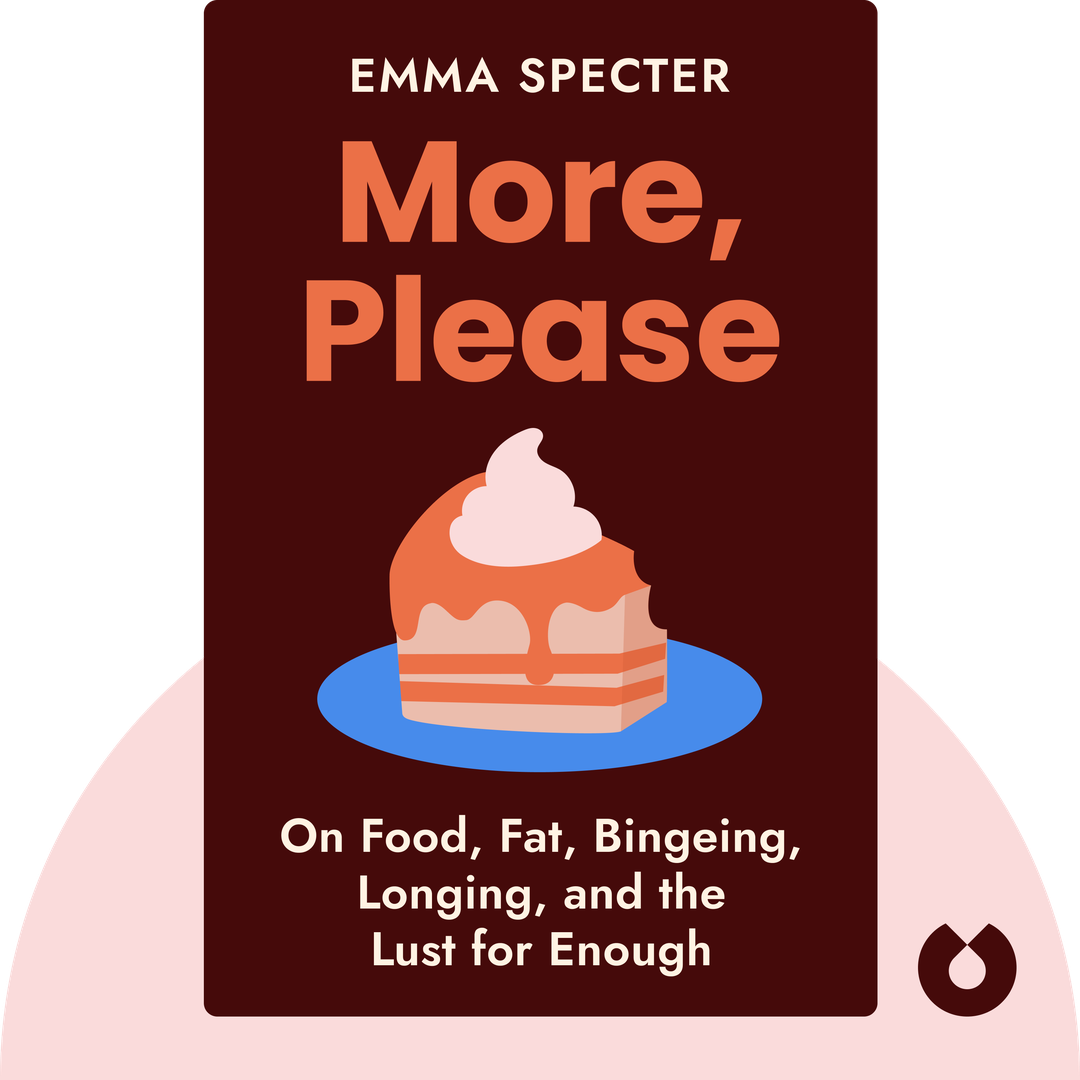
More, Please (2024) invites you to explore the impact of maternal influences and societal pressures on body image and self-worth. Through a blend of personal narrative, journalism, and expert insights, it delves into the complexities of binge-eating disorder and the challenges of navigating diet culture – and encourages a compassionate approach to understanding and improving your relationship with food and body image.
Who Should Listen to More, Please?
- Individuals with eating disorders
- Anyone interested in body positivity
- Parents, guardians, and teachers
Books Similar to More, Please
Readers who enjoyed this also liked these titles.