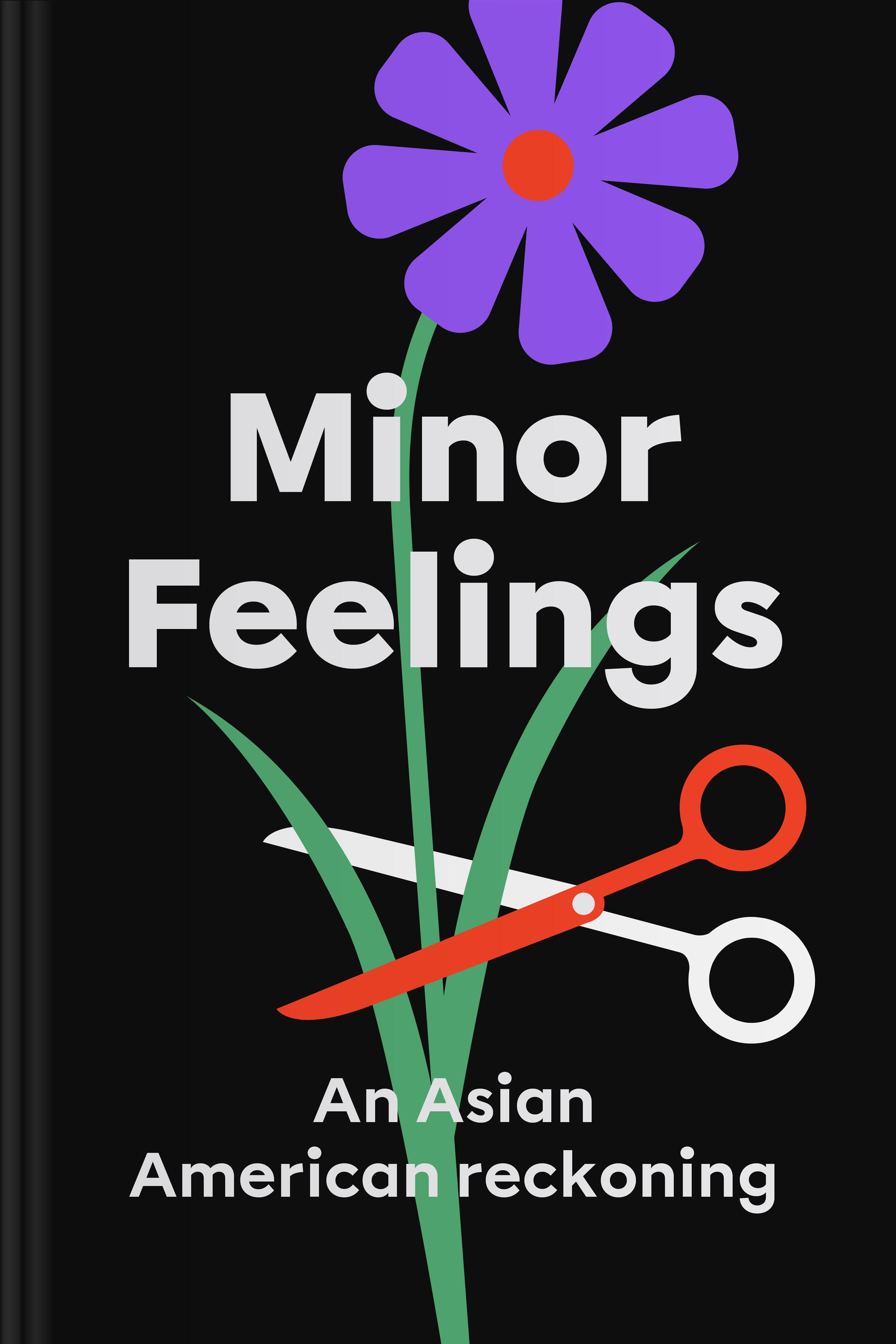
If You're Curious About These Questions...
You should listen to this audiobook
- Have you ever wondered why being "invisible" in society can be just as complex and damaging as facing overt prejudice?
- Did you know that the "model minority" stereotype is often used as a tool to mask a deeper history of systemic exclusion?
- Are you curious about what "minor feelings" are, and how these subtle, everyday emotions hold the key to understanding the modern Asian American experience?
Listen to Minor Feelings — Free Audiobook
Key Takeaways from Minor Feelings
- Understand why invisibility does not protect against racism, but instead creates an exhausting reality where Asian Americans are simultaneously overlooked and judged.
- Discover how Asian Americans are frequently used as convenient comparison points to diminish the suffering of others, rather than being recognized as a community with a distinct history.
- Learn why explaining everyday racism to those who haven't experienced it becomes a deeply draining burden that forces marginalized people to constantly defend their own reality.
- Explore how the historical flattening of distinct Asian cultures into a single, vague category complicates personal identity and erases the unique struggles of different immigrant groups.
- Recognize how past exclusionary policies and the uncredited, dangerous labor of early Asian immigrants established lingering societal expectations to simply work hard and stay quiet.
Learning Tools
Reinforce what you learned from Minor Feelings
Mind Map
Quiz — Test Your Understanding
Minor Feelings — Full Chapter Overview
- 1Recommendation
- 2Asian Americans live in a purgatorial state, neither Black nor white, with an identity that remains poorly defined.
- 3Richard Pryor’s stand-up shows how race shapes every part of a person’s life.
- 4Growing up in an Asian immigrant family is a uniquely complex experience.
- 5The author found her voice through friendships and a combative relationship with English.
- 6Theresa Hak Kyung Cha’s story reveals US attitudes toward Asian women.
- 7Asian Americans still hold a conditional status in the United States.
- 8Final summary
Minor Feelings Summary & Overview
This audio-friendly summary follows Cathy Park Hong’s reflections on Asian American identity—how it can be shaped by invisibility, pressure to overachieve, and the constant need to explain one’s reality to people who may not recognize it. Through personal memory and cultural history, the narrative shows how racism can be both loud and quiet: visible in major incidents, and also embedded in everyday assumptions and systems.
Across eight chapters, the story moves from childhood and family history to immigration policy, public violence, and the rise of hate crimes. The through-line is a gentle but clear invitation: to listen more closely, to take Asian American experiences seriously, and to make space for complex identities without pushing them into the category of “other.”
Who Should Listen to Minor Feelings?
- Listeners who want a clearer, more human understanding of Asian American experiences beyond stereotypes like “model minority” or “quiet success.”
- Anyone trying to learn how racism can show up through invisibility, history, and everyday systems—not only through overt slurs or headlines.
- People looking for a thoughtful, non-judgmental prompt to reflect on identity, belonging, and what respectful allyship can look like.
Books Similar to Minor Feelings
Readers who enjoyed this also liked these titles.