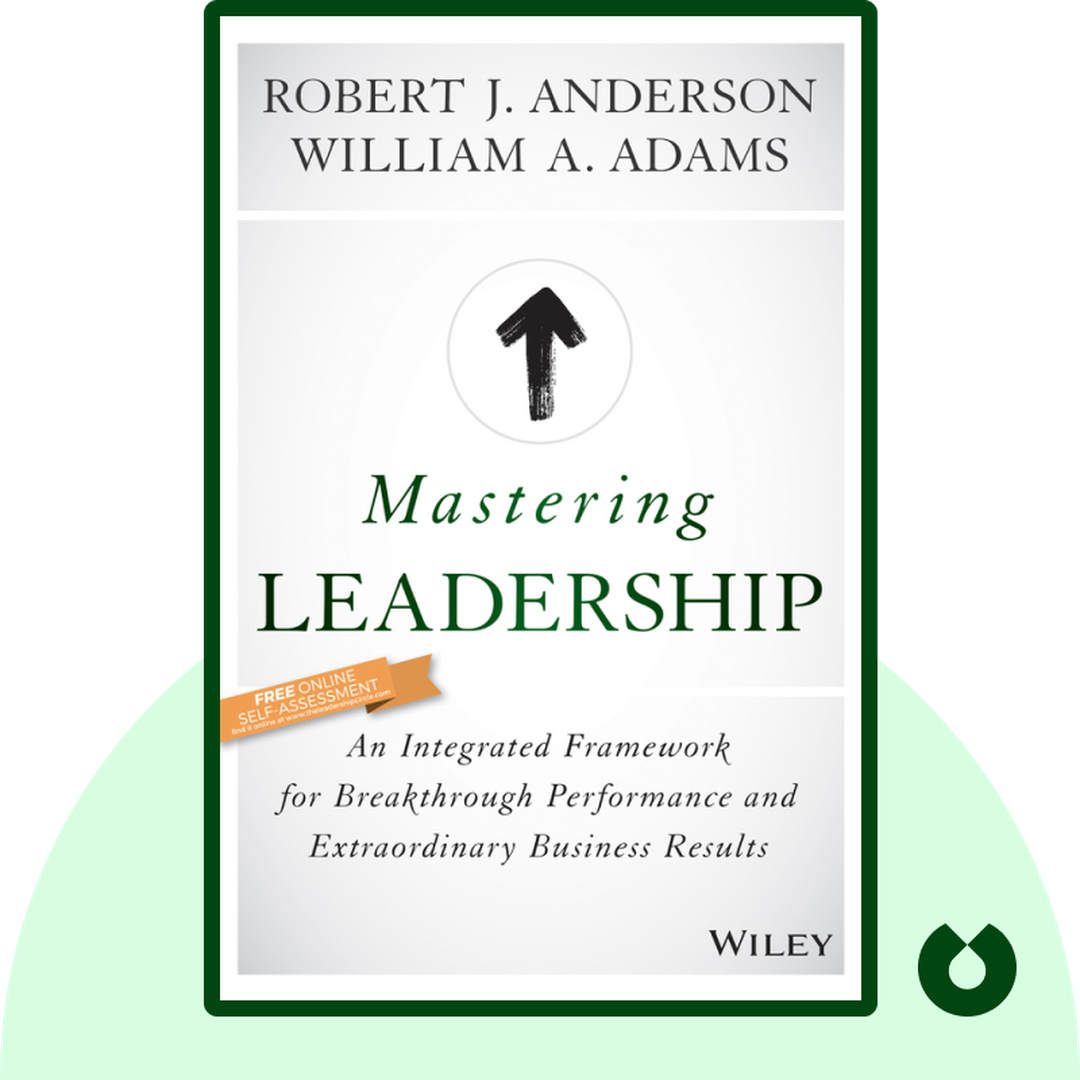
If You're Curious About These Questions...
You should listen to this audiobook
- Did you know that the key to unlocking your full potential as a leader might actually be hidden within the ancient wisdom of classical mythology?
- What if you could bridge the gap between where you are now and the C-suite by mastering one specific shift in your leadership mindset?
- Have you ever wondered why personal development is often the most overlooked—yet most critical—ingredient for high-impact leadership?
Listen to Mastering Leadership — Cinematic Audio Edition
Loading player...
Key Takeaways from Mastering Leadership
- Discover why improving your organization's performance must begin with transforming yourself from the inside out.
- Learn how to fulfill the unspoken promise of leadership by providing your team with meaningful work and connecting the company's mission to their personal contributions.
- Understand why developing your Extended Leadership Team (ELT) provides a massive competitive advantage over simply relying on a single great CEO.
- Master the ability to elevate the collective intelligence of your leadership team by improving the quality, honesty, and openness of their internal conversations.
- Recognize the dangers of reactive leadership and find out why choosing bold purpose over career safety is essential for thriving in a disruptive world.
Learning Tools
Reinforce what you learned from Mastering Leadership
Mind Map
Mastering Leadership
The Promise of Leadership+
Extended Leadership Team (ELT)+
Leadership Mindsets+
The Hero's Journey+
Cultivating Authenticity+
Integral Leadership+
Decision Making+
Quiz — Test Your Understanding
Question 1 of 8
What is identified as the first implicit 'promise' that subordinates believe their leaders have made to them?
Question 2 of 8
According to management expert Peter Senge, what frequently happens to the intelligence and performance of an Extended Leadership Team (ELT) when they interact?
Question 3 of 8
How do the authors characterize 'reactive leadership'?
Question 4 of 8
In the context of leadership, what does the 'death' phase of the mythological Hero's Journey represent?
Question 5 of 8
What point do the authors make by comparing the 'boardroom' to the 'bathroom'?
Question 6 of 8
What defines 'integral leadership,' a style practiced by only about 5 percent of leaders?
Question 7 of 8
How does the motivation of an 'integral leader' differ from that of a purely 'creative leader'?
Question 8 of 8
What actionable advice do the authors provide regarding decision-making in complex systems?
Mastering Leadership — Full Chapter Overview
- 1Recommendation
- 2Leaders often don’t know what’s expected of them.
- 3Organizations should develop their broader leadership team.
- 4Playing it safe won’t help you or your organization flourish.
- 5Becoming a creative leader requires an epic journey.
- 6Creative leaders courageously confront their deepest hopes and dreams.
- 7Integral leadership combines reactive and creative leadership.
- 8Final summary
Mastering Leadership Summary & Overview
Mastering Leadership (2015) explores the link between personal development and great leadership. It reveals the mindset needed to lead effectively, and explores how insights from classical mythology can help managers find their inner heroic leader.
Who Should Listen to Mastering Leadership?
- Middle managers aspiring to join the C-suite
- Leaders looking for fresh insights
- Business owners seeking a new perspective
Books Similar to Mastering Leadership
Readers who enjoyed this also liked these titles.