If You're Curious About These Questions...
You should listen to this audiobook
- Did you know that the secret to boosting your mood and mental clarity might actually lie within your core muscles?
- What if you could dramatically reduce your risk of injury and unlock peak athletic power simply by changing the way you breathe?
- Have you ever wondered why traditional sit-ups aren't enough to fix your posture, and what 'core stability' actually means for your overall health?
Listen to Master Your Core — Free Audiobook
Loading player...
Key Takeaways from Master Your Core
- Understand why your core is much more than just your abs, and how strengthening this vital kinetic chain initiates every major movement your body makes.
- Discover how developing core stability and proprioception—your body's 'sixth sense'—is far more effective at preventing severe injuries than isolated exercises like crunches.
- Learn how correcting your posture by 'standing up curved' instead of strictly straight can alleviate physical pain, combat exhaustion, and instantly boost your mood.
- Find out how the simple act of pandiculation—contracting, lengthening, and relaxing your muscles—can reset your alignment, decrease tension, and improve your brain's sensory feedback.
- Master the powerful connection between your core, mind, and heart by utilizing practices like meditation and gratitude to accelerate injury recovery and enhance overall resilience.
Learning Tools
Reinforce what you learned from Master Your Core
Mind Map
Master Your Core
Anatomy & Function+
Posture & Mood+
Mind-Heart Connection+
Holistic Nourishment+
The Core BASE Guide+
Actionable Strategies+
Quiz — Test Your Understanding
Question 1 of 8
According to the author, which of the following best describes the anatomical makeup of the body's core?
Question 2 of 8
Why does the author warn against relying solely on isolated exercises like traditional crunches?
Question 3 of 8
What does the author suggest is the correct physical approach to achieving good posture?
Question 4 of 8
How can a person stimulate their vagus nerve to reduce stress and bring their heart rate down?
Question 5 of 8
What is the relationship between genetics and overall health according to the book's holistic approach?
Question 6 of 8
What does the acronym in the author's 'Core BASE Guide' stand for?
Question 7 of 8
Why does the author recommend incorporating laughter and play into your routine for core empowerment?
Question 8 of 8
According to the book, why is exercising outdoors particularly beneficial for core training and overall health?
Master Your Core — Full Chapter Overview
- 1Recommendation
- 2Your core drives every major movement your body makes.
- 3Your posture influences your physiology and mood.
- 4Build a strong core, mind, and heart connection to recover from – or even prevent – injuries.
- 5To flourish, you need to nourish your core holistically.
- 6Breath and awareness form the foundation of a healthy core.
- 7Strengthen and stabilize your core with dynamic exercises and fun challenges.
- 8Final summary
Master Your Core Summary & Overview
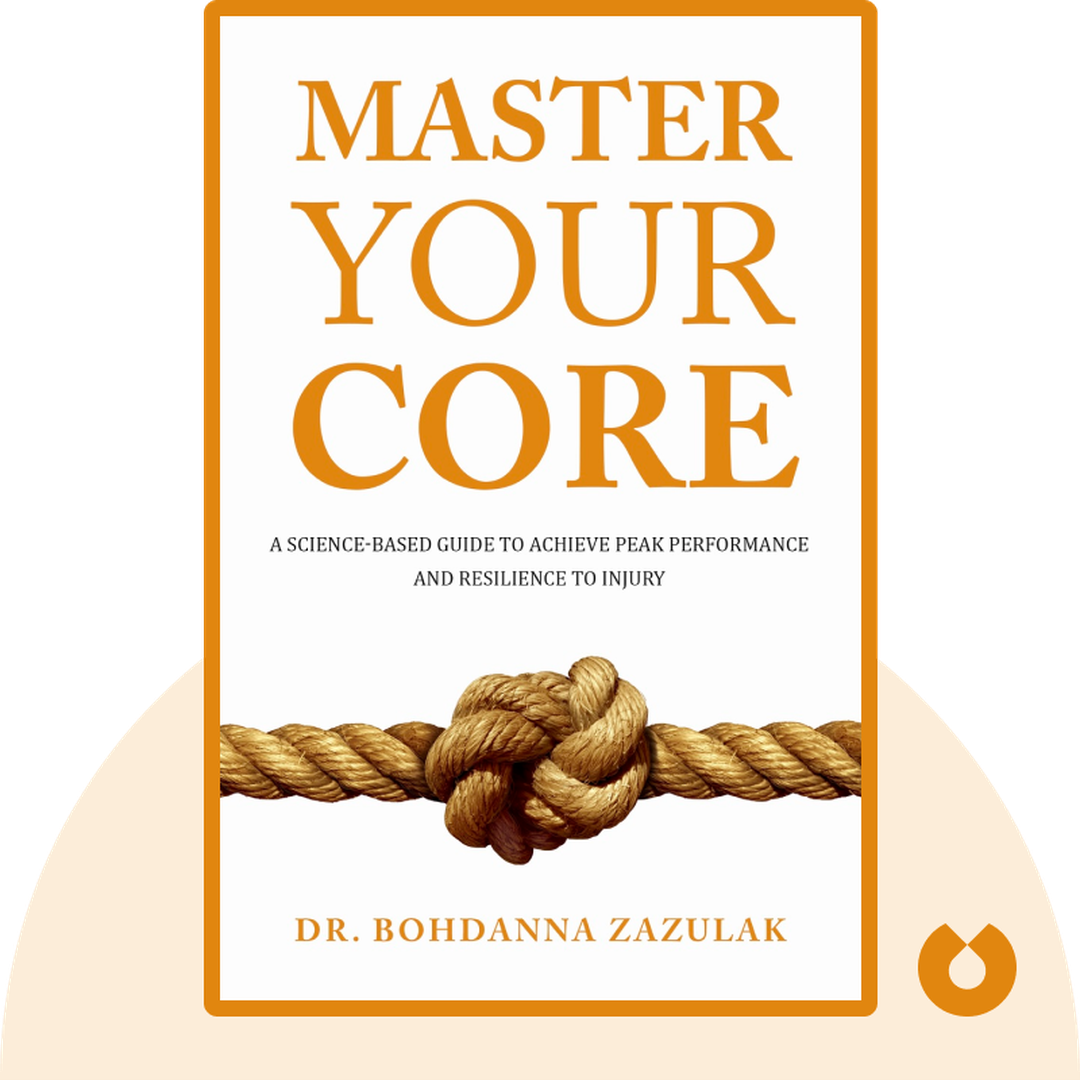
Master Your Core (2021) provides a holistic overview of how strengthening your core can directly boost your athletic performance and mood while reducing injuries. It offers a scientific explanation of “core stability” and includes breathing, stretching, and dynamic exercises to train your core muscles and improve your overall health.
Who Should Listen to Master Your Core?
- Desk workers who want to improve their posture and mood
- Injury-adverse athletes looking to boost strength and power
- Anyone craving sculpted abs with a side of mental well-being
Books Similar to Master Your Core
Readers who enjoyed this also liked these titles.